EUR

Blog - Crystal Car Rental Mauritius

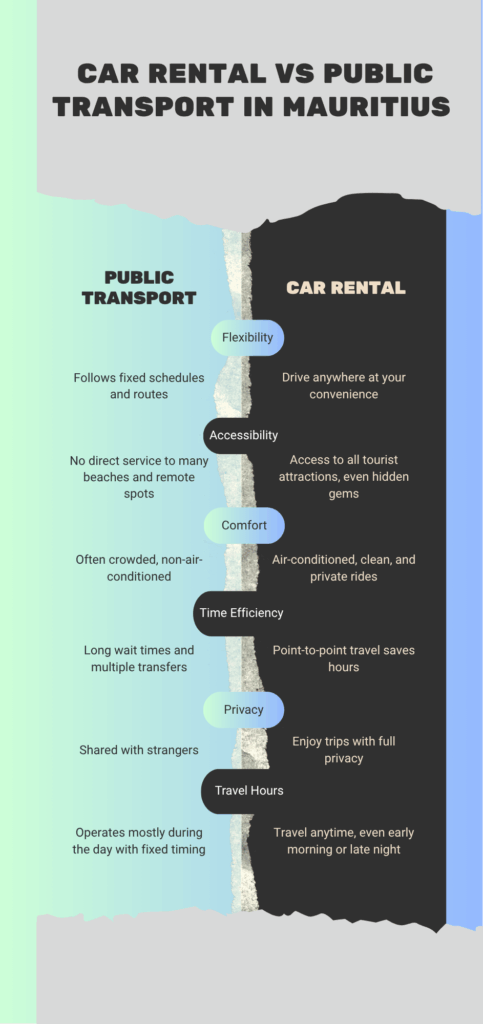
When planning a dream vacation to Mauritius, how you choose to explore the island can make all the difference. I've discovered that renting a car offers unparalleled freedom and convenience, far outshining the experience you'd get with public transport. This isn't just about comfort; it's about making the most of your precious holiday time.

Navigating Mauritius by car means you're not tied to bus schedules or limited to the routes taxis are willing to take. Instead, imagine the breeze in your hair as you drive along the coast, stopping at hidden beaches and quaint villages at your own pace. It's the kind of spontaneity and adventure that public transport simply can't match.

In this piece, I'll dive into why renting a car is your best bet for an unforgettable Mauritius holiday. From the freedom to explore off-the-beaten-path locations to the ease of planning your day, the benefits are clear. Let's get started on why you should consider this option for your next island getaway.

The Freedom of Exploring at Your Own Pace with car rental

Exploring Mauritius by renting a car offers an unparalleled sense of freedom compared to the limitations of public transport. My experience validates the immense value of this flexibility, which allows travelers to immerse themselves fully in the island's beauty at their own pace. This section delves into why renting a car is advantageous for those wishing to explore Mauritius without the constraints typically encountered with public transportation.

No Timetable Restrictions

One of the most liberating aspects of renting a car in Mauritius is the ability to travel without adhering to a fixed schedule. Public transport, while efficient in its own right, operates on strict timetables, which can significantly limit how much of the island you're able to see in a day. I've found that the ability to start the day whenever I choose, be it for an early sunrise at the beach or a late start after a leisurely breakfast, greatly enhances the vacation experience. This flexibility extends to spending as much or as little time as I'd like at each location, free from the worry of missing the last bus or train back to the hotel. It's this type of freedom that transforms a holiday from good to unforgettable, allowing for spontaneous detours and discoveries that are often the highlights of a trip.

Accessing Remote Locations

Mauritius is known for its stunning, secluded spots often situated away from the main tourist trails. Accessing these remote locations can be a challenge with public transport, which typically caters to more popular and densely populated areas. With a rented car, I've ventured off the beaten path to discover hidden beaches, quaint villages, and breathtaking landscapes that I would have otherwise missed. These moments of serenity, away from the crowds, wouldn't have been possible without the independence a personal vehicle provides. Moreover, having a car means there's room to bring along any necessary gear, be it for hiking, snorkeling, or picnicking, enabling a full day of adventures without the constraints of carrying everything by hand. This level of accessibility ensures every day is maximized to its fullest potential, creating a rich tapestry of experiences that public transport simply cannot match.

The freedom to explore Mauritius at one's own pace is a key factor in choosing to rent a car for the holiday of a lifetime. From no timetable restrictions to accessing the most remote and enchanting parts of the island, the benefits are clear. Renting a car not only offers convenience but also opens up a world of possibilities that enrich the travel experience in ways public transport cannot.

Cost-Effectiveness for Groups and Families

Exploring the cost benefits of renting a car in Mauritius becomes even more pronounced when it comes to groups and families. The dynamics of shared costs and the inconvenience of buying multiple tickets for public transport highlight two significant advantages: sharing rental expenses and avoiding the hassle of purchasing individual tickets for each journey.
Sharing Rental Expenses

Renting a car in Mauritius offers an economical advantage for groups and families. Splitting the cost of a rental car among members turns out to be significantly cheaper than individual fares on public transport, especially for larger groups. For instance, the daily rental fee for a comfortable, spacious vehicle capable of accommodating a family of four or a group of friends is often less than the cumulative cost of multiple bus or taxi fares needed to visit various attractions across the island. This shared expense approach not only reduces the financial burden on each person but also enhances the holiday experience by traveling together in comfort.

Avoiding Multiple Ticket Purchases with car rental

Another aspect where renting a car clearly beats public transport is the avoidance of repeated ticket purchases. For families or groups planning to visit multiple sites in a day, the logistics of buying individual tickets for each leg of the journey can be daunting and time-consuming. Public transport in Mauritius, while reliable, requires passengers to purchase tickets for each bus or train ride, which can quickly add up in cost and complexity, particularly for those unfamiliar with the system. In contrast, a rental car eliminates this issue, offering unlimited access to any destination on the island with a single upfront payment. This not only streamlines the travel process but also allows for greater flexibility in itinerary adjustments without the worry of additional costs.

For groups and families looking to explore Mauritius, renting a car presents a cost-effective and convenient alternative to navigating the often complicated and more costly public transport system. By sharing rental expenses and eliminating the hassle of multiple ticket purchases, travelers can enjoy a seamless, enjoyable, and economically smart holiday experience.

Comfort and Convenience Factors

In my exploration of why renting a car beats public transport for your Mauritius holiday, let's delve into the aspects of comfort and convenience that significantly contribute to a superior travel experience. Renting a car not only elevates your journey with tailored travel conditions but also ensures that your privacy and space are uncompromised.

Climate-Controlled Travel

One of the prime advantages of opting for a rental car in Mauritius is the guarantee of climate-controlled travel. Mauritius is known for its tropical climate, with temperatures fluctuating between warm and hot throughout the year. By renting a car, I've found that controlling the internal environment is a breeze, no matter the weather conditions outside. Whether it's turning up the air conditioning to combat the midday heat or adjusting the heater during cooler evenings, the ability to modify your travel climate enhances your comfort multifold. This level of personalized climate control is something public transport cannot offer, making rental cars a preferable choice for many.

Luggage Space and Privacy

When it comes to traveling, especially in a scenic yet expansive island like Mauritius, luggage space and privacy become crucial factors. Renting a car offers ample room for not just the passengers but also for their luggage, sporting equipment, or any shopping items picked up along the way. My experience has shown that this eliminates the stress of cramped spaces and the struggle to keep personal belongings safe and organized - a common issue on public transport.

Moreover, the privacy that comes with renting a car is unparalleled. It allows for personal conversations, the choice of music on the stereo, and the freedom to take breaks or detours whenever desired, without concern for fellow passengers’ preferences or schedules. This privacy aspect significantly enhances the overall holiday experience, making car rental in Mauritius a highly favored option for travelers seeking both comfort and convenience.

Cultural Immersion and Flexibility

In the heart of a Mauritius holiday, cultural immersion and flexibility rank high for an unforgettable experience. Renting a car not only elevates this adventure but also seamlessly integrates it into the journey, allowing me to dive deep into the island’s vibrant culture and tailor each day to my spontaneity and curiosity.

Meeting Locals off the Beaten Path

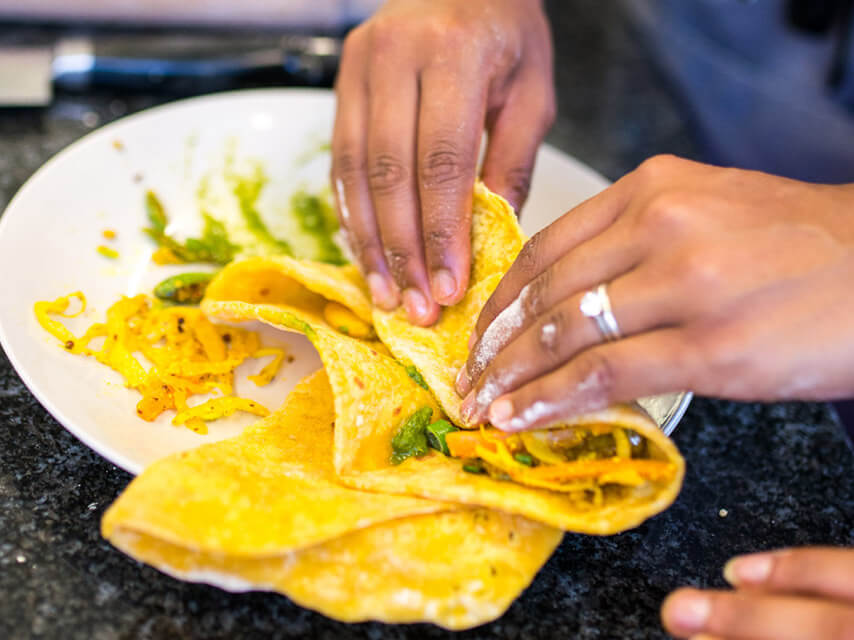
Exploring Mauritius by car, I've found, offers unparalleled opportunities to meet locals in their authentic settings, far removed from the well-trodden tourist spots. Small villages and hidden gems that public transport often bypasses become accessible, showcasing the real heartbeat of the island. Engaging with the local community, trying traditional street food like Dholl Puri from a roadside stall, or simply having a chat at a quaint village shop enriches the travel experience manifold. These encounters allow for a genuine understanding of the Mauritian way of life, adding depth and color to my holiday narrative.

Adapting Plans on the Fly

One of the highlights of having a rented car in Mauritius is the liberating ability to adapt plans on the fly. If I hear about a can't-miss local event or spot an intriguing trailhead on the side of the road, there’s nothing stopping me from exploring it right then and there. This flexibility is a game-changer, setting the stage for serendipitous discoveries and adventures. Whether it's deciding to chase the sunset at a newly recommended beach or opting to spend a few extra hours exploring the vibrant streets of Port Louis, a rented car puts me in the driver’s seat of my holiday, literally and figuratively. The freedom to change course as I please, guided by whims or local recommendations, ensures that my Mauritius experience is uniquely mine, filled with personal triumphs and treasures.

In essence, renting a car in Mauritius not only amplifies the cultural immersion and flexibility of the holiday but also turns every moment into a potential adventure, making it the superior choice over public transport.

Safety and Reliability Considerations

Exploring the aspects that make renting a car in Mauritius a preferable choice over public transport, I delve into the crucial factors of safety and reliability. These components are significant for travelers seeking peace of mind during their holiday.

Dependable Transportation

Renting a car ensures that I have dependable transportation at my disposal. Unlike public transport, where schedules can be erratic and delays common, a rental car is ready to go whenever I am. This reliability is especially important in Mauritius, where some attractions are located in areas that might be difficult to reach through public transport. Having a car means I'm not reliant on the punctuality or availability of buses or taxis, making my travel plans seamless and stress-free. Additionally, rental agencies in Mauritius typically offer 24/7 assistance, ensuring that any issues with the vehicle are promptly addressed, further enhancing the reliability of this mode of transportation.

Reduced Exposure to Crowds

In the context of safety, particularly relevant in today's world, renting a car significantly reduces my exposure to crowded spaces. Public transportation, by nature, involves traveling with many people in confined areas, which can be a concern for those cautious about health and safety. By choosing a rental car, I minimize my contact with large groups, allowing for a safer and more comfortable holiday experience. This aspect is not only beneficial health-wise but also offers a sense of privacy and personal space that greatly enhances the overall vacation experience in Mauritius.

Together, the dependable nature of having a personal vehicle and the reduced exposure to crowds justify the choice of renting a car in Mauritius for safety and reliability considerations. These factors, combined with the flexibility and freedom previously discussed, paint a comprehensive picture of why renting a car surpasses public transport for an unforgettable holiday experience on the island.

Conclusion Opting to rent a car for your Mauritius holiday clearly outweighs the limitations of relying on public transport. The unmatched freedom to explore at your own pace, combined with the cost savings for groups and families, makes it a no-brainer. It's not just about the convenience; it's about crafting a personalized adventure that immerses you in the local culture far beyond what scheduled routes offer. Safety and reliability seal the deal, ensuring peace of mind throughout your journey. For a truly unforgettable experience, embracing the flexibility and independence of a rental car is the way to go

Why Car Rental Wins Over Public Transport in Mauritius

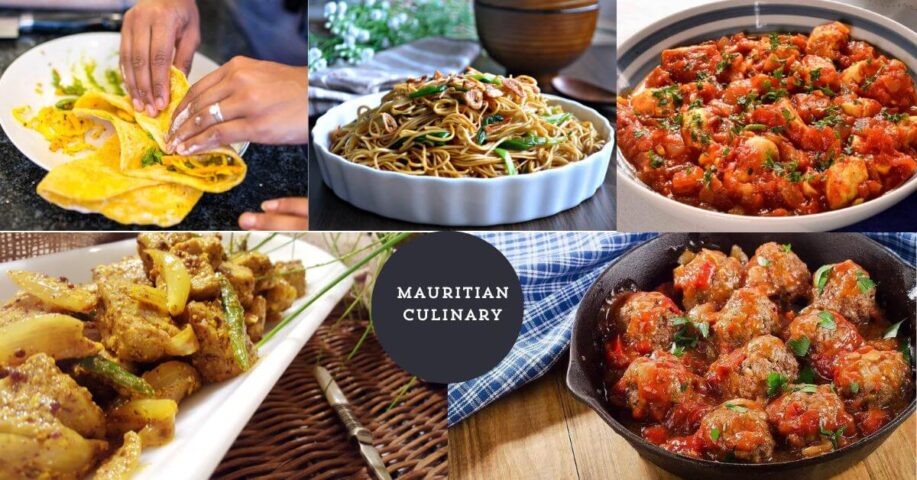
Embarking on a culinary journey to Mauritius, I discovered a melting pot of flavors that truly embodies the island's diverse culture. From street food to gourmet dishes, the Mauritian cuisine offers a tantalizing array of tastes that promise to delight any food lover. It's a vibrant fusion of Indian, French, Chinese, and African influences, each dish telling a story of its ancestral origins and the island's rich history.

As I explored the bustling markets and quiet streets, I compiled a list of 10 must-try foods that are the heart and soul of Mauritian culinary tradition. These dishes are not just meals; they're an experience, a way to connect with the local culture and its welcoming people. Join me as I take you through this flavorful journey, sharing the secrets and stories behind Mauritius's most beloved foods. Get ready to ignite your taste buds and add these culinary gems to your foodie bucket list.

The Melting Pot of Flavors: Mauritius' Culinary Scene

Overview of Mauritian Cuisine

Mauritius, a lush island nation in the Indian Ocean, presents a culinary landscape as diverse as its history and people. My journey across this vibrant food scene reveals that Mauritian cuisine is a testament to the island's rich mosaic of cultures. Integrating Indian, French, Chinese, and African culinary traditions, the local dishes offer a symphony of flavors that echo the island’s multicultural heritage. Each meal here isn't just sustenance; it's a narrative of migration, adaptation, and unity, served on a plate. From the bustling markets of Port Louis to the serene beaches of Grand Baie, the variety of food available is a palatable representation of Mauritius's social and cultural amalgamation.

The Influence of Multiple Cultures on Mauritian Dishes

Delving deeper, I've discovered how the assorted influences shape Mauritius' culinary offerings. Indian spices mingle with French savoir-faire, Chinese cooking techniques combine with African vibrancy, resulting in dishes that are uniquely Mauritian. The Indian influence is unmistakable in the widespread use of spices and preparation of curries and chutneys, while French contributions manifest in the sophisticated flavors of seafood dishes and desserts. The Chinese touch is evident in the popularity of fried noodles and rice dishes, adapted to local tastes with the addition of Mauritian spices. African influence, though more subtle, is present in the rustic, hearty meals prepared across the island. This culinary coalescence creates a dining experience that is both familiar and novel, inviting you to dissect the layers of flavors with every bite. Thus, in Mauritius, food is more than sustenance—it’s a celebration of the island’s history, a colorful patchwork of its diverse cultural influences.

The Top 10 Must-Try Foods in Mauritius

Mauritius, an island rich in cultural diversity, offers a culinary journey like no other. I've explored the vibrant flavors that tell stories of its multicultural heritage, weaving together Indian, French, Chinese, and African influences into every bite. Here, I'll share with you the 10 must-try foods during your visit to this enchanting island.

Dholl Puri: The Quintessential Street Food

Dholl Puri: The Quintessential Street Food

Dholl Puri stands as Mauritius's ultimate street food, a testament to the island's Indian influence. This dish features thin, flatbread stuffed with ground split peas, served with bean curry, atchar, and chutney. Every bite of Dholl Puri encapsulates a mix of textures and flavors, making it an unmissable culinary experience.

Gateau Piment: The Spicy Snack

Gateau Piment: The Spicy Snack

Gateau Piment, or chili cakes, are small, fried balls made from yellow split peas and, of course, chili. They balance spiciness with a touch of seasoning, typically eaten as a savory snack or within bread as a Mauritius-style sandwich. They're a simple yet profound reflection of the island's love for spices and deep-fried delights.

Boulettes: The Chinese Influence

Boulettes: The Chinese Influence

Mauritius's culinary landscape would be incomplete without Boulettes, the local take on Chinese dumplings. These steamed goodies come with a variety of fillings, such as chicken, fish, or vegetables, often swimming in a flavorful broth. Boulettes showcase the seamless integration of Chinese cooking techniques into Mauritian cuisine.

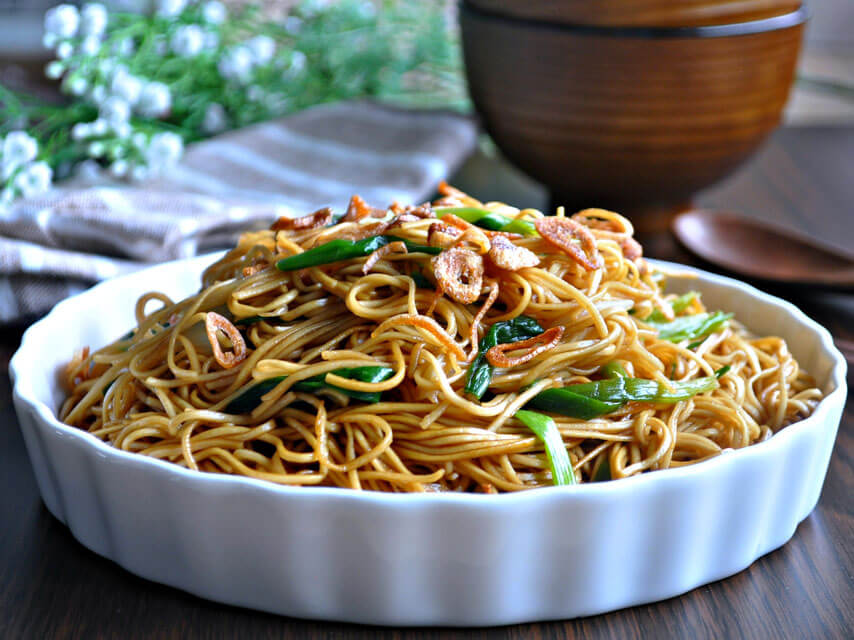
Mine Frite: A Nod to Noodles

Mine Frite: A Nod to Noodles

Mine Frite, or fried noodles, pays homage to the island's Chinese community. Tossed with vegetables, meat, or seafood, and seasoned with soy sauce and spices, this dish is a staple in Mauritian homes and a beloved street food option. Mine Frite exemplifies the simplicity and adaptability of Chinese cuisine with a Mauritian twist.

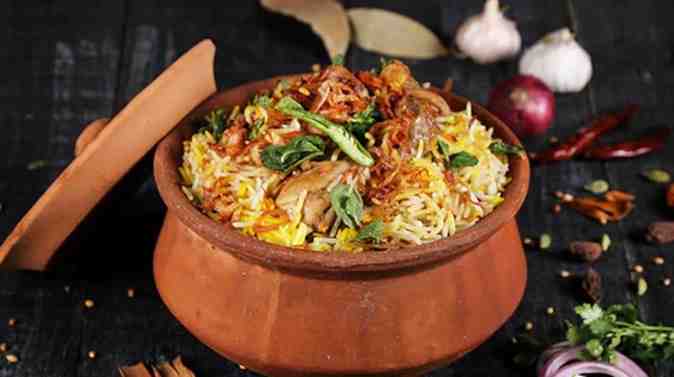
Briani: A Celebration of Spices

Briani: A Celebration of Spices

Briani, a gastronomic nod to the island's Indian Muslims, is a fragrant rice dish cooked with spices, meat, or fish. What sets the Mauritian Briani apart is the use of local ingredients like thyme and the method of layering, which ensures every spoonful is infused with complex flavors.

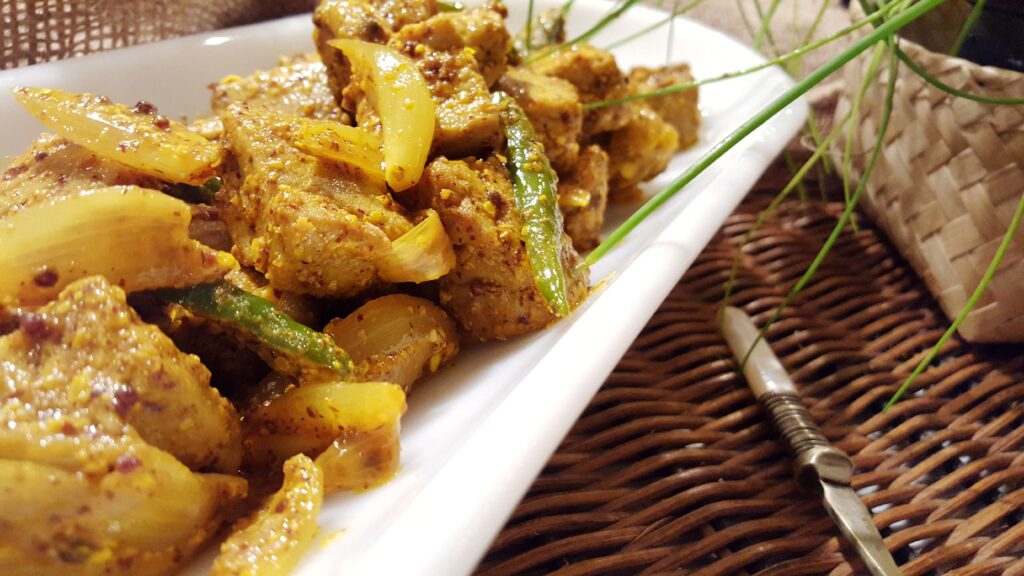
Fish Vindaye: A Taste of India

Fish Vindaye: A Taste of India

Fish Vindaye, borrowing from the Indian Vindaloo, is a Mauritian version less spicy yet equally flavorful. It features fish marinated with turmeric, garlic, and mustard, giving it a unique taste and a slightly tangy flavor. It's a reflection of how Indian cuisine has been adapted to suit local tastes.

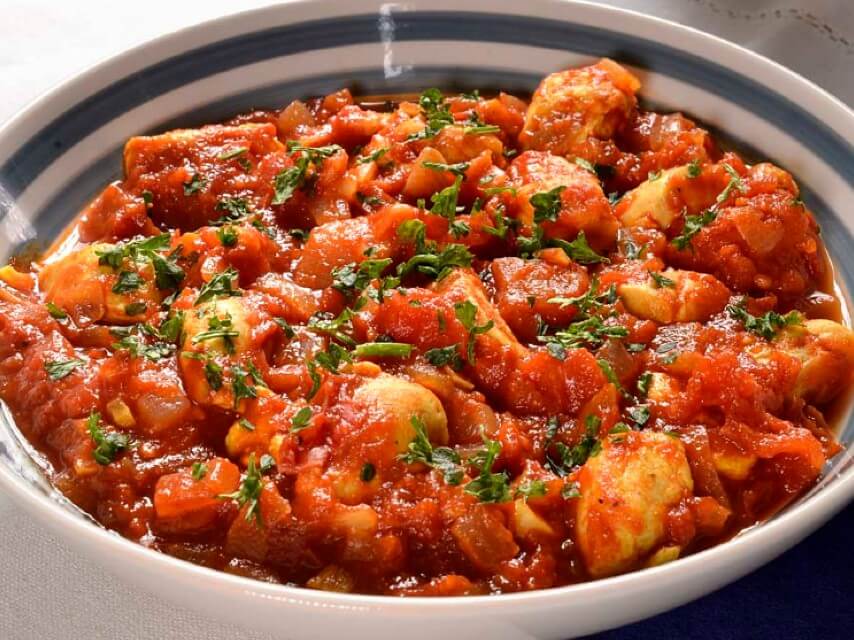
Rougaille: A Creole Classic

Rougaille: A Creole Classic

Rougaille is a versatile tomato-based sauce, a staple of Creole households. This sauce accompanies a variety of dishes, from fish to sausages, embodying the essence of Creole cuisine's robust and hearty flavors. It's a testament to the African and French culinary influences blending in Mauritius.

Farata: The Perfect Accompaniment

Farata: The Perfect Accompaniment

Farata, the Mauritian version of Indian flatbread, serves as the perfect accompaniment to curries and stews. Its soft, buttery layers are perfect for scooping up sauces and gravies, making it a must-try for anyone aiming to experience the full range of Mauritius's flavors.

Alouda: A Sweet Soother

Alouda: A Sweet Soother

After exploring the myriad of savory dishes, Alouda provides a sweet respite. This refreshing drink made from milk, basil seeds, agar-agar jelly, and flavored syrups, often topped with ice cream, is Mauritius's answer to the falooda. It's a beloved dessert drink that perfectly encapsulates the island's penchant for vibrant, sweet treats.

The French Connection

Napolitaine is a delightful pastry that rounds off our list with a touch of French elegance. These shortbread cookies, sandwiched with jam and topped with a pink icing glaze, are a testament to Mauritius's French influence. They're a popular treat for special occasions, embodying the sophistication and finesse of French pastry arts with a uniquely Mauritian flavor.

Through these dishes, Mauritius offers a culinary voyage that mirrors its cultural diversity, making it a destination where every meal narrates the history of this beautiful island. From street food to sweet treats, the top 10 must-try foods in Mauritius promise an unforgettable gastronomic journey.

Where to Find These Delicacies

Exploring Mauritius's culinary landscape requires knowing where to find these incredible foods. From bustling street-food stalls to local restaurants and vibrant festivals, every corner of this island offers a taste of its rich cultural diversity. Let me guide you through the best spots to enjoy the top must-try foods in Mauritius.

Street-Food Stalls and Markets

My journey through Mauritius's culinary offerings often starts at street-food stalls and local markets, the heartbeats of Mauritian street cuisine. Places like Port Louis' Central Market or the Quatre Bornes market are not just markets but culinary treasure troves. Here, Dholl Puri, a thin flatbread filled with ground yellow split peas, becomes an ultimate treat when paired with bean curry and chutney. Don't miss the chance to try Gateau Piment, spicy fried chili cakes, perfect for snacking as you explore. For a taste of Chinese influence, Boulettes, steamed dumplings served in a flavorful broth, are readily available at these bustling hubs, offering a glimpse into the island's culinary fusion.

Local Restaurants: A Sit-Down Experience

When I seek a more relaxed dining environment, Mauritius's local restaurants provide an intimate look into the island's gastronomy. Here, dishes like Mine Frite, a Mauritian take on fried noodles, and Briani, a fragrant mix of rice, spices, and meats, are meticulously prepared, creating flavors that tell stories of cultural confluence. Restaurants from Grand Baie to Mahebourg offer seafront views, enhancing the dining experience with picturesque backdrops. Fish Vindaye and Rougaille, a tomato-based stew, epitomize the local flavors, best enjoyed in these sit-down establishments, where the attention to detail in every dish reflects the island's culinary pride.

Festivals and Celebratory Feasts: Where Foods Shine

In Mauritius, festivals and celebratory feasts are perhaps the most vibrant showcase of the island's culinary heritage. My experiences during Diwali, Eid, or Chinese New Year in Mauritius highlight how food becomes the centerpiece of celebrations. Farata, a buttery flatbread, and Alouda, a sweet milk-based drink, are popular during these times, offering insights into the communal and celebratory aspects of Mauritius's food culture. Napolitaine, a sweet treat with jam sandwiched between two cookies and covered in pink icing, is especially sought after during these festive occasions. Each festival in Mauritius, regardless of its cultural origin, serves as a melting pot of flavors, inviting everyone to partake in the joyous celebration of diversity through food.

Eating Like a Local: Tips and Etiquette

Exploring Mauritius's vibrant culinary landscape goes beyond just sampling dishes; it's about immersing in the local dining etiquette and understanding the cultural nuances. I'm here to guide you through this aspect, ensuring you not only eat like a local but also respect the island's dining traditions.

Embracing the Street Food Scene

Mauritius's street food is a reflection of its melting pot culture, offering flavors that span continents within the space of a food stall. When visiting places like Port Louis' Central Market, I've learned to observe a few unwritten rules that make the experience richer. Always greet the vendor with a friendly "Bonjour" or "Bonsoir," depending on the time of day. It's a simple gesture that sets a positive tone. Paying with small change is appreciated, as it makes transactions smoother for vendors. Lastly, patience is key. The best delicacies, like Dhal Puri or Gateaux Piment, often come with a wait, indicative of their freshness and popularity.

Understanding the Rituals of Mauritian Dining

Mauritian dining rituals are a beautiful amalgamation of the island's diverse cultures, each adding its unique flavor to the communal dining experience. An essential custom I've observed is the act of sharing food. It's common to order several dishes and share them among the table, fostering a sense of community and togetherness. When invited to a local's home, bringing a small gift, like sweets or a dessert, is a polite gesture that's always appreciated. During meals, using the right hand for eating (especially when utensils aren't used) respects local customs and reflects a keenness to integrate into the dining experience.

Dietary Preferences and Allergies in Mind

Mauritius's cuisine, with its array of flavors, also caters to various dietary preferences and allergies. As someone mindful of these considerations, it's comforting to know that many local eateries and street-food vendors are accommodating. Vegetarian options abound, thanks to the island's considerable Hindu population, with dishes like Vegetable Briani and Roti Chaud offering delicious meat-free choices. For those with allergies, communication is key. Learning a few phrases in French or Mauritian Creole to specify dietary restrictions helps immensely. Vendors are generally understanding and will often go out of their way to ensure your meal is safe and enjoyable.

Mastering these dining nuances has not only enriched my culinary journey in Mauritius but also deepened my appreciation for the island's culture and hospitality. It's a reminder that food is more than sustenance; it's a gateway to understanding and embracing the local way of life.

Pairing Mauritian Dishes with the Perfect Drinks

Mauritian cuisine's explosion of flavors finds perfect accompaniment in a variety of drinks, from local creations to international favorites. By pairing the right beverage with your meal, you can elevate the dining experience, enriching the complex flavors Mauritius offers. Here's my guide to matching these tantalizing dishes with the best drinks to complement their rich tastes.

Local Beverages to Enhance Your Meal

Mauritius boasts a selection of unique beverages that perfectly complement its diverse culinary scene. When indulging in the island's delicacies, choosing a local drink not only enhances the meal but also offers a more authentic dining experience.

  • Alouda: This refreshing Mauritian drink, a favorite at Port Louis' Central Market, pairs wonderfully with light snacks or street food. Alouda, made from milk, agar-agar jelly, basil seeds, and vanilla, provides a soothing contrast to spicy bites like Gateaux Piment.
  • Phoenix Beer: A locally brewed lager, Phoenix Beer is the go-to choice for washing down heartier dishes. Its crisp and light taste complements the rich flavors of dishes like Mine Frite or a flavorful Mauritian Briani, balancing the meal's spices.
  • Green Island Rum: Mauritius is known for its exceptional rum, and sipping on Green Island Rum alongside traditional desserts like Napolitaine fills each bite with enhanced flavors. This combination introduces a smooth, sweet finish to a delightful culinary journey.

Also Read : Useful Things to Know Before You Travel to Mauritius

International Drinks That Complement Mauritian Flavors

While local beverages provide a traditional pairing, several international drinks also harmonize beautifully with Mauritian dishes, offering a global twist to the dining experience.

  • South African Chardonnay: The creamy and oaky notes of a chilled South African Chardonnay beautifully cut through the richness of seafood dishes, such as Grilled Ourite (octopus). This pairing brightens the meal, highlighting the fresh, oceanic flavors.
  • Indian Pale Ale (IPA): The hoppy bitterness of an IPA contrasts nicely with the sweetness of Mauritian dishes like Rougaille. Its complexity can stand up to the robust flavors, adding an extra layer of taste.
  • French Rosé: For a refreshing accompaniment to a spicy Mauritian curry, a glass of French Rosé offers a crisp, cooling balance. Its light fruitiness complements the heat without overpowering the dish's vibrant flavors.

Pairing the right drink with Mauritian dishes isn't just about quenching thirst; it's an integral part of the culinary adventure that Mauritius presents. Whether opting for a local specialty or an international favorite, the perfect drink can turn a meal into an unforgettable experience. As I immerse myself further into the island's dining culture, I find these pairings not only enhance the meal but also deepen my appreciation for Mauritius's rich, culinary heritage.

A Foodie's Itinerary: Planning Your Culinary Journey

As a seasoned traveler and a fervent advocate for exploring cultures through their cuisines, I've crafted a guide to help you navigate Mauritius's culinary landscape seamlessly. The island’s myriad of flavors is a palette waiting for exploration, and with this itinerary, you're set to embark on a gastronomic journey that promises an authentic taste of Mauritian culture.

Mapping Out Dining Spots

Commencing your culinary adventure in Mauritius necessitates a strategic approach to mapping out dining spots. My firsthand experience dining across the island has shown me the importance of variety. Start with the bustling street-food stalls in Port Louis' Central Market for a taste of authentic Mauritian Dholl Puri or the succulent Gateaux Piments. Here, the vibrant atmosphere and aromatic spices intermingle to provide a sensory feast even before the first bite.

Transitioning from the streets to established restaurants offers an elevated dining experience with dishes such as Mine Frite and Briani, meticulously prepared to reflect Mauritius’s Indo-Mauritian influence. Restaurants nestled along the coast, such as those found in Grand Baie, provide fresh seafood options like Grilled Dorado with a Creole sauce, enhancing the island vibe with every dish.

An essential part of mapping out dining spots includes identifying eateries that celebrate Mauritius's cultural and festive foods. Seek out places that serve Farata, Alouda, and Napolitaine during local festivals to immerse yourself fully in the island's culinary traditions.

Scheduling Meals Around Activities

To maximize your culinary journey, scheduling meals around activities is key. My strategy involves starting the day with a light breakfast, perhaps a locally inspired fruit salad with papayas, mangoes, and pineapples, leaving ample room for the exploration of mid-morning snacks found in markets or beachside stalls.

Lunches are best enjoyed post-morning adventures, ideally at a restaurant with a scenic view to relax and savor the midday meal. This could be after a hike in the Black River Gorges National Park or a swim at Pereybere Beach, aligning the meal with the day's physical activities.

Evening dining plans should incorporate the island's nightlife, pairing dinner with an opportunity to explore Mauritius's lively scenes. A late dinner after sunset catamaran cruises or a stroll along the Flic-en-Flac beach ensures you experience both the island’s culinary delicacies and its enchanting night ambiance.

In crafting this segment of your journey, pairing drinks with meals enhances the dining experience. Ending a day with a glass of Green Island Rum or a chilled Phoenix Beer mirrors the essence of Mauritian dining culture, where the meal extends beyond just the food—it’s an experience, a celebration of the island's rich, cultural tapestry.

Conclusion

Exploring Mauritius's culinary scene is like embarking on a vibrant journey that tantalizes the taste buds at every turn. My adventure through the island's diverse flavors has not only introduced me to the rich tapestry of dishes but also to the cultural significance behind each meal. From the bustling street-food stalls to the serene upscale dining, every bite tells a story of tradition, innovation, and celebration. Pairing these exquisite meals with local drinks has elevated my dining experience, allowing me to truly immerse myself in the Mauritian way of life. Whether it's the spicy kick of Briani, the sweet indulgence of Napolitaine, or the refreshing sip of Alouda, Mauritius's culinary offerings are a testament to its vibrant culture. So, if you're planning a trip, make sure to indulge in these culinary delights—your palate will thank you for the unforgettable journey.

Must Try Foods on Your Culinary Journey

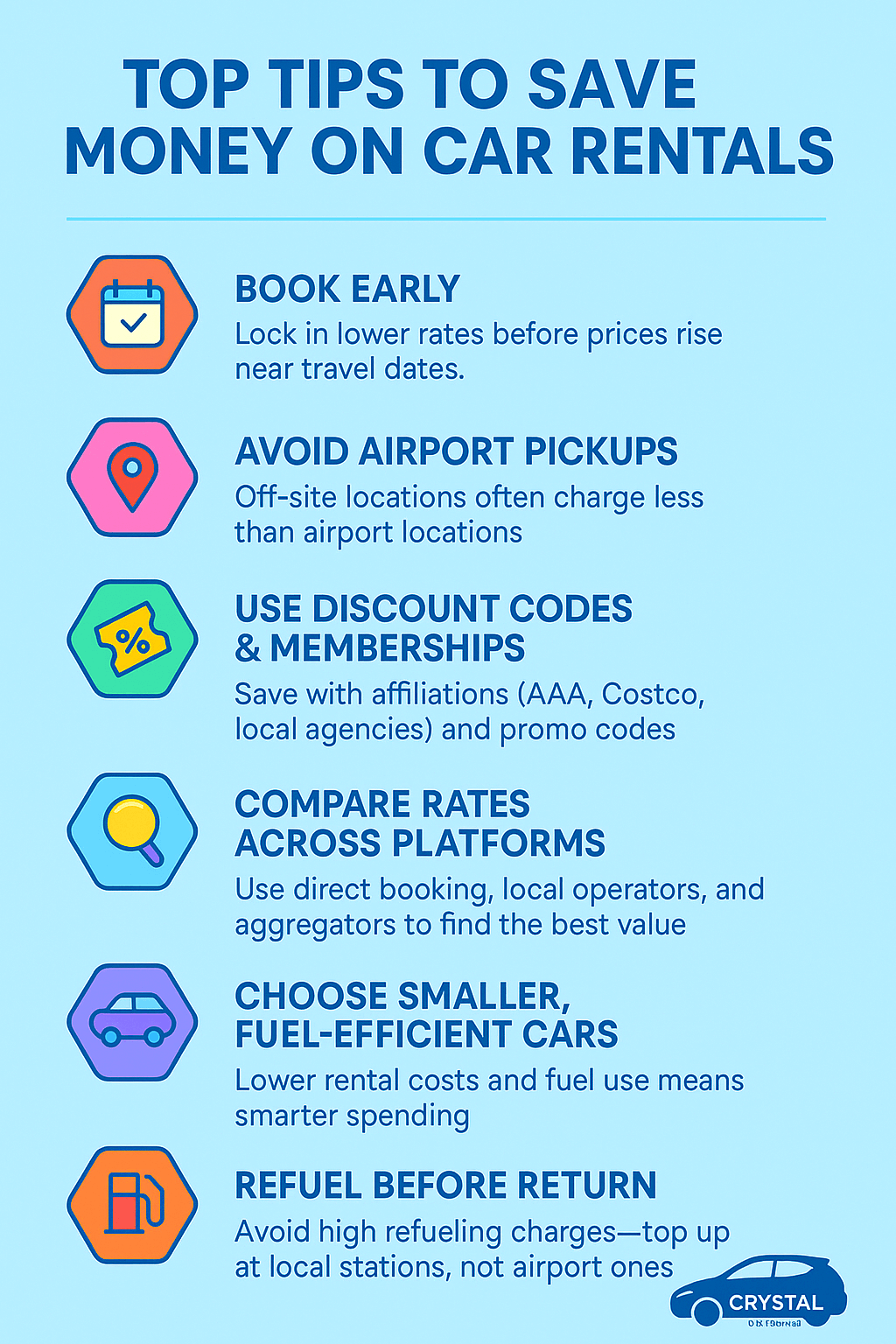
In my years of traveling, I've learned a thing or two about stretching a dollar, especially when it comes to car rentals. It's no secret that hiring a car can significantly eat into your travel budget, but it doesn't have to. With a few smart strategies up your sleeve, you can drive off with a great deal, keeping more money in your pocket for the fun parts of your trip.

I've navigated through the maze of booking sites, hidden fees, and insurance options more times than I can count. And I'm here to share my insider tips on how to economize your car hire without compromising on quality or convenience. Whether you're planning a road trip or just need a ride for a day, these strategies will help you save money and avoid common pitfalls. Let's dive into how you can make your next car rental experience wallet-friendly and stress-free.

Understanding Car Hire Economics

In my journey to economize car hires, I've unearthed some crucial insights into the economics behind car rentals. These insights are foundational for anyone looking to navigate the complexities of hiring a car. Let's dive deeper into key areas: planning ahead and identifying hidden costs.

The Importance of Planning Ahead for car rental

Planning ahead isn’t just about booking your car hire early; it's a strategic move that significantly impacts the cost-effectiveness of your rental. By reserving a vehicle well in advance, I've often locked in lower rates. Rental prices can fluctuate based on demand, and as the pickup date nears, prices tend to increase. Early bookings also provide a wider selection of vehicles, allowing for a choice that better suits budget and needs without having to compromise due to last-minute availability.

Additionally, early planning offers the opportunity to compare prices across different car rental agencies and booking platforms. Using comparison tools, I've saved a notable percentage off the standard rates. Furthermore, this approach gives me ample time to read the fine print of rental agreements, ensuring I fully understand the deal I'm getting into, thus avoiding any surprises.

Hidden Costs in Car Rentals

Understanding the various hidden costs in car rentals has allowed me to save money and avoid budget overruns. These costs can significantly inflate the price of a rental, hence knowing what to look for is key. Insurance, for one, is a major hidden cost. Rental companies often try to upsell additional insurance coverage. However, I've learned to check my existing insurance policies and credit card benefits first, as they sometimes already cover rental cars, negating the need for double coverage.

Another hidden cost is fuel policies. I've found that opting for the 'full to full' fuel policy, where you pick up the car with a full tank and return it full, is often the most economical choice. This way, I avoid the rental company's charges for fuel, which are usually higher than local fuel rates.

Additionally, fees for additional drivers and equipment like GPS or child seats can add up. Whenever possible, I limit added drivers and bring my own equipment, such as using my smartphone for navigation instead of renting a GPS.

By staying informed about these and other potential fees, such as late return charges or toll pass fees, I've been able to make more cost-effective decisions and ensure that my car hire doesn't come with unwelcome surprises.

Infographic- Top tips for car rental

Booking Strategies for Economizing car hiring

After navigating through the initial stages of understanding car hire economics, it's clear that planning and strategic choices play crucial roles in saving money on car rentals. To further economize your car hire, adopting savvy booking strategies is key. My focus now shifts to sharing the practices I've found most effective in minimizing rental costs without compromising on the quality of the rental experience.

Comparing Prices Online

Embarking on the quest to find the best car rental deals, I always start with comparing prices online. This approach has consistently proven itself as a cornerstone in economizing car hires. Various comparison websites serve as platforms where rental companies list their vehicles and rates, providing a comprehensive overview of what's available. By entering details of the desired rental period and location, I can instantly view a range of offers from different agencies. This transparency allows me to identify the most competitive rates and often unveil deals that are exclusive to online bookings. Moreover, I make it a point to visit the official websites of rental agencies, as they sometimes offer lower prices or special promotions not available on comparison sites.

Utilizing Discount Codes and Coupons

Over the years, I've found that leveraging discount codes and coupons is akin to uncovering hidden treasure in the realm of car rental savings. Membership in travel clubs, loyalty programs, or affiliations with certain credit cards and organizations often comes with the perk of discounted car hire rates. Prior to confirming a booking, I dedicate time to searching for applicable discount codes or coupons. Websites that aggregate such discounts and the rental companies' own promotional pages are invaluable resources. Inputting a discount code during the booking process or presenting a coupon at the rental counter can lead to significant savings, making this strategy an indispensable part of my economizing toolkit.

Opting for Economy Models

Choosing economy models is another strategy I employ to ensure my car rentals are both affordable and efficient. Small or compact cars not only come with lower rental rates but also offer benefits like better fuel efficiency and easier navigation, especially in urban settings. This choice does not mean compromising on comfort or safety, as many economy models are well-equipped with modern amenities. By opting for an economy model, I prioritize practicality and savings, ensuring that I only pay for the space and features I truly need.

Incorporating these booking strategies into your car hire process can lead to significant cost savings while still enjoying a reliable and comfortable rental experience. By comparing prices online, utilizing discount codes and coupons, and choosing economy models, I've been able to economize my car hires effectively, ensuring that I get the best value for my money.

Timing Your Rental for Maximum Savings

After navigating the challenges of minimizing rental costs with early bookings and intelligent choices, I find timing your car hire crucial for maximizing savings. Understanding when to rent not only reduces costs but also significantly enhances the rental experience.

Off-Peak Rental Advantages

I've learned that renting during off-peak periods can lead to substantial savings. Car rental companies often lower their prices during times of low demand to attract more customers. For instance, avoiding holidays, major events, or the summer season can result in cheaper rates. Moreover, I've found that weekdays are generally less expensive than weekends due to a decrease in demand. By choosing to rent from Monday to Thursday, I've saved up to 20% compared to weekend rates. It's also beneficial to pick up and drop off the car at the same location to avoid additional fees, making off-peak rentals not only affordable but also convenient.

Long-Term vs. Short-Term Car Rentals

Deciding between long-term and short-term rentals presents another opportunity for economizing your car hire. For durations longer than a week, I've noticed that long-term rentals often come with discounted rates. Rental companies prefer longer commitments as it guarantees vehicle usage over an extended period, offering rates that can be significantly lower than the daily price multiplied by the number of rental days. On the other hand, short-term rentals can be sensible for quick trips or when only needing a car for a few days. However, for trips extending beyond a week, I always opt for the long-term option to exploit lower per-day costs. By choosing the right type of rental based on the trip duration, I've effectively managed to reduce overall rental expenses.

Integrating these timing strategies with the insights from advanced booking methods has empowered me to effectively economize my car hires. By carefully planning the rental period and choosing the right duration, significant savings are achievable without compromising on convenience or choice.

Navigating Insurance Options

After mastering the art of securing the best rates and timing for my car hires, I've learned that understanding insurance options is equally crucial in economizing the overall cost. Here, I'll dissect the complexities surrounding car rental insurance, guiding you through deciding on your coverage needs and comparing external insurance with rental company policies. This insight aims to arm you with the necessary knowledge to make informed decisions, potentially saving you a substantial amount of money.

Deciding on Coverage Needs

Determining the exact coverage you need before renting a car is paramount. Many renters, including myself, often overlook this step, either opting for too much insurance or not enough, both of which have their downsides. I found that analyzing my existing car insurance policy was the first step. Many personal auto insurance policies extend some coverage to rental cars, which can save you from purchasing redundant coverage from the rental company.

Next, consider the trip's specifics. For high-risk activities or regions prone to certain hazards, opting for comprehensive coverage makes sense. However, for routine travels, minimal coverage may suffice if it aligns with your risk tolerance and the coverage provided by your credit card company. Credit cards, especially premium travel cards, commonly offer rental car insurance as a benefit, covering anything from collision damage to theft, provided the car hire is charged to the card. Always verify the specifics directly with the card issuer, as coverage varies widely among cards.

External Insurance vs. Rental Company Policies

Comparing external insurance options with those offered by the rental company can unveil opportunities for savings. Rental companies often market their insurance packages with convenience in mind, offering them at the point of hire with a simple sign-up process. However, these policies might come at a premium cost. On the other hand, securing insurance externally, either through a standalone policy from an insurance company or leveraging coverage offered by my credit card, often results in significant savings.

External policies also offer the benefit of customizability. Unlike the one-size-fits-all approach of rental company policies, external insurance allows renters like me to tailor coverage based on specific needs, potentially lowering the cost. Additionally, third-party insurers tend to provide broader coverage options, ranging from liability-only to full comprehensive and collision, giving renters more control over their protection level.

My journey in economizing car hires taught me the importance of meticulously navigating insurance options. By decisively assessing coverage needs and weighing external insurance against rental company policies, you can protect against unexpected expenses, ensuring a cost-efficient and stress-free rental experience.

Additional Tips for Saving on Car Hire

In my quest to uncover the most effective strategies for economizing car hire, I've identified additional tips that further drive down costs. By integrating these into your car rental approach, you can enjoy even more savings.

Refueling the Car Yourself

One straightforward way to save on car hire involves refueling the vehicle yourself before returning it. Rental companies typically charge higher rates for gas compared to local fuel prices. By taking the time to refill the tank at a nearby gas station before drop-off, I've consistently saved a significant amount. It's a simple step that doesn't just cut costs; it also puts you in control of how much you're paying for fuel, rather than being at the mercy of the rental company's rates.

Avoiding Airport Rental Premiums

Another tip I've found particularly effective is bypassing the convenience of airport rentals. Although picking up a car right at the airport might seem like a time-saver, it often comes with a premium due to added fees and higher rates. Instead, I've saved money by choosing rental locations a short distance away from the airport. Public transport or a quick rideshare can get you to these offsite locations where rates are typically more economical. This minor inconvenience can lead to major savings, especially for longer rentals.

Joining Loyalty Programs

Lastly, I cannot overemphasize the benefits of joining car rental loyalty programs. These programs are often free to join and can offer a plethora of savings opportunities, from discounted rates to free upgrades. Over time, points accumulate, leading to even greater rewards. Additionally, membership often includes expedited service options, which can save a lot of time. My experience with these programs has not only made car hire more affordable but also more efficient and enjoyable.

By incorporating these additional tips into your car hire strategy, you'll find that saving money doesn't have to mean sacrificing convenience or comfort. Each of these strategies offers a practical way to cut costs, proving that with a little extra effort and knowledge, economizing your car hire is entirely achievable.

Conclusion

I've shared my journey and the strategies that have worked for me in economizing car hire without sacrificing convenience. From booking early to choosing off-peak times and understanding insurance, these tips are designed to cut costs. Remember, it's about being smart with your choices—opting for economy models, refueling the car yourself, and avoiding airport rentals can make a significant difference. Joining loyalty programs is also a smart move for frequent travelers. Armed with this knowledge, you're now better equipped to save on your next car rental. Let's make savvy renting a habit, ensuring we get the best deals every time we hit the road.

Tips to Save Money on Car Rentals
© Crystal Car Rental | 2023