EUR

Uncategorized

Embarking on a culinary journey to Mauritius, I discovered a melting pot of flavors that truly embodies the island's diverse culture. From street food to gourmet dishes, the Mauritian cuisine offers a tantalizing array of tastes that promise to delight any food lover. It's a vibrant fusion of Indian, French, Chinese, and African influences, each dish telling a story of its ancestral origins and the island's rich history.

As I explored the bustling markets and quiet streets, I compiled a list of 10 must-try foods that are the heart and soul of Mauritian culinary tradition. These dishes are not just meals; they're an experience, a way to connect with the local culture and its welcoming people. Join me as I take you through this flavorful journey, sharing the secrets and stories behind Mauritius's most beloved foods. Get ready to ignite your taste buds and add these culinary gems to your foodie bucket list.

The Melting Pot of Flavors: Mauritius' Culinary Scene

Overview of Mauritian Cuisine

Mauritius, a lush island nation in the Indian Ocean, presents a culinary landscape as diverse as its history and people. My journey across this vibrant food scene reveals that Mauritian cuisine is a testament to the island's rich mosaic of cultures. Integrating Indian, French, Chinese, and African culinary traditions, the local dishes offer a symphony of flavors that echo the island’s multicultural heritage. Each meal here isn't just sustenance; it's a narrative of migration, adaptation, and unity, served on a plate. From the bustling markets of Port Louis to the serene beaches of Grand Baie, the variety of food available is a palatable representation of Mauritius's social and cultural amalgamation.

The Influence of Multiple Cultures on Mauritian Dishes

Delving deeper, I've discovered how the assorted influences shape Mauritius' culinary offerings. Indian spices mingle with French savoir-faire, Chinese cooking techniques combine with African vibrancy, resulting in dishes that are uniquely Mauritian. The Indian influence is unmistakable in the widespread use of spices and preparation of curries and chutneys, while French contributions manifest in the sophisticated flavors of seafood dishes and desserts. The Chinese touch is evident in the popularity of fried noodles and rice dishes, adapted to local tastes with the addition of Mauritian spices. African influence, though more subtle, is present in the rustic, hearty meals prepared across the island. This culinary coalescence creates a dining experience that is both familiar and novel, inviting you to dissect the layers of flavors with every bite. Thus, in Mauritius, food is more than sustenance—it’s a celebration of the island’s history, a colorful patchwork of its diverse cultural influences.

The Top 10 Must-Try Foods in Mauritius

Mauritius, an island rich in cultural diversity, offers a culinary journey like no other. I've explored the vibrant flavors that tell stories of its multicultural heritage, weaving together Indian, French, Chinese, and African influences into every bite. Here, I'll share with you the 10 must-try foods during your visit to this enchanting island.

Dholl Puri: The Quintessential Street Food

Dholl Puri: The Quintessential Street Food

Dholl Puri stands as Mauritius's ultimate street food, a testament to the island's Indian influence. This dish features thin, flatbread stuffed with ground split peas, served with bean curry, atchar, and chutney. Every bite of Dholl Puri encapsulates a mix of textures and flavors, making it an unmissable culinary experience.

Gateau Piment: The Spicy Snack

Gateau Piment: The Spicy Snack

Gateau Piment, or chili cakes, are small, fried balls made from yellow split peas and, of course, chili. They balance spiciness with a touch of seasoning, typically eaten as a savory snack or within bread as a Mauritius-style sandwich. They're a simple yet profound reflection of the island's love for spices and deep-fried delights.

Boulettes: The Chinese Influence

Boulettes: The Chinese Influence

Mauritius's culinary landscape would be incomplete without Boulettes, the local take on Chinese dumplings. These steamed goodies come with a variety of fillings, such as chicken, fish, or vegetables, often swimming in a flavorful broth. Boulettes showcase the seamless integration of Chinese cooking techniques into Mauritian cuisine.

Mine Frite: A Nod to Noodles

Mine Frite: A Nod to Noodles

Mine Frite, or fried noodles, pays homage to the island's Chinese community. Tossed with vegetables, meat, or seafood, and seasoned with soy sauce and spices, this dish is a staple in Mauritian homes and a beloved street food option. Mine Frite exemplifies the simplicity and adaptability of Chinese cuisine with a Mauritian twist.

Briani: A Celebration of Spices

Briani: A Celebration of Spices

Briani, a gastronomic nod to the island's Indian Muslims, is a fragrant rice dish cooked with spices, meat, or fish. What sets the Mauritian Briani apart is the use of local ingredients like thyme and the method of layering, which ensures every spoonful is infused with complex flavors.

Fish Vindaye: A Taste of India

Fish Vindaye: A Taste of India

Fish Vindaye, borrowing from the Indian Vindaloo, is a Mauritian version less spicy yet equally flavorful. It features fish marinated with turmeric, garlic, and mustard, giving it a unique taste and a slightly tangy flavor. It's a reflection of how Indian cuisine has been adapted to suit local tastes.

Rougaille: A Creole Classic

Rougaille: A Creole Classic

Rougaille is a versatile tomato-based sauce, a staple of Creole households. This sauce accompanies a variety of dishes, from fish to sausages, embodying the essence of Creole cuisine's robust and hearty flavors. It's a testament to the African and French culinary influences blending in Mauritius.

Farata: The Perfect Accompaniment

Farata: The Perfect Accompaniment

Farata, the Mauritian version of Indian flatbread, serves as the perfect accompaniment to curries and stews. Its soft, buttery layers are perfect for scooping up sauces and gravies, making it a must-try for anyone aiming to experience the full range of Mauritius's flavors.

Alouda: A Sweet Soother

Alouda: A Sweet Soother

After exploring the myriad of savory dishes, Alouda provides a sweet respite. This refreshing drink made from milk, basil seeds, agar-agar jelly, and flavored syrups, often topped with ice cream, is Mauritius's answer to the falooda. It's a beloved dessert drink that perfectly encapsulates the island's penchant for vibrant, sweet treats.

The French Connection

Napolitaine is a delightful pastry that rounds off our list with a touch of French elegance. These shortbread cookies, sandwiched with jam and topped with a pink icing glaze, are a testament to Mauritius's French influence. They're a popular treat for special occasions, embodying the sophistication and finesse of French pastry arts with a uniquely Mauritian flavor.

Through these dishes, Mauritius offers a culinary voyage that mirrors its cultural diversity, making it a destination where every meal narrates the history of this beautiful island. From street food to sweet treats, the top 10 must-try foods in Mauritius promise an unforgettable gastronomic journey.

Where to Find These Delicacies

Exploring Mauritius's culinary landscape requires knowing where to find these incredible foods. From bustling street-food stalls to local restaurants and vibrant festivals, every corner of this island offers a taste of its rich cultural diversity. Let me guide you through the best spots to enjoy the top must-try foods in Mauritius.

Street-Food Stalls and Markets

My journey through Mauritius's culinary offerings often starts at street-food stalls and local markets, the heartbeats of Mauritian street cuisine. Places like Port Louis' Central Market or the Quatre Bornes market are not just markets but culinary treasure troves. Here, Dholl Puri, a thin flatbread filled with ground yellow split peas, becomes an ultimate treat when paired with bean curry and chutney. Don't miss the chance to try Gateau Piment, spicy fried chili cakes, perfect for snacking as you explore. For a taste of Chinese influence, Boulettes, steamed dumplings served in a flavorful broth, are readily available at these bustling hubs, offering a glimpse into the island's culinary fusion.

Local Restaurants: A Sit-Down Experience

When I seek a more relaxed dining environment, Mauritius's local restaurants provide an intimate look into the island's gastronomy. Here, dishes like Mine Frite, a Mauritian take on fried noodles, and Briani, a fragrant mix of rice, spices, and meats, are meticulously prepared, creating flavors that tell stories of cultural confluence. Restaurants from Grand Baie to Mahebourg offer seafront views, enhancing the dining experience with picturesque backdrops. Fish Vindaye and Rougaille, a tomato-based stew, epitomize the local flavors, best enjoyed in these sit-down establishments, where the attention to detail in every dish reflects the island's culinary pride.

Festivals and Celebratory Feasts: Where Foods Shine

In Mauritius, festivals and celebratory feasts are perhaps the most vibrant showcase of the island's culinary heritage. My experiences during Diwali, Eid, or Chinese New Year in Mauritius highlight how food becomes the centerpiece of celebrations. Farata, a buttery flatbread, and Alouda, a sweet milk-based drink, are popular during these times, offering insights into the communal and celebratory aspects of Mauritius's food culture. Napolitaine, a sweet treat with jam sandwiched between two cookies and covered in pink icing, is especially sought after during these festive occasions. Each festival in Mauritius, regardless of its cultural origin, serves as a melting pot of flavors, inviting everyone to partake in the joyous celebration of diversity through food.

Eating Like a Local: Tips and Etiquette

Exploring Mauritius's vibrant culinary landscape goes beyond just sampling dishes; it's about immersing in the local dining etiquette and understanding the cultural nuances. I'm here to guide you through this aspect, ensuring you not only eat like a local but also respect the island's dining traditions.

Embracing the Street Food Scene

Mauritius's street food is a reflection of its melting pot culture, offering flavors that span continents within the space of a food stall. When visiting places like Port Louis' Central Market, I've learned to observe a few unwritten rules that make the experience richer. Always greet the vendor with a friendly "Bonjour" or "Bonsoir," depending on the time of day. It's a simple gesture that sets a positive tone. Paying with small change is appreciated, as it makes transactions smoother for vendors. Lastly, patience is key. The best delicacies, like Dhal Puri or Gateaux Piment, often come with a wait, indicative of their freshness and popularity.

Understanding the Rituals of Mauritian Dining

Mauritian dining rituals are a beautiful amalgamation of the island's diverse cultures, each adding its unique flavor to the communal dining experience. An essential custom I've observed is the act of sharing food. It's common to order several dishes and share them among the table, fostering a sense of community and togetherness. When invited to a local's home, bringing a small gift, like sweets or a dessert, is a polite gesture that's always appreciated. During meals, using the right hand for eating (especially when utensils aren't used) respects local customs and reflects a keenness to integrate into the dining experience.

Dietary Preferences and Allergies in Mind

Mauritius's cuisine, with its array of flavors, also caters to various dietary preferences and allergies. As someone mindful of these considerations, it's comforting to know that many local eateries and street-food vendors are accommodating. Vegetarian options abound, thanks to the island's considerable Hindu population, with dishes like Vegetable Briani and Roti Chaud offering delicious meat-free choices. For those with allergies, communication is key. Learning a few phrases in French or Mauritian Creole to specify dietary restrictions helps immensely. Vendors are generally understanding and will often go out of their way to ensure your meal is safe and enjoyable.

Mastering these dining nuances has not only enriched my culinary journey in Mauritius but also deepened my appreciation for the island's culture and hospitality. It's a reminder that food is more than sustenance; it's a gateway to understanding and embracing the local way of life.

Pairing Mauritian Dishes with the Perfect Drinks

Mauritian cuisine's explosion of flavors finds perfect accompaniment in a variety of drinks, from local creations to international favorites. By pairing the right beverage with your meal, you can elevate the dining experience, enriching the complex flavors Mauritius offers. Here's my guide to matching these tantalizing dishes with the best drinks to complement their rich tastes.

Local Beverages to Enhance Your Meal

Mauritius boasts a selection of unique beverages that perfectly complement its diverse culinary scene. When indulging in the island's delicacies, choosing a local drink not only enhances the meal but also offers a more authentic dining experience.

  • Alouda: This refreshing Mauritian drink, a favorite at Port Louis' Central Market, pairs wonderfully with light snacks or street food. Alouda, made from milk, agar-agar jelly, basil seeds, and vanilla, provides a soothing contrast to spicy bites like Gateaux Piment.
  • Phoenix Beer: A locally brewed lager, Phoenix Beer is the go-to choice for washing down heartier dishes. Its crisp and light taste complements the rich flavors of dishes like Mine Frite or a flavorful Mauritian Briani, balancing the meal's spices.
  • Green Island Rum: Mauritius is known for its exceptional rum, and sipping on Green Island Rum alongside traditional desserts like Napolitaine fills each bite with enhanced flavors. This combination introduces a smooth, sweet finish to a delightful culinary journey.

Also Read : Useful Things to Know Before You Travel to Mauritius

International Drinks That Complement Mauritian Flavors

While local beverages provide a traditional pairing, several international drinks also harmonize beautifully with Mauritian dishes, offering a global twist to the dining experience.

  • South African Chardonnay: The creamy and oaky notes of a chilled South African Chardonnay beautifully cut through the richness of seafood dishes, such as Grilled Ourite (octopus). This pairing brightens the meal, highlighting the fresh, oceanic flavors.
  • Indian Pale Ale (IPA): The hoppy bitterness of an IPA contrasts nicely with the sweetness of Mauritian dishes like Rougaille. Its complexity can stand up to the robust flavors, adding an extra layer of taste.
  • French Rosé: For a refreshing accompaniment to a spicy Mauritian curry, a glass of French Rosé offers a crisp, cooling balance. Its light fruitiness complements the heat without overpowering the dish's vibrant flavors.

Pairing the right drink with Mauritian dishes isn't just about quenching thirst; it's an integral part of the culinary adventure that Mauritius presents. Whether opting for a local specialty or an international favorite, the perfect drink can turn a meal into an unforgettable experience. As I immerse myself further into the island's dining culture, I find these pairings not only enhance the meal but also deepen my appreciation for Mauritius's rich, culinary heritage.

A Foodie's Itinerary: Planning Your Culinary Journey

As a seasoned traveler and a fervent advocate for exploring cultures through their cuisines, I've crafted a guide to help you navigate Mauritius's culinary landscape seamlessly. The island’s myriad of flavors is a palette waiting for exploration, and with this itinerary, you're set to embark on a gastronomic journey that promises an authentic taste of Mauritian culture.

Mapping Out Dining Spots

Commencing your culinary adventure in Mauritius necessitates a strategic approach to mapping out dining spots. My firsthand experience dining across the island has shown me the importance of variety. Start with the bustling street-food stalls in Port Louis' Central Market for a taste of authentic Mauritian Dholl Puri or the succulent Gateaux Piments. Here, the vibrant atmosphere and aromatic spices intermingle to provide a sensory feast even before the first bite.

Transitioning from the streets to established restaurants offers an elevated dining experience with dishes such as Mine Frite and Briani, meticulously prepared to reflect Mauritius’s Indo-Mauritian influence. Restaurants nestled along the coast, such as those found in Grand Baie, provide fresh seafood options like Grilled Dorado with a Creole sauce, enhancing the island vibe with every dish.

An essential part of mapping out dining spots includes identifying eateries that celebrate Mauritius's cultural and festive foods. Seek out places that serve Farata, Alouda, and Napolitaine during local festivals to immerse yourself fully in the island's culinary traditions.

Scheduling Meals Around Activities

To maximize your culinary journey, scheduling meals around activities is key. My strategy involves starting the day with a light breakfast, perhaps a locally inspired fruit salad with papayas, mangoes, and pineapples, leaving ample room for the exploration of mid-morning snacks found in markets or beachside stalls.

Lunches are best enjoyed post-morning adventures, ideally at a restaurant with a scenic view to relax and savor the midday meal. This could be after a hike in the Black River Gorges National Park or a swim at Pereybere Beach, aligning the meal with the day's physical activities.

Evening dining plans should incorporate the island's nightlife, pairing dinner with an opportunity to explore Mauritius's lively scenes. A late dinner after sunset catamaran cruises or a stroll along the Flic-en-Flac beach ensures you experience both the island’s culinary delicacies and its enchanting night ambiance.

In crafting this segment of your journey, pairing drinks with meals enhances the dining experience. Ending a day with a glass of Green Island Rum or a chilled Phoenix Beer mirrors the essence of Mauritian dining culture, where the meal extends beyond just the food—it’s an experience, a celebration of the island's rich, cultural tapestry.

Conclusion

Exploring Mauritius's culinary scene is like embarking on a vibrant journey that tantalizes the taste buds at every turn. My adventure through the island's diverse flavors has not only introduced me to the rich tapestry of dishes but also to the cultural significance behind each meal. From the bustling street-food stalls to the serene upscale dining, every bite tells a story of tradition, innovation, and celebration. Pairing these exquisite meals with local drinks has elevated my dining experience, allowing me to truly immerse myself in the Mauritian way of life. Whether it's the spicy kick of Briani, the sweet indulgence of Napolitaine, or the refreshing sip of Alouda, Mauritius's culinary offerings are a testament to its vibrant culture. So, if you're planning a trip, make sure to indulge in these culinary delights—your palate will thank you for the unforgettable journey.

Must Try Foods on Your Culinary Journey

In my years of traveling, I've learned a thing or two about stretching a dollar, especially when it comes to car rentals. It's no secret that hiring a car can significantly eat into your travel budget, but it doesn't have to. With a few smart strategies up your sleeve, you can drive off with a great deal, keeping more money in your pocket for the fun parts of your trip.

I've navigated through the maze of booking sites, hidden fees, and insurance options more times than I can count. And I'm here to share my insider tips on how to economize your car hire without compromising on quality or convenience. Whether you're planning a road trip or just need a ride for a day, these strategies will help you save money and avoid common pitfalls. Let's dive into how you can make your next car rental experience wallet-friendly and stress-free.

Understanding Car Hire Economics

In my journey to economize car hires, I've unearthed some crucial insights into the economics behind car rentals. These insights are foundational for anyone looking to navigate the complexities of hiring a car. Let's dive deeper into key areas: planning ahead and identifying hidden costs.

The Importance of Planning Ahead for car rental

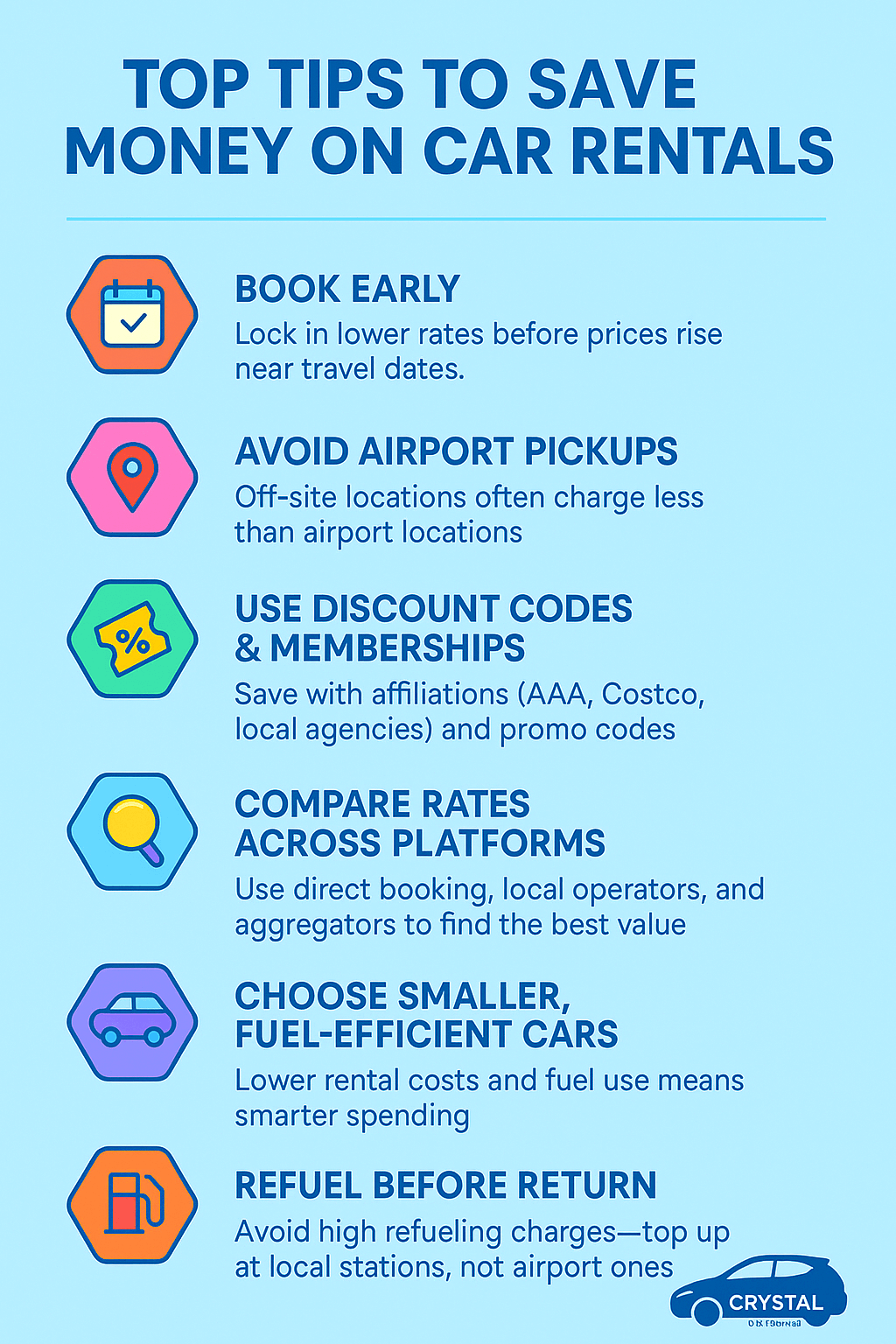
Planning ahead isn’t just about booking your car hire early; it's a strategic move that significantly impacts the cost-effectiveness of your rental. By reserving a vehicle well in advance, I've often locked in lower rates. Rental prices can fluctuate based on demand, and as the pickup date nears, prices tend to increase. Early bookings also provide a wider selection of vehicles, allowing for a choice that better suits budget and needs without having to compromise due to last-minute availability.

Additionally, early planning offers the opportunity to compare prices across different car rental agencies and booking platforms. Using comparison tools, I've saved a notable percentage off the standard rates. Furthermore, this approach gives me ample time to read the fine print of rental agreements, ensuring I fully understand the deal I'm getting into, thus avoiding any surprises.

Hidden Costs in Car Rentals

Understanding the various hidden costs in car rentals has allowed me to save money and avoid budget overruns. These costs can significantly inflate the price of a rental, hence knowing what to look for is key. Insurance, for one, is a major hidden cost. Rental companies often try to upsell additional insurance coverage. However, I've learned to check my existing insurance policies and credit card benefits first, as they sometimes already cover rental cars, negating the need for double coverage.

Another hidden cost is fuel policies. I've found that opting for the 'full to full' fuel policy, where you pick up the car with a full tank and return it full, is often the most economical choice. This way, I avoid the rental company's charges for fuel, which are usually higher than local fuel rates.

Additionally, fees for additional drivers and equipment like GPS or child seats can add up. Whenever possible, I limit added drivers and bring my own equipment, such as using my smartphone for navigation instead of renting a GPS.

By staying informed about these and other potential fees, such as late return charges or toll pass fees, I've been able to make more cost-effective decisions and ensure that my car hire doesn't come with unwelcome surprises.

Infographic- Top tips for car rental

Booking Strategies for Economizing car hiring

After navigating through the initial stages of understanding car hire economics, it's clear that planning and strategic choices play crucial roles in saving money on car rentals. To further economize your car hire, adopting savvy booking strategies is key. My focus now shifts to sharing the practices I've found most effective in minimizing rental costs without compromising on the quality of the rental experience.

Comparing Prices Online

Embarking on the quest to find the best car rental deals, I always start with comparing prices online. This approach has consistently proven itself as a cornerstone in economizing car hires. Various comparison websites serve as platforms where rental companies list their vehicles and rates, providing a comprehensive overview of what's available. By entering details of the desired rental period and location, I can instantly view a range of offers from different agencies. This transparency allows me to identify the most competitive rates and often unveil deals that are exclusive to online bookings. Moreover, I make it a point to visit the official websites of rental agencies, as they sometimes offer lower prices or special promotions not available on comparison sites.

Utilizing Discount Codes and Coupons

Over the years, I've found that leveraging discount codes and coupons is akin to uncovering hidden treasure in the realm of car rental savings. Membership in travel clubs, loyalty programs, or affiliations with certain credit cards and organizations often comes with the perk of discounted car hire rates. Prior to confirming a booking, I dedicate time to searching for applicable discount codes or coupons. Websites that aggregate such discounts and the rental companies' own promotional pages are invaluable resources. Inputting a discount code during the booking process or presenting a coupon at the rental counter can lead to significant savings, making this strategy an indispensable part of my economizing toolkit.

Opting for Economy Models

Choosing economy models is another strategy I employ to ensure my car rentals are both affordable and efficient. Small or compact cars not only come with lower rental rates but also offer benefits like better fuel efficiency and easier navigation, especially in urban settings. This choice does not mean compromising on comfort or safety, as many economy models are well-equipped with modern amenities. By opting for an economy model, I prioritize practicality and savings, ensuring that I only pay for the space and features I truly need.

Incorporating these booking strategies into your car hire process can lead to significant cost savings while still enjoying a reliable and comfortable rental experience. By comparing prices online, utilizing discount codes and coupons, and choosing economy models, I've been able to economize my car hires effectively, ensuring that I get the best value for my money.

Timing Your Rental for Maximum Savings

After navigating the challenges of minimizing rental costs with early bookings and intelligent choices, I find timing your car hire crucial for maximizing savings. Understanding when to rent not only reduces costs but also significantly enhances the rental experience.

Off-Peak Rental Advantages

I've learned that renting during off-peak periods can lead to substantial savings. Car rental companies often lower their prices during times of low demand to attract more customers. For instance, avoiding holidays, major events, or the summer season can result in cheaper rates. Moreover, I've found that weekdays are generally less expensive than weekends due to a decrease in demand. By choosing to rent from Monday to Thursday, I've saved up to 20% compared to weekend rates. It's also beneficial to pick up and drop off the car at the same location to avoid additional fees, making off-peak rentals not only affordable but also convenient.

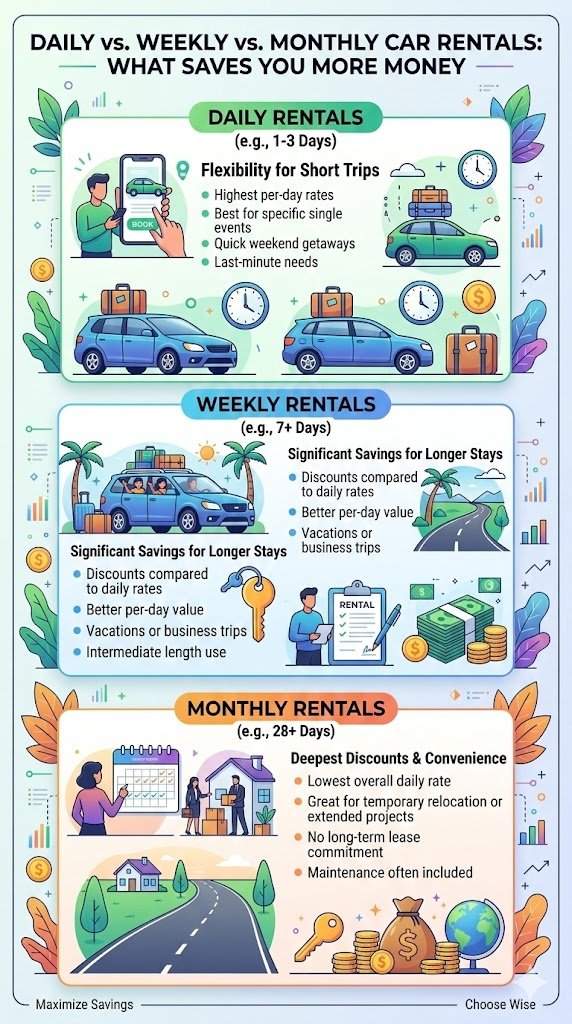
Long-Term vs. Short-Term Car Rentals

Deciding between long-term and short-term rentals presents another opportunity for economizing your car hire. For durations longer than a week, I've noticed that long-term rentals often come with discounted rates. Rental companies prefer longer commitments as it guarantees vehicle usage over an extended period, offering rates that can be significantly lower than the daily price multiplied by the number of rental days. On the other hand, short-term rentals can be sensible for quick trips or when only needing a car for a few days. However, for trips extending beyond a week, I always opt for the long-term option to exploit lower per-day costs. By choosing the right type of rental based on the trip duration, I've effectively managed to reduce overall rental expenses.

Integrating these timing strategies with the insights from advanced booking methods has empowered me to effectively economize my car hires. By carefully planning the rental period and choosing the right duration, significant savings are achievable without compromising on convenience or choice.

Navigating Insurance Options

After mastering the art of securing the best rates and timing for my car hires, I've learned that understanding insurance options is equally crucial in economizing the overall cost. Here, I'll dissect the complexities surrounding car rental insurance, guiding you through deciding on your coverage needs and comparing external insurance with rental company policies. This insight aims to arm you with the necessary knowledge to make informed decisions, potentially saving you a substantial amount of money.

Deciding on Coverage Needs

Determining the exact coverage you need before renting a car is paramount. Many renters, including myself, often overlook this step, either opting for too much insurance or not enough, both of which have their downsides. I found that analyzing my existing car insurance policy was the first step. Many personal auto insurance policies extend some coverage to rental cars, which can save you from purchasing redundant coverage from the rental company.

Next, consider the trip's specifics. For high-risk activities or regions prone to certain hazards, opting for comprehensive coverage makes sense. However, for routine travels, minimal coverage may suffice if it aligns with your risk tolerance and the coverage provided by your credit card company. Credit cards, especially premium travel cards, commonly offer rental car insurance as a benefit, covering anything from collision damage to theft, provided the car hire is charged to the card. Always verify the specifics directly with the card issuer, as coverage varies widely among cards.

External Insurance vs. Rental Company Policies

Comparing external insurance options with those offered by the rental company can unveil opportunities for savings. Rental companies often market their insurance packages with convenience in mind, offering them at the point of hire with a simple sign-up process. However, these policies might come at a premium cost. On the other hand, securing insurance externally, either through a standalone policy from an insurance company or leveraging coverage offered by my credit card, often results in significant savings.

External policies also offer the benefit of customizability. Unlike the one-size-fits-all approach of rental company policies, external insurance allows renters like me to tailor coverage based on specific needs, potentially lowering the cost. Additionally, third-party insurers tend to provide broader coverage options, ranging from liability-only to full comprehensive and collision, giving renters more control over their protection level.

My journey in economizing car hires taught me the importance of meticulously navigating insurance options. By decisively assessing coverage needs and weighing external insurance against rental company policies, you can protect against unexpected expenses, ensuring a cost-efficient and stress-free rental experience.

Additional Tips for Saving on Car Hire

In my quest to uncover the most effective strategies for economizing car hire, I've identified additional tips that further drive down costs. By integrating these into your car rental approach, you can enjoy even more savings.

Refueling the Car Yourself

One straightforward way to save on car hire involves refueling the vehicle yourself before returning it. Rental companies typically charge higher rates for gas compared to local fuel prices. By taking the time to refill the tank at a nearby gas station before drop-off, I've consistently saved a significant amount. It's a simple step that doesn't just cut costs; it also puts you in control of how much you're paying for fuel, rather than being at the mercy of the rental company's rates.

Avoiding Airport Rental Premiums

Another tip I've found particularly effective is bypassing the convenience of airport rentals. Although picking up a car right at the airport might seem like a time-saver, it often comes with a premium due to added fees and higher rates. Instead, I've saved money by choosing rental locations a short distance away from the airport. Public transport or a quick rideshare can get you to these offsite locations where rates are typically more economical. This minor inconvenience can lead to major savings, especially for longer rentals.

Joining Loyalty Programs

Lastly, I cannot overemphasize the benefits of joining car rental loyalty programs. These programs are often free to join and can offer a plethora of savings opportunities, from discounted rates to free upgrades. Over time, points accumulate, leading to even greater rewards. Additionally, membership often includes expedited service options, which can save a lot of time. My experience with these programs has not only made car hire more affordable but also more efficient and enjoyable.

By incorporating these additional tips into your car hire strategy, you'll find that saving money doesn't have to mean sacrificing convenience or comfort. Each of these strategies offers a practical way to cut costs, proving that with a little extra effort and knowledge, economizing your car hire is entirely achievable.

Conclusion

I've shared my journey and the strategies that have worked for me in economizing car hire without sacrificing convenience. From booking early to choosing off-peak times and understanding insurance, these tips are designed to cut costs. Remember, it's about being smart with your choices—opting for economy models, refueling the car yourself, and avoiding airport rentals can make a significant difference. Joining loyalty programs is also a smart move for frequent travelers. Armed with this knowledge, you're now better equipped to save on your next car rental. Let's make savvy renting a habit, ensuring we get the best deals every time we hit the road.

Tips to Save Money on Car Rentals

Dreaming of turquoise waters, lush landscapes, and exotic cuisines but worried about the cost? I've been there. Mauritius, a gem in the Indian Ocean, often seems like a luxury destination out of reach for budget travelers. But I'm here to tell you, it's more accessible than you might think. With a bit of planning and some insider knowledge, visiting Mauritius without breaking the bank is entirely possible.

I've scoured the island, from the bustling markets of Port Louis to the serene beaches of Flic-en-Flac, to bring you the best tips and tricks for experiencing this paradise on a budget. Whether it's finding affordable accommodations, savoring local delicacies without the hefty price tag, or discovering free natural wonders, I've got you covered. Let's dive into how you can make your dream trip to Mauritius a reality, without compromising on the experience.

Understanding the Costs of Traveling to Mauritius

After exploring how Mauritius, despite its reputation as a luxury destination, can be surprisingly accessible for budget travelers, it's important to delve into the specifics of what makes this possible. Knowing the various costs involved in a trip to Mauritius allows for better planning and ensures that the experience remains unforgettable without breaking the bank. I'll break down the major cost categories, including accommodation, transportation, dining, and activities, offering insights into how to effectively manage your budget.

Accommodation Expenses

Finding affordable accommodations is key to visiting Mauritius on a budget. The island offers a range of options, from hostels and guesthouses to budget hotels and Airbnb rentals. Prices for these accommodations vary greatly depending on location, time of year, and amenities offered. On average, budget accommodations can range from $30 to $50 per night. To maximize savings, I recommend booking well in advance, preferring locations slightly off the beaten path, and considering stays with kitchen facilities to reduce dining costs. Also, leveraging online platforms for last-minute deals can sometimes result in significant discounts.

Transportation Costs

Transportation on the island comprises mainly of public buses, taxis, and car rentals. Public buses are the most economical choice, with fares typically under $2 for most routes, offering a great way to experience Mauritius like a local. Taxis, while more comfortable, can be pricey unless you negotiate the fare in advance. For those wanting more flexibility, renting a car can be a cost-effective option, especially for groups or families, with daily rental fees starting from around $30. I also suggest leveraging any free transportation offered by accommodations or exploring the possibility of bike rentals for shorter distances.

Food and Dining Budget

Mauritius is a haven for food lovers, with its mix of Creole, Indian, Chinese, and European influences. Local markets and street food vendors offer delicious meals at a fraction of the cost of dining in tourist-centric restaurants. An average meal at a local eatery might cost between $5 and $10, while street food options are even less, sometimes as low as $2-$3 for dishes like Dholl Puri or Biryani. If you're staying somewhere with cooking facilities, purchasing local produce and seafood from markets can not only save money but also provide a enriching cultural experience.

Activity and Excursion Prices

The good news is that many of Mauritius’s attractions, including its stunning beaches, hikes, and historical sites, are free to explore. However, for certain activities like snorkeling tours, boat excursions, or entrance to national parks, fees apply. Prices vary, but a typical half-day excursion can range from $20 to $50 per person. To save money, consider group offers, package deals, or booking directly with operators. Additionally, many accommodations provide complimentary activities, so check with your hotel or rental for any included experiences.

With strategic planning and an awareness of the costs involved, visiting Mauritius on a budget is entirely feasible. By prioritizing your spending, seeking out local experiences, and making educated choices based on detailed cost insights, you can enjoy all the beauty and culture Mauritius has to offer without overspending.

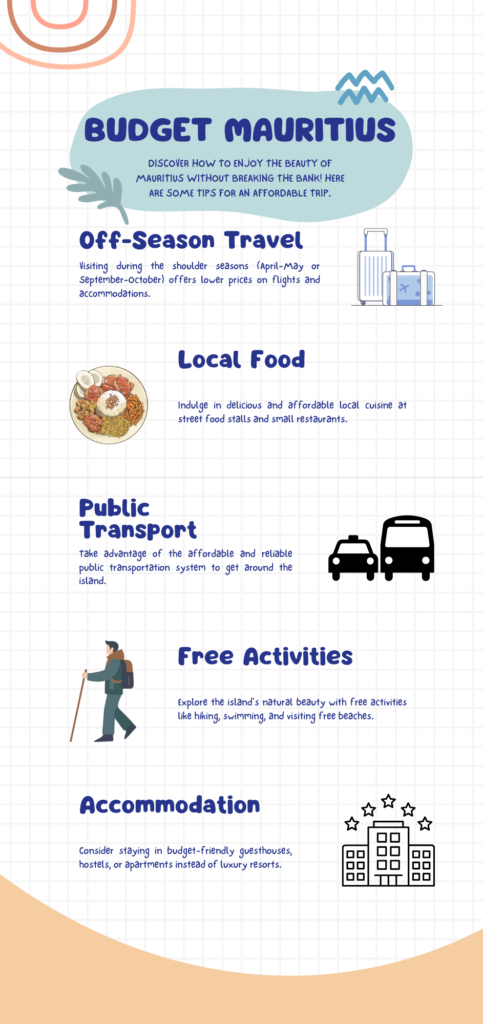
Explore Mauritius on a Budget: Top Tips for an Affordable Trip

Best Time to Visit Mauritius on a Budget

Continuing from my exploration of making Mauritius accessible for budget travelers, finding the right time to visit this island paradise can significantly cut costs. This section delves into the best period to travel to Mauritius without breaking the bank, focusing on off-peak season benefits and weather considerations.


Also read: Useful things to know before you Travel To Mauritius

Off-Peak Season Advantages

Traveling to Mauritius during the off-peak season, primarily between May and September, offers numerous benefits for budget-conscious tourists. Firstly, airfare and accommodation prices tend to drop during these months, making it more affordable to secure flights and places to stay. I've noticed that budget accommodations, which are already competitively priced, become even more economical.

Moreover, exploring Mauritius in the off-peak season means fewer crowds at popular tourist spots. This not only enhances the visitor experience, allowing for a more relaxed exploration of attractions but also increases the likelihood of finding deals and discounts on activities. Many tour operators and attractions offer reduced prices to encourage tourism during these quieter months.

Lastly, the off-peak season is ideal for travelers who prioritize experiencing local life. With fewer tourists around, it's easier to interact with locals, who are usually more available to share insights into their culture and traditions. This immersive experience can be invaluable and comes without the hefty price tag often associated with peak travel times.

Weather Considerations in Mauritius

Understanding Mauritius' weather patterns is crucial for planning a budget-friendly trip. The off-peak season coincides with the Mauritian winter, which, unlike the winter in many other parts of the world, is mild and pleasant. Temperatures during these months average between 17°C and 24°C, making it comfortable for exploring outdoor attractions without the intense heat of the summer months.

However, it's important to note that this period can also see more rainfall, particularly in the central and eastern parts of the island. Packing a lightweight rain jacket and planning indoor activities for rainy days can help ensure that the weather doesn't disrupt your travel plans.

Balancing the advantages of lower costs and fewer tourists with the potential for rain, I've found that visiting Mauritius from May to September strikes the perfect balance for budget travelers. This period allows for enjoying the island's stunning landscapes and vibrant culture without the crowds and high prices of the peak season, provided you're prepared for the occasional shower.

Optimizing the timing of your visit to Mauritius by selecting the off-peak season can enhance your experience while ensuring the trip remains affordable. Remember, the key to a successful budget-friendly holiday lies in strategic planning, including when to visit. By considering both the financial and weather-related aspects, you can make the most of your Mauritian adventure without overspending.

Budget-Friendly Accommodation Options

Visiting Mauritius doesn't have to break the bank, especially when it comes to finding a place to stay. I've discovered some budget-friendly accommodation options that ensure a comfortable stay without stretching your wallet too thin.

Guesthouses and B&Bs

Guesthouses and Bed & Breakfasts (B&Bs) in Mauritius offer a cozy, intimate experience at a fraction of the cost of luxury resorts. I find that these accommodations often include breakfast, providing a great start to your day without the added expense. Many guesthouses and B&Bs are family-run, which means you'll receive personalized attention and invaluable local insights. Locations vary from beachfront to city-center, allowing you to choose based on your interests. By staying in a guesthouse or B&B, I've not only saved money but also immersed myself in the local culture, making my visit to Mauritius more memorable.

Hostels and Dormitories

For solo travelers and backpackers, hostels and dormitories represent the ultimate budget-friendly accommodation in Mauritius. These options allow you to save on lodging so you can allocate more funds toward experiences and activities. Hostels in Mauritius often feature communal kitchens, which means you can prepare your meals and save even more. Additionally, the communal lounges and shared spaces offer fantastic opportunities to meet fellow travelers. From my experience, hostels and dormitories are not just about saving money; they're about building a community. Whether you're in the north near Grand Baie or in the capital, Port Louis, you'll find a hostel that fits your budget and your vibe.

Vacation Rentals

Vacation rentals, such as apartments or villas, present a cost-effective solution for families or groups traveling to Mauritius. Splitting the cost among several people makes these rentals incredibly affordable. Moreover, having your own kitchen can significantly reduce dining expenses since you can cook meals instead of eating out. I've found that vacation rentals offer a level of privacy and comfort that's hard to match, along with the freedom to live like a local. Platforms like Airbnb or Vrbo host a range of listings across Mauritius, from beachside cottages to urban apartments, ensuring that you'll find something within your budget.

By exploring these accommodation options, I've managed to visit Mauritius without overspending. Guesthouses and B&Bs, hostels and dormitories, and vacation rentals each offer unique benefits that cater to different types of travelers, all while keeping costs low. Remember, a trip to Mauritius on a budget doesn't mean compromising on experience; it's about making smart choices that enhance your journey.

Saving on Transportation

In Mauritius, transportation can quickly add up if you're not careful. Thankfully, there are numerous ways to save on transportation without sacrificing the convenience or the joy of exploring everything the island has to offer. Here, I'll dive into some smart choices that can help keep your budget in check.

Public Transport Over Tourist Shuttles

Opting for public transport over tourist shuttles is a cost-effective way to get around Mauritius. Buses in Mauritius are reliable and cover most tourist destinations. They offer an authentic experience of day-to-day life on the island. Fares are significantly lower than what you'd pay for tourist shuttles or private taxis. Moreover, riding the bus provides an opportunity to meet locals and get recommendations that aren't in the travel guides. Just make sure to check the schedules as some routes may have limited services, especially in the evening or on weekends.

Car Rental Tips

Renting a car is a great option for those who value flexibility in their travel plans. To save money, I recommend booking your rental car in advance, as prices tend to be higher if you book upon arrival. Comparing rates from different rental agencies can also lead to significant savings. Look out for rental packages that include insurance, as this can often be an unexpected addition to your budget. Consider fuel efficiency when choosing your car; Mauritius has plenty to explore, and a fuel-efficient vehicle can be kinder to your wallet in the long run.

Walking and Biking Routes

Mauritius is not just about the beaches; it's a place where you can walk or bike through lush landscapes and charming towns. Exploring on foot or by bike is not only free but also allows for a more intimate experience with nature and the culture of this beautiful island. Coastal towns, botanical gardens, and the Mauritian countryside offer safe and scenic routes for bikers and hikers alike. Places like Grande Rivière Noire and Tamarin are perfect for cycling, while the vibrant streets of Port Louis offer an array of sights within walking distance. Always stay hydrated and wear appropriate gear when exploring under the sun.

By following these tips, I've managed to explore Mauritius extensively without straining my budget. With a bit of planning and smart choices, you too can discover the wonders of this island in a cost-effective manner.

Affordable Dining and Local Eats

Embarking on a journey to explore Mauritius doesn't mean you have to spend a fortune to enjoy delicious meals. With a focus on affordable dining and local eats, I'm excited to share some insider tips that will help you savor the flavors of the island without breaking the bank.

Street Food and Markets

Diving into the bustling street food scene is a must for budget-conscious travelers. Mauritius boasts a variety of street food stalls and markets where you can sample local delicacies at a fraction of restaurant prices. Key spots like the Port Louis Central Market offer a range of mouthwatering options, from the famous "dholl puri" to "rotis", providing an authentic taste of Mauritian cuisine for just a few rupees. These dishes not only promise a culinary adventure but also offer the added experience of mingling with locals and soaking in the vibrant atmosphere of Mauritian markets.

Local Restaurants Over Tourist Traps

Opting for local restaurants over tourist traps is another effective way to enjoy affordable yet delicious meals. I've found that eating where the locals eat not only guarantees lower prices but also a more authentic culinary experience. Many local spots serve generous portions of Creole dishes, seafood, and other specialties at a fraction of the cost you'd find in restaurants geared towards tourists. To discover these gems, I recommend asking locals for their recommendations or simply wandering off the beaten path. You'll be surprised at the quality and affordability of meals you can enjoy, allowing you to delve deeper into the island's culture through its cuisine.

Self-Catering to Save Money

For those staying in accommodations with kitchen facilities, self-catering is an excellent way to manage food expenses. Shopping at local supermarkets or open-air markets like the Flacq Market gives you access to fresh produce, meats, and seafood at local prices. Preparing your meals not only saves money but also allows you to experiment with Mauritian recipes, creating a more personalized dining experience. Whether it's a simple breakfast with fresh tropical fruits or a full-fledged dinner featuring local spices and ingredients, self-catering can significantly reduce your dining costs while adding an enriching aspect to your travel experience.

By embracing street food and markets, preferring local restaurants, and considering self-catering options, you can enjoy the culinary delights of Mauritius without straining your budget. These strategies not only ensure a more affordable trip but also foster a deeper connection with the island's culture and local way of life.

Free and Low-Cost Attractions

Moving from savoring Mauritius' local delicacies and embracing the vibrant street food culture to exploring the island's natural beauty and cultural heritage, there are numerous free and low-cost attractions that promise an enriching experience without straining your wallet. I'll guide you through some of the must-visit places where you can soak in the unparalleled beauty of Mauritius, learn about its rich history, and engage in thrilling outdoor activities, all while adhering to a budget.

Beaches and Natural Sights

Mauritius is synonymous with stunning beaches and breathtaking natural sights, many of which are accessible without any entrance fee. One cannot talk about Mauritius without mentioning the pristine beaches such as Flic en Flac, Pereybere, and Mont Choisy. These beaches offer clear, turquoise waters and soft, sandy shores perfect for relaxation, swimming, and snorkeling. Beyond the beaches, the island's natural reserves, like the Black River Gorges National Park, provide free access to scenic viewpoints, waterfalls, and diverse flora and fauna. The park's abundant hiking trails cater to all fitness levels, leading visitors through lush greenery and offering the chance to spot rare birds and plants.

Museums and Cultural Sites

For those intrigued by Mauritius' multifaceted history and culture, several museums and cultural sites offer free or low admission fees. The Blue Penny Museum, located in the capital city of Port Louis, houses rare Mauritian stamps and provides insights into the island's colonial history and cultural diversity for a nominal fee. Another gem is the SSR Botanical Garden in Pamplemousses, one of the oldest botanical gardens in the Southern Hemisphere, where visitors can marvel at giant water lilies and a variety of endemic plants for a small entry charge. These sites not only offer a peek into the island's past but also showcase its commitment to preserving natural beauty and cultural heritage.

Outdoor Activities and Hikes

Mauritius is a paradise for nature enthusiasts and adventure seekers, offering a plethora of outdoor activities and hikes that require minimal to no expenses. The island's rugged terrain and natural landscapes provide the perfect backdrop for hiking and trekking. Trails like the Le Morne Brabant, a UNESCO World Heritage site, offer breathtaking views of the island and the ocean, making the challenging hike worth every step. Similarly, the Tamarin Falls or Seven Cascades, a series of waterfalls in southwest Mauritius, can be explored independently or with a guide for a small fee, providing the opportunity to swim in natural pools and enjoy the serene environment.

By visiting these beaches, museums, cultural sites, and engaging in outdoor activities and hikes, I've discovered that experiencing the best of Mauritius doesn't have to break the bank. These attractions highlight the island's natural wonders, rich history, and vibrant culture, offering budget-conscious travelers an array of options to explore without compromising their experience.

Practical Tips to Keep Expenses Low

Given my experiences and research, navigating Mauritius without blowing your budget is entirely feasible with smart planning and insider tips. From daily budgeting to avoiding unnecessary expenses, I'll unpack proven tactics that ensure a memorable yet affordable Mauritius adventure.

Daily Budget Planning

Sticking to a daily budget is paramount when exploring Mauritius on a budget. Begin by defining how much you're willing to spend each day. This amount should include accommodations, meals, transportation, and a small buffer for miscellaneous expenses. Accommodations and dining at local spots often consume the largest portion of a traveler's budget, but by leveraging tips from earlier sections, such as opting for guesthouses or self-catering units and savoring street food, significant savings can be achieved. When it comes to transportation, consider using public buses or renting a bicycle to navigate the island. Not only are these options cost-effective, but they also offer a deeper immersion into the local lifestyle. Allocating a specific amount daily for activities or attractions ensures you don't miss out on Mauritius's gems while keeping expenses in check. Remember, many of the island’s natural attractions come at no cost.

Avoiding Tourist Traps and Scams

Mauritius, while predominantly safe and welcoming, has its share of tourist traps and scams, just like any popular destination. To keep expenses low, familiarize yourself with common practices designed to overcharge or deceive tourists. For instance, be cautious of unsolicited guides or vendors, especially near popular tourist spots who may charge inflated prices. Research activities and market prices before your trip to have a sense of what you should be paying. Similarly, when booking tours or experiences, do it through reputable agencies or your accommodation to avoid being overcharged. Experiencing the island like a local not only provides an authentic flavor of Mauritius but often leads to encountering fewer tourist traps.

Using Local Currency and Bargaining

In Mauritius, dealing in the local currency (Mauritian Rupee, MUR) tends to be more cost-effective than using foreign currencies or making card payments, which might involve additional fees. Withdraw local currency at ATMs or exchange money at authorized dealers for the best rates. Bargaining is a culture in many local markets and shopping areas, so don't hesitate to negotiate prices, especially for souvenirs or services like taxis, which don't have fixed rates. However, it's crucial to bargain respectfully and recognize when a price is fair, both to ensure savings and to contribute positively to the local economy.

By following these practical tips to keep expenses low, your visit to Mauritius can be both enriching and economical. Engaging with the island’s lifestyle, prioritizing experiences over expenses, and making informed decisions based on the island's norms enable a budget-friendly journey without compromising the essence of Mauritius.

Conclusion

Visiting Mauritius doesn't have to break the bank. With the right strategies in place, I've shown you how to enjoy the island's breathtaking beauty and rich culture without overspending. Remember, the key to a budget-friendly trip lies in smart planning and local immersion. By choosing affordable accommodations, indulging in local cuisine, and embracing free attractions, you're not just saving money; you're experiencing Mauritius like a true local. Staying vigilant against tourist traps and making informed choices about where and how to spend your money will ensure your trip is both memorable and affordable. So pack your bags and get ready to explore Mauritius in a way that's kind to your wallet and enriching for your soul.

mauritius budget friendly trip

When renting a car, having the right payment method can make all the difference. You might be wondering, do you need a credit or debit card to rent a car? Well, I've got the answers for you.

Let's dive into the world of car rentals and explore whether a credit card or a debit card is the way to go. Stick around as I break down the requirements and benefits of each option.

By the end of this article, you'll have a clear understanding of whether you need a credit or debit card to rent a car and be ready to hit the road with confidence.

Understanding Car Rental Payment Methods

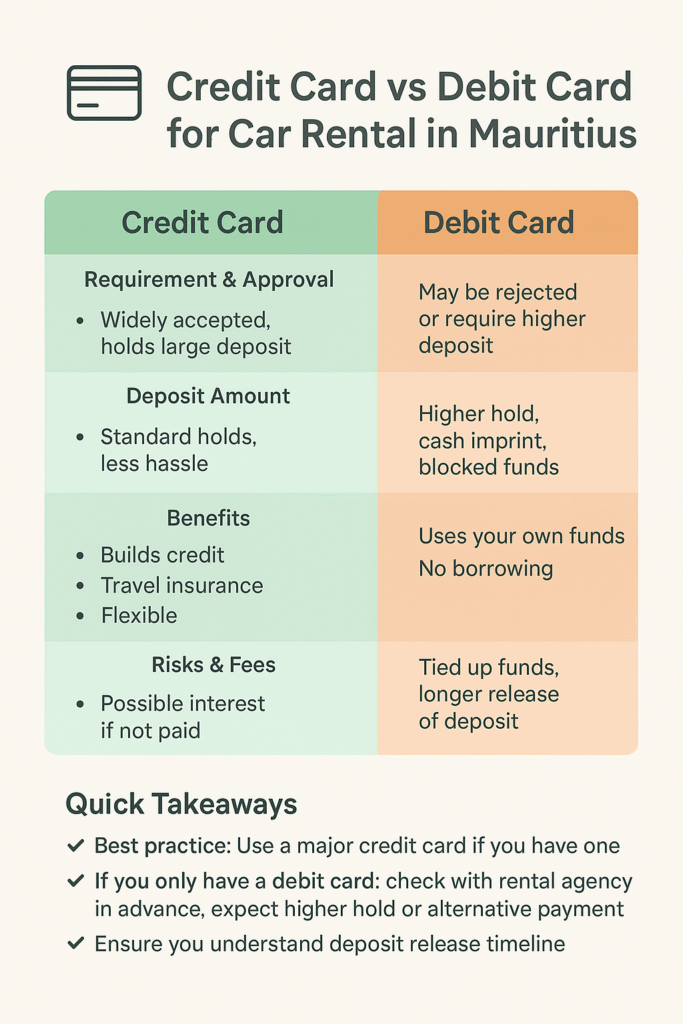
When it comes to car rental payment methods, there are generally two main options: using a credit card or a debit card. Each method has specific requirements and benefits that you should consider before renting a car.

Credit Card Payments

  • Credit cards are the preferred method by many car rental companies due to their added insurance protections and security features.
  • They often require a security hold on the card but provide a buffer for incidental expenses during the rental period.
  • Some premium credit cards also offer additional rental car insurance coverage, rewards, and travel benefits that can enhance your overall rental experience.
  • Make sure to check credit limits and foreign transaction fees if you plan to use a credit card for international car rentals.
  • Some car rental agencies accept debit cards, but they may impose more restrictions and requirements compared to credit cards.
  • Debit card users may face credit checks, minimum age restrictions, or additional deposits to cover potential damages.
  • It's essential to inquire about debit card policies beforehand to avoid any unexpected charges or delays when picking up your rental vehicle.

Understanding the differences between credit card and debit card payments for car rentals can help you make an informed decision based on your financial situation and travel needs.

Pros and Cons of Using a Credit Card

When it comes to renting a car, using a credit card has its advantages and disadvantages. Here's a breakdown of the pros and cons of using a credit card for car rentals:

Pros:

  • Insurance Coverage: Many credit cards offer rental car insurance as a cardholder benefit, providing coverage for damages or theft.
  • Security: Credit cards provide an added layer of security for transactions and often come with fraud protection.
  • Rewards: Some credit cards offer rewards or cash back for car rental purchases, helping you save money or earn points.
  • Security Holds: Rental companies may place a security hold on your credit card, tying up funds until the car is returned.
  • Credit Check: Some agencies require a credit check when using a credit card, which can be a drawback for individuals with less-than-perfect credit.
  • Interest Charges: If the balance is not paid off in full, interest charges may apply, potentially adding to the overall cost of the rental.

Considering these factors can help you determine whether using a credit card is the right choice for your next car rental.

Do You Need A Credit Or Debit Card To Rent A Car

Pros and Cons of Using a Debit Card

Using a debit card for car rentals has its advantages and disadvantages. Let's dive into the pros and cons to help you make an informed decision:

Pros:

  • Convenience: You can easily use your debit card for the transaction without worrying about accumulating credit card debt.
  • No Interest Charges: Since you're using your own money, there's no risk of incurring interest charges on the rental amount.
  • Budget Management: Paying with a debit card can help you stay within your budget as you're spending what you have in your account.
  • Security Holds: Rental car companies may place a hold on funds in your bank account, tying up your money until the hold is released.
  • Limited Protection: Debit cards offer less protection against fraud compared to credit cards, potentially leaving you liable for unauthorized transactions.
  • Credit Checks: Some rental companies may require a credit check when using a debit card, which could impact your credit score.

When deciding whether to use a debit card for your car rental, weigh these pros and cons to determine what aligns best with your financial preferences and needs.

Understanding Car Rental Payment Methods in Mauritius

In Mauritius, the common payment methods for car rentals include credit and debit cards, with a preference for credit cards due to the security and insurance benefits they offer. However, if you don't have access to these payment methods or prefer not to use them, there are alternatives:

Cash Payments

  • Availability: Some local car rental companies in Mauritius may accept cash payments. This option might be more common with smaller, locally owned rental agencies rather than international chains.
  • Security Deposit: If you're paying with cash, be prepared to provide a substantial security deposit upfront. This deposit is used to cover any potential damages during the rental period and is usually refundable upon the car's return without damages.
  • Advance Planning: Not all car rental agencies in Mauritius advertise their acceptance of cash payments online. It may require contacting them directly to inquire about this payment option and any associated conditions.

Prepaid Cards

  • Usage: Prepaid cards are a viable alternative, functioning similarly to debit cards but without being tied to a bank account. Ensure the prepaid card has sufficient funds for both the rental cost and any security deposit required by the rental company.
  • Acceptance: Before opting for a prepaid card, confirm with the rental agency that they accept this form of payment and understand any additional requirements they might have.

Third-Party Payment Services

  • Digital Wallets: Some car rental companies in Mauritius may start accepting digital payments through services like PayPal, Apple Pay, or Google Pay, offering a convenient and secure way to handle the transaction without a physical card.
  • Verification: Check with the rental company in advance to ensure they accept these payment methods and to understand the process involved.

Travel Rewards or Loyalty Points

  • Program Partnerships: If you participate in a travel rewards program or have loyalty points, check if they can be redeemed for car rentals in Mauritius. Some international rental agencies have partnerships with airlines, hotels, and credit card programs that allow you to use points towards rentals.
  • Direct Booking: Often, redeeming rewards or points for a car rental will require booking directly through the loyalty program's website or customer service center, so plan accordingly.

Local Considerations

  • Driving Permit: Ensure that your driver's license is valid in Mauritius. Many car rental companies require an International Driving Permit (IDP) alongside your national driving license, especially if it's not in English or French.
  • Insurance: Investigate whether your chosen payment method or any personal travel insurance policies you hold offer rental car coverage in Mauritius. This coverage is crucial in case of accidents or theft.

Conclusion:

Renting a car in Mauritius without a credit or debit card is possible but requires some preparation and flexibility. Opting for cash payments, using a prepaid card, leveraging third-party payment services, or redeeming travel rewards are all viable methods to secure a rental car on the island. 

Each option comes with its considerations, from ensuring sufficient funds to cover security deposits with cash or prepaid cards to confirming acceptance of digital wallet payments. By planning ahead and communicating directly with the rental agency, you can enjoy the freedom and convenience of exploring Mauritius at your own pace, even without traditional payment methods.

Do You Need A Credit Or Debit Card To Rent A Car

Ever landed in a foreign country and wondered, "Can I rent a car here?" Well, if you're landing at the Mauritius Airport, you're in luck. I've been there, done that, and I'm here to share my experience.

Mauritius Airport, also known as Sir Seewoosagur Ramgoolam International Airport, is well-equipped with a variety of services. Renting a car is one of them. It's an easy and convenient way to explore the beautiful island nation at your own pace.

Whether you're in Mauritius for a business trip or a vacation, having your own ride can make a big difference. In the paragraphs that follow, I'll delve into the process of renting a car at the Mauritius Airport, so you can hit the road as soon as you land.

Renting a Car at Mauritius Airport

Yes, you can rent a car at Mauritius Airport!

This accessibility benefits you tremendously. Upon landing at Sir Seewoosagur Ramgoolam International Airport, you'll find a variety of car rental companies waiting to help you choose the perfect ride. From economy cars to luxury vehicles, there's an array of options to suit your preferences and budget.

My first-hand experience was quite seamless. Immediately after my arrival I spotted several recognized brands like Hertz, Europcar, and locally acclaimed services like Crystal Car Rental and Pingouin Car Rental. Each offers their own unique features and benefits, from competitive pricing to the variety to the quality of cars.

Here's a quick breakdown:

CompanyProsCons
HertzWide range of vehiclesHigher rates
EuropcarAffordable pricingLimited luxury options
Crystal Car RentalGreat customer serviceLesser known brand
Pingouin Car RentalMany new carsHigh deposit

Don't just settle on the first car rental service you see. It's advisable to do some online research before your trip. Check out reviews and ratings for a clearer picture of what to expect.

Rental documents are easy to take care of at the time of hiring. You'll need a valid driver's license and credit card. Some companies may have additional requirements but they don't pose any significant inconvenience. I found it very straightforward: choose a car, complete the paperwork, and start your journey.

Renting a car at Mauritius Airport is not just about the ease of mobility, it's also about comfort and flexibility. Whether you're conducting business meetings around the island or simply exploring the charms of this tropical paradise at your own pace, having your own vehicle can liberate you from waiting for public transport or paying the often exorbitant taxi fares.

Let's remember: the joy of travelling also resides in your capability to control and customize your journey on the go. And renting a car is a sure-fire way to achieve this.

Availability of Rental Companies at Mauritius Airport

Factors to Consider

When you land at Mauritius airport, you'll have a multitude of car rental services to choose from. The companies that are available right at the airport include Hertz, Europcar, Maki Car Rental, and Pingouin Car Rental. Each of these businesses offers a different experience, so it's crucial to perform a thorough online search before settling on one. Look for a company that suits your needs and travel plans, whether you're in Mauritius for a business trip or a vacation.

Types of Cars Available

The variety of cars available for rent also plays a significant role in your choice. Depending on the company, you might find a selection that ranges from economy and compact cars to luxury cars and SUVs. If you're planning to navigate the winding roads in the mountainous areas, you might want to opt for an SUV. On the other hand, if you're mainly going to be in the city, a compact car might suit your needs just fine. Knowing what each rental agency has to offer can save you both time and inconvenience.

Rental Costs

Finally, consider the cost of the rental. Each company will have its pricing structure, and charges will vary depending on the time of year, the type of vehicle, and the length of the rental period. It's important to ask about any additional costs, like insurance or late return fees, so you don't run into any surprises. Consider using an online comparison tool to get a sense of the range of prices and to find a deal that works within your budget.

Over and above, renting a car in Mauritius Airport can prove convenient, granting the comfort and the flexibility of exploring the island at your own pace, noting that it only requires a simple process of presenting a valid driver's license and credit card.

Booking Process

Having recognized what to deliberate when selecting a car rental service and the convenience of doing so directly at Mauritius airport, it's time to unpack the booking process. From online reservations to in-person arrangements, I'll walk you through how straightforward and flexible this process can be.

Online Reservation

In the digital age we live in, it’s no surprise that most car rental companies have transitioned online. They offer accessible interfaces, where users can browse available cars based on their requirements and budget. Online reservations are an excellent way to secure your preferred vehicle well in advance of your trip.

To book a car rental online, you'll need to visit the chosen company's website. Here, you'll be asked for information, such as pickup and drop-off dates, preferred car type, and personal details. After you've completed these steps, you'll proceed to the payment section where you'll provide your credit card details.

Most companies will send a confirmation email or SMS with all the booking information. Make sure to keep this confirmation safe. It's proof of your booking and also contains essential information like the company's contact details and terms of the rental.

It's always a good practice to double-check the cancellation policy before finalizing the booking. Some companies offer free cancellation within a certain time-frame, which could be beneficial if your travel plans change.

In-Person Arrangements

For those who'd prefer making arrangements after arrival, many car rental services at Mauritius airport also accept in-person bookings. These rental companies maintain counters in the arrivals hall, well-marked and staffed with approachable representatives ready to assist you.

Once you've selected your car type and agreed on the price, you'll provide your driver's license and credit card for the security deposit. After these steps, you'll be on your way to exploring Mauritius at your own pace.

It's worth noting that in-person bookings might not offer as much choice in terms of car variety, especially during peak seasons when demand is high. Booking in advance online could save you from encountering this obstacle.

Benefits of Renting a Car

After understanding the initial process and options, it's useful to discuss the advantages that come with a car rental. Behind every decision, there must be worthwhile benefits. In this case, the freedom of mobility and convenience certainly tip the scales in favor of renting a car at the Mauritius airport. Let's delve into the specifics.

Flexibility in Travel

Anyone who's traveled before knows that schedules are almost always unpredictable. Flights get delayed, weather happens, plans change, and these disruptions can turn your trip upside down. With a rented car, you sidestep some of these potential hurdles by having full control over your mobility. Flexibility and independence become your travel companions.

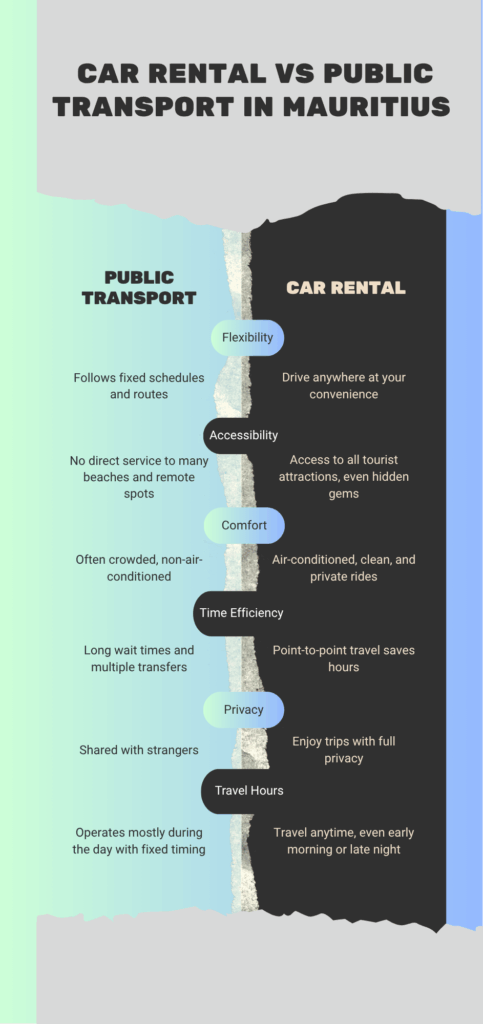
With your own vehicle, you're not tied down to the timetable of public transportation or at the mercy of taxi availability. Want to leave early to beat the morning traffic? Or perhaps you fancy the idea of a late-night drive along the coast? Maybe it's a spontaneous detour to a nearby point of interest that wasn't in the original schedule? With a rented car, you have the flexibility to make these choices without fuss.

Convenience in Exploring

And speaking of going off the beaten track, imagine not jostling in a crowded bus or waiting out a long taxi queue. Whether you're headed to the lively marketplaces of Port Louis or the pristine beaches of Flic en Flac, the convenience of a personal vehicle simply cannot be overstated.

Believe me, with a car rental, you'll find it easier to discover and experience everything Mauritius has to offer, at your own pace and leisure. It also provides the freedom to make on-the-go adjustments to your itinerary, such as deciding to visit the impressive Botanical Gardens on a whim, or when you come to know about the less explored beautiful coral reefs, you can just drive and reach there.

Renting a car also means no more lugging around your belongings on foot or worrying about leaving something behind in a taxi. Everything you need can travel with you. To sum up, convenience makes one's journey truly enjoyable and stress-free and that is what a vacation in Mauritius should be all about.

Conclusion

Renting a car at Mauritius Airport is indeed a game-changer. It's a ticket to freedom and flexibility while exploring the island. With the ease of booking, you can kick off your journey stress-free. You're not bound by public transport schedules or crowded spaces. It's all about you, your pace, and your spontaneous detours. You've got the convenience of carrying your belongings without hassle. So why wait? Make the most of your Mauritius adventure with a rented car right from the airport. It's an experience that's worth every penny.

1. How do I book a car rental at Mauritius Airport?

You can book a car rental at Mauritius Airport either online before your trip or at the car rental desk upon arrival. Online booking tends to offer better rates and ensures vehicle availability.

2. Why should I consider renting a car in Mauritius?

Renting a car in Mauritius gives you the freedom and flexibility to explore the island at your own pace. It eliminates dependence on public transportation schedules, allows for spontaneous detours, and provides easier transport for your belongings.

3. Is renting a car a convenient way to travel in Mauritius?

Yes, renting a car in Mauritius is a convenient way to travel. It allows you to avoid crowded public transportation and enhances your overall travel experience, giving you the independence to make your journey as you please.

4. Is renting a car a stress-free way to travel?

Absolutely! Renting a car alleviates the need to adhere to preset transportation schedules, providing a stress-free way to travel and discover all that Mauritius has to offer at your leisure.

5. What are the advantages of renting a car at Mauritius Airport?

Renting a car at Mauritius Airport saves you time by eliminating the need to wait for public transportation or a taxi. You have the immediate convenience of hopping into your pre-booked vehicle and starting your journey.

Rent A Car At The Mauritius Airport

Thinking about exploring Mauritius? Wondering if it's worth renting a car? Well, I've got you covered! As someone who has navigated the picturesque roads of Mauritius, I'll share my insights on whether hiring a car is the way to go for your island adventure.
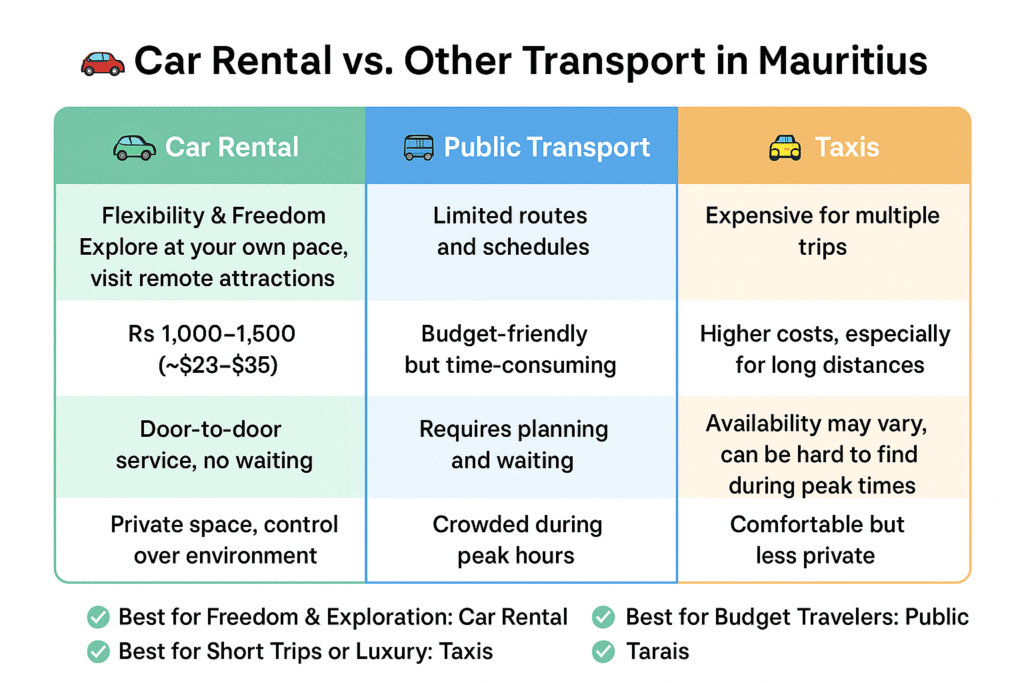
From cruising along the stunning coastal roads to venturing into the lush interior, having a car in Mauritius opens up a world of possibilities. But is it truly worth it? In this article, I'll delve into the perks and drawbacks of renting a car on this tropical paradise, helping you make an informed decision for your travels.

Join me as I break down the cost-effectiveness, flexibility, and overall convenience of renting a car in Mauritius. Whether you're a solo traveler seeking freedom or a family looking for ease of exploration, I'll provide you with valuable tips to make the most of your journey.

Pros of Renting a Car in Mauritius

Renting a car in Mauritius offers freedom and flexibility to explore the island at my own pace. I can easily cruise along coastal roads and venture into the lush interior without being constrained by public transport schedules.

One of the key benefits of having a car in Mauritius is the convenience it provides. I don't have to rely on taxis or buses, and I can visit attractions off the beaten path that may not be easily accessible by other means of transportation.

Having a rental car also gives me the opportunity to discover hidden gems and local spots that are not crowded with tourists. I can explore remote beaches, quaint villages, and scenic viewpoints that can make my trip truly memorable.

In addition, renting a car in Mauritius can be cost-effective, especially for longer stays or for those traveling with a group. I can save money on transportation costs and have the freedom to tailor my itinerary according to my preferences.

Moreover, driving in Mauritius is relatively easy as the road signs are in English and navigation is straightforward with the help of GPS or maps. This makes it convenient to navigate around the island and ensures that I make the most of my time exploring all that Mauritius has to offer.

Stunning Road Trip Routes in Mauritius

When it comes to exploring Mauritius by car, there are some truly breathtaking road trip routes that showcase the island's natural beauty and cultural richness. Here are a few must-visit road trip routes that will surely enhance your experience:

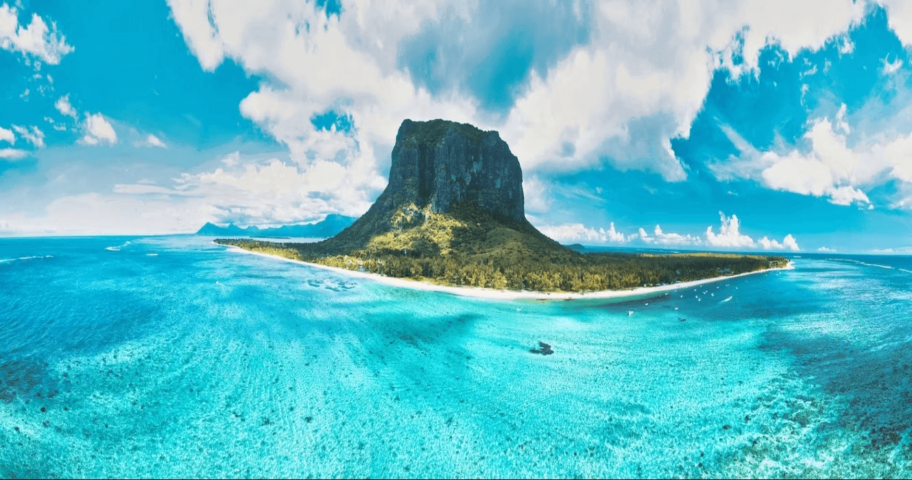
  • Coastal Road from Flic en Flac to Le Morne: This picturesque route offers stunning views of the Indian Ocean on one side and lush green sugarcane fields on the other. Driving along this coastal road allows you to witness beautiful beaches, charming villages, and the iconic Le Morne Brabant mountain.
  • Chamarel Loop Road: Embark on a journey through the Chamarel Loop Road, where you'll encounter the unique Seven Colored Earths and Chamarel Waterfall. The road meanders through rolling hills, dense forests, and volcanic landscapes, providing a visual feast for nature lovers.
  • Scenic Drive to Black River Gorges National Park: Take a drive to the Black River Gorges National Park, a haven for hikers and nature enthusiasts. The road leading to the park offers panoramic viewpoints, endemic flora and fauna, and invigorating hiking trails through pristine forests.
  • East Coast Road from Mahebourg to Trou d'Eau Douce: Explore the enchanting east coast of Mauritius by driving along this coastal road. Admire the azure waters of the Indian Ocean, picturesque fishing villages, and the famous Ile aux Cerfs island. Don't miss the chance to stop at local eateries for authentic Mauritian cuisine along the way.

Embarking on a road trip in Mauritius allows you to discover hidden gems, immerse yourself in the local culture, and create unforgettable memories. Whether you're a nature lover, adventure seeker, or simply looking to relax, these road trip routes will undoubtedly elevate your Mauritius experience.

Renting a Car vs. Other Transport Options

Cost Comparison: Renting a Car vs. Other Transport Options

When considering whether to hire a car in Mauritius, one crucial factor to weigh is the cost comparison between renting a car and utilizing other transport options. Here's a breakdown to help you decide:

Renting a Car:

  • Flexibility: With a rental car, I have the freedom to explore hidden gems off the beaten path.
  • Convenience: I can visit attractions at my own pace and timing, without being dependent on public transport schedules.
  • Cost-Effective for Groups: Splitting the rental cost among travel companions can make it a budget-friendly option.

Public Transport:

  • Affordability: Public buses in Mauritius are relatively inexpensive for budget-conscious travelers.
  • Limited Coverage: Public transport may not reach all areas, restricting access to some remote or less touristy locations.
  • Scheduled Timings: I'd need to plan activities around bus timetables, which might not align with my desired itinerary.

Taxis:

  • Convenience, but at a Cost: Taxis are readily available and provide door-to-door service, ideal for short distances or late-night travel.
  • Expense: Taxis can be expensive for long-distance travel or daily use, potentially adding up to a significant amount over the trip duration.

Summary:

Considering the cost comparison between renting a car, utilizing public transport, or relying on taxis in Mauritius is essential in making an informed decision based on your travel preferences and budget constraints.

Tips for Renting a Car in Mauritius

Renting a car in Mauritius can be a great choice for exploring the island at your own pace. Here are some tips to make the most of your car rental experience:

  • Book in Advance: Securing your rental car ahead of time can often lead to better deals and availability.
  • Compare Prices: Take the time to compare prices from different car rental companies to find the most competitive rates.
  • Check for Insurance Coverage: Ensure that the rental agreement includes adequate insurance coverage to avoid any unexpected costs in case of an accident or damage.
  • Understand the Rental Agreement: Carefully read through the terms and conditions of the rental agreement to be aware of any additional fees or restrictions.
  • Consider Fuel Policy: Some car rental companies have different fuel policies, so be clear on whether you need to return the car with a full tank or not.
  • Inspect the Car: Before driving off, inspect the car for any pre-existing damage and make sure it is in good condition to avoid disputes upon return.
  • Stay on the Left: Remember that driving in Mauritius follows the left-hand side of the road, so keep this in mind while navigating the island.
  • Explore Off the Beaten Path: Having a rental car gives you the freedom to explore lesser-known spots and hidden gems around Mauritius.
  • Plan Your Itinerary: Plan your routes and destinations in advance to make the most of your time with the rental car and see as much of the island as possible.

Renting a car in Mauritius can truly enhance your travel experience, providing you with the flexibility and autonomy to discover this beautiful destination on your terms.

Worried About Which Car Rental to Choose??? We have Got You covered : Crystal Car Rental Mauritius

offers the best deals within your budget and top-notch services. Book now and experience a hassle-free rental experience

Conclusion

Renting a car in Mauritius is a fantastic way to enhance your travel experience. By following these tips, you can ensure a smooth and enjoyable journey. Booking in advance, comparing prices, and understanding rental agreements are key. Don't forget to check insurance coverage, inspect the car, and consider fuel policies. 

Driving on the left side of the road may take some getting used to, but it's worth it for the freedom to explore off the beaten path. With your own wheels, you can create unforgettable memories and make the most of your time on this beautiful island.

Hiring A Car

Planning a getaway and wondering about car rental costs for a week or a month? I've got you covered! Renting a car can be a convenient and cost-effective way to explore a new destination without the hassle of public transportation schedules. In this article, I'll break down the factors that influence car rental prices and help you budget for your upcoming trip.

Whether you're looking for a short-term rental for a week-long road trip or need a vehicle for an extended stay, understanding the pricing structure is key to making an informed decision. From daily rates to insurance coverage and additional fees, I'll share insider tips on how to find the best deals and save money on your next car rental. Get ready to hit the road with confidence and clarity on what to expect when renting a car for a week or a month.

Understanding Car Rental in Mauritius

Mauritius is a popular tourist destination, known for its beautiful beaches, lagoons, and reefs. Renting a car in Mauritius can offer you the flexibility to explore the island at your own pace, from the bustling capital of Port Louis to the serene beaches of Flic-en-Flac and the scenic routes of the Black River Gorges National Park.

Factors Affecting Car Rental Prices in Mauritius

  • Rental Duration: As with other locations, longer rentals in Mauritius usually mean lower daily rates. However, given the island's size, you might not need a long-term rental to explore extensively.
  • Car Type: In Mauritius, compact cars might be more convenient for navigating narrow roads, especially in rural areas. SUVs or larger vehicles may be preferable if you're traveling with family or planning to explore mountainous terrains.
  • Seasonality: Mauritius has a tropical climate with a peak tourist season from October to April. Car rental prices may be higher during this period, especially around December and January. Consider renting outside these months for better deals.
  • Location: Picking up your rental car at Sir Seewoosagur Ramgoolam International Airport might be more expensive than other locations. Look into renting from a location in the city for potentially lower rates.
Planning for Long term car rental during your Mauritius trip : Crystal car rental would be best fit for your Long term car rental needs

Daily Rates vs. Monthly Rates

When comparing daily rates to monthly rates for car rentals, it's essential to understand the cost-saving benefits that come with each option.

  • Daily Rates:
  • Typically, daily rates are higher compared to monthly rates due to the shorter rental period.
  • They are ideal for short trips or weekend getaways when you only need a car for a few days.
  • Keep in mind that renting a car for multiple days under daily rates could add up quickly.
  • Monthly rates are often much lower on a per-day basis compared to daily rates.
  • If you require a car for an extended period, opting for a monthly rate can result in significant savings.
  • This option is great for long-term rentals, such as when you need a vehicle for a month or more.

When deciding between daily and monthly rates, consider the duration of your rental needs. If you need a car for a week or less, daily rates may be more cost-effective. However, if you're planning a month-long excursion or require a vehicle for an extended period, monthly rates can offer substantial discounts.

Overall, understanding the differences between daily and monthly rates can help you choose the most economical option based on your specific rental requirements. By weighing the benefits of each rate structure, you can make an informed decision that aligns with both your budget and travel plans.

Understanding Insurance Coverage in Mauritius

When renting a car for a week or a month, insurance coverage is a crucial aspect to consider for a worry-free experience. Here's what I've learned about different insurance options:

  • Mauritian Law Requirements: Ensure that the rental car has at least third-party liability insurance, which is mandatory. Comprehensive coverage is recommended for peace of mind.
  • Personal Accident Insurance: This might be more relevant if you're engaging in outdoor activities around the island and wish to have extra coverage.
  • Liability Insurance: Liability insurance covers damages to other vehicles or property in case you're at fault in an accident. It's a critical coverage to protect your finances.
  • Personal Effects Coverage: This optional coverage insures personal belongings in the rental car. It's beneficial for safeguarding valuable items during your trip.

Understanding the insurance coverage options when renting a car for a week or a month can help you make an informed decision and ensure you have the necessary protection throughout your rental period.

Additional Fees to Consider

When planning to rent a car for a week or a month, it's vital to budget for additional fees that may come up during your rental period. Here are some common extra costs to keep in mind:

  • Taxes and Fees: Be prepared for taxes and surcharge fees that may not be included in the initial rental price.
  • Additional Driver: Adding an extra driver to the rental agreement can incur a daily fee. Check the terms and conditions of your rental agreement for details.
  • Young Driver Surcharge: If you are under a certain age, there may be a young driver surcharge applied to your rental.
  • Late Return Fees: Returning the car later than the agreed-upon time can result in late fees. Make sure to clarify the return policy with the rental company.
  • Fuel Charges: Ensure you understand the fuel policy of the rental company. You may need to return the car with a full tank to avoid extra charges.
  • Upgrades and Extras: Opting for upgrades like a GPS or car seat, or adding insurance coverage, could incur additional fees. Consider these add-ons carefully.

Remember, being aware of these potential extra costs and factoring them into your budget will help you avoid any surprises and enjoy a smooth rental experience.

Insider Tips for Finding the Best Deals

When looking to rent a car for a week or a month, it's crucial to compare prices from various rental companies. Here are some insider tips that can help you find the best deals:

  • Book in advance: Planning ahead and making reservations early can often lead to lower rates.
  • Consider off-airport locations: Renting from a location outside the airport can sometimes be more budget-friendly.
  • Be flexible with your pickup and drop-off times: Prices may vary depending on the time of day, so adjusting your schedule slightly can result in cost savings.
  • Look for discounts: Check for any memberships or affiliations you have that offer rental car discounts, such as through AAA or Costco.
  • Opt for smaller or local rental companies: They may offer competitive rates compared to larger chain companies.
  • Utilize price comparison websites: Online platforms can help you quickly compare prices across multiple rental companies.
  • Avoid prepaid gas options: It's often cheaper to fill up the tank yourself before returning the vehicle.
  • Check for hidden fees: Be aware of any additional charges, such as insurance upgrades or added features, that can significantly increase the total cost.

By keeping these insider tips in mind, you can maximize your savings and secure the best deal when renting a car for a week or a month.

Conclusion

Renting a car in Mauritius requires a bit of planning and awareness of local conditions. By considering the factors specific to Mauritius, such as seasonal variations, car types suitable for local roads, and insurance requirements, you can enjoy a hassle-free and flexible travel experience on the island. Remember to book early, especially during peak tourist seasons, and consider both international and local rental companies to find the best deal that suits your needs and budget. With these insights, you're ready to explore the beautiful island of Mauritius at your own pace.

Long term car rental

Planning a trip to Mauritius and wondering if it's safe to hire a car? Well, I've got you covered! As an experienced traveler, I've explored the ins and outs of car rentals in Mauritius to help you make an informed decision.

Driving in a foreign country can be daunting, but fear not! In this article, I'll share my insights on the safety of hiring a car in Mauritius, including tips on road conditions, local driving habits, and essential precautions to ensure a smooth and secure journey.

Whether you're a solo adventurer or traveling with family, knowing the dos and don'ts of renting a car in Mauritius is crucial for a memorable and worry-free experience. So, sit back, relax, and let me guide you through everything you need to know about hitting the road on this beautiful island paradise.

Understanding Road Safety in Mauritius to rent a car

Driving in Mauritius can be a delightful experience, but it's essential to be aware of the road safety conditions to ensure a smooth journey. Here are some key points to consider:

  • Driving side: In Mauritius, we drive on the left-hand side of the road. This is important to remember, especially for travelers coming from countries where driving on the right is the norm.
  • Road conditions: The road infrastructure in Mauritius is generally well-maintained, with paved roads covering almost the entire island. However, some rural areas may have narrower roads, so it's crucial to drive cautiously, especially on winding coastal routes.
  • Traffic congestion: The main cities and tourist areas in Mauritius can experience heavy traffic, particularly during rush hours. Planning your journeys to avoid peak times can help you navigate the roads more efficiently.
  • Local driving habits: Mauritians are generally courteous and patient drivers. However, it's not uncommon to encounter aggressive driving behavior, especially in urban areas. Stay alert and drive defensively to ensure your safety on the road.
  • Speed limits: The speed limits in Mauritius are as follows:
Speed LimitDescription
60 km/hBuilt-up areas
80 km/hOutside built-up areas
110 km/hMotorways
  • Seat belts: It's mandatory for all passengers to wear seat belts while the vehicle is in motion. Ensure that everyone in the car is buckled up for a safer journey.

Remember, being informed about the road safety regulations and driving conditions in Mauritius is key to enjoying your car rental experience on this picturesque island. Drive safely and enjoy the scenic routes Mauritius has to offer.

Pros and Cons of Renting a Car in Mauritius

Renting a car in Mauritius can offer both advantages and challenges. As someone exploring the island, it's essential to weigh the pros and cons before making this decision.

Pros:

  • Flexibility: Having a rental car gives me the freedom to explore the island at my own pace and visit remote attractions off the beaten path.
  • Convenience: With my own vehicle, I can easily reach destinations like national parks, pristine beaches, and charming villages.
  • Comfort: Renting a car provides me with a more comfortable and personalized travel experience, especially when compared to public transportation.
  • Independence: I can customize my itinerary and schedule, making it easier to fit in all the sights I want to see.
  • Traffic: Navigating through urban areas can be challenging due to congestion, especially during peak hours in cities like Port Louis.
  • Driving Laws: Adhering to local traffic regulations may require extra attention, such as driving on the left side of the road.
  • Parking: Finding parking spots, especially in crowded areas, can be time-consuming and sometimes expensive.
  • Cost: While renting a car provides convenience, it also comes with expenses such as fuel, insurance, and rental fees.

When deciding whether to rent a car in Mauritius, it's crucial to consider these pros and cons to make an informed choice based on your travel preferences and itinerary.

Tips for Safe Driving in Mauritius

Driving in Mauritius can be a delightful experience if you prioritize safety. Here are some essential tips to ensure a smooth and secure journey:

  • Familiarize yourself with the local road rules and signs before hitting the road.
  • Keep a safe distance from other vehicles to prevent accidents, especially in heavy traffic areas.
  • Drive defensively to anticipate and avoid potential hazards on the road.
  • Avoid distractions such as using mobile phones while driving to stay focused on the road ahead.
  • Buckle up and make sure all passengers are wearing seat belts for added safety.
  • Adhere to speed limits to maintain control of the vehicle and prevent accidents.
  • Be cautious when driving at night, as visibility can be reduced on some roads.

By following these simple guidelines, you can enjoy a safe and pleasant driving experience in Mauritius.

Precautions and Safety Measures

When hiring a car in Mauritius, safety should always be a top priority. To ensure a smooth and secure experience on the road, here are some essential precautions and safety measures to keep in mind:

  • Check the condition of the car: Before embarking on your journey, it's crucial to inspect the vehicle for any damages or issues that could affect your drive.
  • Wear seat belts at all times: Seat belts are not just a legal requirement in Mauritius, but they also play a vital role in keeping you safe in case of an accident.
  • Avoid driving at night: While it's tempting to explore the island after dark, it's best to limit your driving to daylight hours to prevent potential road hazards.
  • Stay aware of local driving habits: Familiarize yourself with how locals drive to anticipate their actions and react accordingly.
  • Be cautious on narrow roads: Mauritius is known for its winding and narrow roads, so proceed with caution and be prepared to give way to oncoming traffic.

By following these precautions and safety measures, you can enjoy a worry-free driving experience in Mauritius while exploring all the beauty the island has to offer.

Conclusion

Renting a car in Mauritius can be a convenient way to explore the island, but it's essential to prioritize safety. By taking necessary precautions like checking the car's condition, wearing seat belts, and being mindful of local driving customs, travelers can enhance their overall experience. 

Remember, safety should always be the top priority when driving in a new destination like Mauritius. With proper preparation and awareness, you can enjoy the freedom of exploring the beautiful sights and attractions without compromising on safety. Drive safely and make the most of your journey in Mauritius!

Hire A Car

When renting a car, you might wonder, "Do I need insurance?" Well, I'm here to clear that up for you.

Insurance when renting a car can be a bit confusing, but I've got you covered with all the essential information you need to know.

Let's dive into the details of whether insurance is a must-have when you're looking to rent a car.

Considerations for Renting a Car Without Insurance

Understanding Rental Car Insurance Options

When it comes to renting a car without insurance, it's crucial to understand your options. Rental car companies typically offer different types of coverage, such as Collision Damage Waiver (CDW), Liability Insurance, and Personal Accident Insurance. Choosing not to opt for insurance means you could be held financially responsible for damages or injuries in case of an accident.

Risks of Driving Without Insurance

Driving without insurance while renting a car can leave you exposed to significant risks. If you're involved in an accident without insurance, you may have to pay for damages to the rental car, medical expenses, and even legal fees out of your pocket. It's essential to weigh the potential costs against the price of purchasing insurance from the rental company.

Types of Insurance Coverage for Rental Cars

Collision Damage Waiver (CDW)

When renting a car, one common type of insurance coverage is the Collision Damage Waiver (CDW). This option typically covers damage to the rental vehicle in case of a collision. Keep in mind that CDW may not cover all types of damage, so it's important to read the fine print of the policy.

Supplemental Liability Insurance (SLI)

Another important insurance coverage to consider is Supplemental Liability Insurance (SLI). SLI provides protection in case you cause an accident and the costs exceed the limits of the basic liability coverage included in your rental agreement. This additional coverage can help protect you from significant financial liabilities.

Personal Effects Coverage

For added peace of mind, some rental car companies offer Personal Effects Coverage. This type of insurance can help cover the cost of personal belongings that are stolen from the rental vehicle. It's important to assess the value of your belongings before deciding if this coverage is necessary for your rental car during travelling.

Tips for Saving Money on Rental Car Insurance

When it comes to rental car insurance, there are ways to save money without sacrificing coverage. Here are some tips to help you navigate the options:

  • Review your existing car insurance policy to see if it includes coverage for rental cars. You might already be covered.
  • Consider opting out of insurance coverage offered by the rental agency if you have coverage through your credit card. Many credit cards provide rental car insurance as a benefit.
  • Shop around and compare prices from different insurance providers. Sometimes purchasing a separate policy can be more cost-effective than relying on the rental agency's coverage.
  • Avoid duplicating coverage. Before purchasing insurance, make sure you are not already covered through another source.
  • Ask about discounts. Some rental agencies or insurance providers offer discounts for certain memberships or affiliations.
  • Opt for higher deductibles. Choosing a higher deductible can lower your insurance premium, but be prepared to pay more out of pocket if you need to make a claim.
  • Be mindful of add-ons. While additional coverage can offer peace of mind, it can also significantly increase the overall cost. Evaluate your needs to determine if the extras are truly necessary.

By following these tips, you can make an informed decision about rental car insurance and potentially save money in the process, On the other hand you can check out Crystal car rental Insurance policy where they " Do Not Charge Any Upfront Deposit" for insurance coverage.

Conclusion

After exploring various ways to save money on car insurance, it's clear that being proactive and informed can lead to significant cost savings. By leveraging existing insurance coverage, understanding credit card benefits, and comparing prices diligently, individuals can make smart choices when renting a car. Remember to inquire about discounts, consider higher deductibles for lower premiums, and avoid unnecessary add-ons to keep costs in check. With these strategies in mind, renting a car can be a more affordable and hassle-free experience. Make sure to assess your needs and options carefully to make the most cost-effective decision when it comes to rental car insurance.

Frequently Asked Questions
What should I consider when looking to save money on rental car insurance?

When looking to save money on rental car insurance, consider reviewing your existing car insurance policies to understand what coverage you already have. Additionally, explore any benefits provided by your credit card that may include rental car insurance coverage. Comparing prices from different insurance providers can help you secure the best deal. Avoiding duplicate coverage, asking about discounts, opting for higher deductibles, and carefully evaluating add-ons are also recommended strategies to save money on rental car insurance.

rental car insurance

When renting a car, it's essential to have the right documentation ready. I'll guide you through the must have things for a smooth rental experience. From a valid driver's license to a major credit card, I'll cover all the essentials.

Having a valid driver's license is non-negotiable when renting a car. I'll share tips on what to look out for to ensure your license meets the rental company's requirements. Stay tuned for expert advice on navigating this crucial step effortlessly.

Understanding Rental Car Requirements

When renting a car, it's vital to understand the requirements set by rental companies. Here are key points to keep in mind:

  • Driver's License: A valid driver's license is a must. Make sure you have yours with you and that it's current.
  • Minimum Age: Most rental companies require drivers to be at least 25 years old. Some may allow younger drivers for an additional fee.
  • Credit Card: Having a credit card in your name is often mandatory. It serves as a form of security for the rental company.
  • Insurance: Insurance coverage for the rental vehicle is important. Check if your personal insurance or credit card offers sufficient coverage.
  • Additional Drivers: If you plan to have more than one driver, they usually need to be listed on the rental agreement.
  • International Travelers: For foreign travelers, an international driver's permit may be required in addition to your native driver's license.
  • Reservations: It's advisable to make reservations in advance to ensure the availability of the vehicle type you need.
  • Return Conditions: Familiarize yourself with the return conditions, such as the refill policy for fuel and any additional charges for late returns.

By understanding and meeting these requirements, you can make your car rental experience smoother.

Age Requirements

Minimum Age for Renting a Car

When renting a car, I must typically be at least 21 years old. However, most car rental companies require drivers to be 25 years old to avoid additional fees.

Young Driver Surcharge

I must be aware that rental car companies often charge a Young Driver Surcharge for drivers under the age of 25. This fee can significantly increase the total cost of renting a car, so it's essential to consider when planning.

License and Identification

Driver's License

When renting a car, having a valid driver's license is essential. Make sure your driver's license is current, as expired licenses are not accepted by rental companies.

International Drivers

For travelers coming from abroad, an international driver's permit may be necessary. Check with the car rental company and the specific country's requirements to avoid any issues.

Key Points
Valid driver's license required
International driver's permit may be needed for foreign travelers

Rental Car Insurance

Basic Coverage

When renting a car, basic insurance coverage is typically included in the rental price. This usually includes liability coverage which covers damages to other vehicles and property in case of an accident. However, it's important to note that this coverage may have limitations and it's recommended to check with the rental company about the specifics of what is included.

Additional Coverage Options

Aside from the basic insurance, Additional Coverage Options may be offered by the rental company. These can include collision damage waivers to cover damages to the rental vehicle, personal accident insurance for medical expenses, and personal effects coverage for stolen or damaged belongings. It's crucial to review these options carefully and choose the ones that best suit your needs to ensure a worry-free rental experience.

Coverage TypeDescription
Liability CoverageCovers damages to other vehicles and property in case of an accident
Collision Damage WaiverCovers damages to the rental vehicle
Personal Accident InsuranceCovers medical expenses in case of an accident
Personal Effects CoverageCovers stolen or damaged belongings while in the rental vehicle

Payment and Deposit

Credit Card Requirements

When renting a car, credit cards are usually required. Debit cards may not be accepted. A credit card in the driver's name is needed to cover the rental costs and any additional charges.

Deposit and Preauthorization

Rental car companies may charge a deposit at the start of the rental. This amount is typically held on the credit card provided and released upon return of the vehicle. Preauthorization is common to cover potential damages or fees, on other hand you can visit Crystal car rental in Mauritius Unlike most companies in Mauritius we don’t charge any Excess/Caution during your rental. No Credit Card limit blocked or upfront cash taken The cheapest car rental in Mauritius.

DataValue
Deposit Amount$200 - $500
Preauthorization HoldVaries by Rental Company

Returning the Rental Car

When returning the rental car, make sure to refuel it before dropping it off to avoid any additional charges for fuel. Inspect the vehicle for any damages that may have occurred during your rental period and report them to the rental company.

Check the rental agreement to verify the time and location for returning the car. Late returns may result in additional charges, so it's essential to be punctual.

Upon return, ensure to collect any personal belongings from the car and return the keys to the rental company as instructed. Request a final receipt to confirm the return of the vehicle and the end of the rental agreement.

Remember, promptly address any concerns with the rental company regarding the return process to avoid misunderstandings or disputes later on.

You can find us in listyourservices.com's Car Hire Business Listings

Conclusion

Ensuring you have a valid driver's license and understanding insurance options are key when renting a car. Remember to use a credit card for payments and return the vehicle on time to avoid extra fees. Checking for damages and refueling the car before returning it is crucial. Don't forget to collect your belongings and address any issues with the rental company promptly. Renting a car can be a smooth experience when you have all the necessary requirements in place.

Frequently Asked Questions

Do I need a valid driver's license to rent a car?

Yes, a valid driver's license is required to rent a car. Make sure your license is up to date before heading to the car rental agency.

Should I get an international driver's permit when renting a car abroad?

It is recommended to obtain an international driver's permit when renting a car in a foreign country to ensure smooth travels and compliance with local regulations.

What are my options for rental car insurance coverage?

Rental car insurance options usually include collision damage waiver, liability coverage, and personal accident insurance. Review them carefully to choose the right coverage for your needs.

Is a credit card necessary for renting a car?

Yes, most car rental companies require a credit card for payments due to security and deposit reasons. Debit cards may not always be accepted.

Wh at should I do when returning the rental car?

When returning the rental car, remember to refuel the vehicle, check for damages, return on time to avoid extra charges, collect personal belongings, and promptly report any concerns to the rental company.

rent a car
© Crystal Car Rental | 2023