EUR

Uncategorized

Mauritius attracts travelers from all over the world with its natural beauty, relaxed island lifestyle, and cultural diversity. Whether you are visiting with friends, family, or as a couple, the island offers something for every type of traveler.

To make the most of your trip, it is important to understand a few essential things before you arrive. Proper planning and awareness will help you enjoy a smooth, stress-free vacation and explore the island with confidence..

Things to Know Before Travelling to Mauritius 

Some of the important things that everyone should be aware of before visiting Mauritius are as follows:

Knowing Mauritius: Places You Want to Cover

Before traveling, take some time to understand the geography and layout of Mauritius. The island is relatively small, but each region offers a different experience — from lively beaches in the north to quieter coastal areas in the east and scenic landscapes in the south.

Along with beaches and viewpoints, exploring local towns and markets adds depth to your trip. Visiting places like the Central Flacq Market in Mauritius gives travelers a genuine look into daily island life, local produce, street food, and traditional shopping. Planning your route in advance helps you cover more places without rushing.

It is also useful to know that the local currency is the Mauritian Rupee, while English and French are widely spoken across the island.

Mode of Transportation

Once Mauritius has been set as the holiday location, the next thing to do would be to enquire about the best ways to reach Mauritius. There are direct and indirect flights available for Mauritius and also the most preferred mode of transportation. 

Traveling by sea is also possible, but it is generally expensive and time-consuming. After landing, visitors can choose between taxis, buses, or car rentals. While public transport is affordable, it may not always be convenient for tourists with limited time.

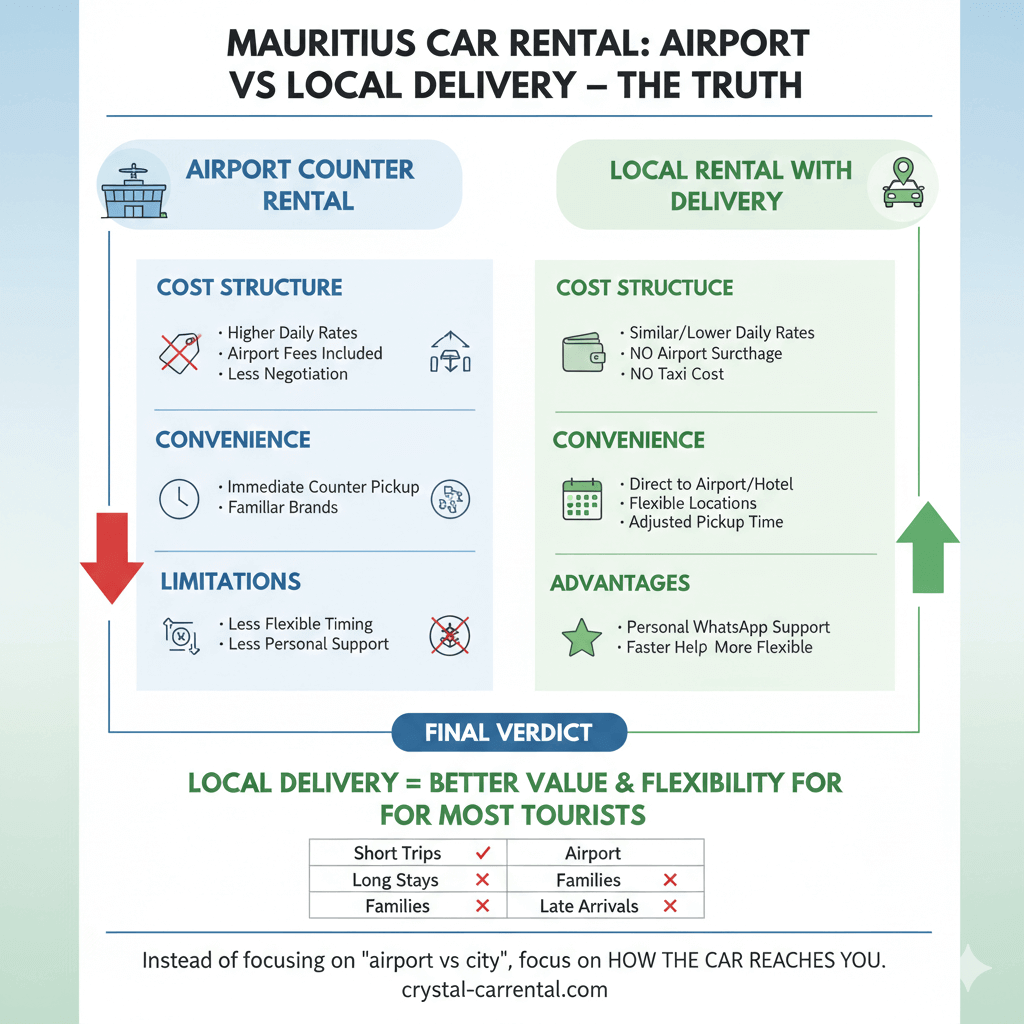
Many travelers prefer to plan ahead by searching for the Best Car Rental in Mauritius or Cheap Car Rental in Mauritius and booking in advance. Having your own vehicle allows you to explore beaches, viewpoints, markets, and attractions at your own pace.

Ask Crystal Car for a Quote for Car Rental in Mauritius

Expenses and Budgets

Since they have a different currencies it is best to be aware of the rates of exchange so that all matters regarding money go smoothly. It is best to get the currency exchanged from a money lender in one’s own country or to get it exchanged at Sir Seewoosagur Ramgoolam International Airport in Mauritius.

Since US dollars are widely accepted in Mauritius there is no harm in carrying a few dollar bills in the wallet. If for some reason one is unable to get their money exchanged at the airport then they can visit a bank to do so.

Those who prefer online payments can simply go to an ATM or use their credit or debit cards for making payments.

Travel Insurance: better to be safe

Travel insurance is highly recommended for international travel. It protects against unexpected medical expenses, trip cancellations, or travel disruptions.

Opting for a suitable Mauritius package that includes travel insurance can offer peace of mind and reduce stress during your vacation.

Safety and Security Utmost Important

Out of all other travel destinations in Africa, Mauritius is one of the safest destinations for tourists. Not only do they provide a safe environment for visitors but are also very friendly and welcoming. Just like in any other city, there are also thefts or crimes, but the government ensures a safe environment for travelers.

As with any destination, basic precautions should be taken. Avoid leaving valuables unattended and stay alert in crowded areas. Following local guidelines ensures a safe and enjoyable trip

Essentials Things to Carry

To avoid unnecessary luggage one needs to pack only the essential things needed for a trip to Mauritius. It is best to wear light cotton clothes in Mauritius as synthetic fabrics might feel uncomfortable in its humid climate. 

But for evenings, that come from May to October, light woolens are recommended. Then comes the most important thing, which is beachwear. Flipflops or flats are best for sandy beaches, parks, and gardens there.

One can never forget to bring a camera, but in case they do, there is always a phone camera. The things that people mostly forget to bring are sunscreen, sunglasses, insect repellents, medicines, etc. which might seem trivial but are necessary.

Get A list of Everything you Need with
Dbs Directory.com

Avoid Tourist Traps during your Journey

While Mauritius is famous for being very welcoming to its visitors, there are also those who might take advantage of the ignorance of tourists. It is best to carry one’s own luggage and never leave it anywhere. For shopping, it’s best to purchase from local shops than hotels as they would charge more. It is best to trust guides and not the local taxi drivers who might charge more. One can also pre-book Cheap Car Rental Mauritius which would save the trouble.

Tourist Safety Tips

Instead of relying on Google maps, it’s best to listen and trust a guide to lead the way. There are also certain traffic guidelines one must be aware of. Since people drive on the left in Mauritius it is best to be on left. 

No parking on yellow double lines as that would earn a parking ticket. Buses after 6 pm should be avoided, and one can instead opt for Car Booking Mauritius.

Sudden changes in foods and water along with the environment might cause diarrhea, so one should always use sanitizer and keep their hands clean.

Adventure Activities Needs to be Included

Those who are the outdoor type and adventurous would absolutely find Mauritius the perfect holiday destination. Tourists can enjoy several adventurous activities such as parasailing, zip lining, deep sea fishing, water skiing, skydiving, windsurfing, underwater sea walk, etc.

Mauritius is a traveler’s paradise for creating wonderful memories. Not only can one enjoy quiet walks along the beaches, enjoy local delicacies, visit a spa or try out adventurous activities, but also be worry-free throughout the whole trip. To make sure of that there are a few essential things to be kept in mind, some of which are stated above. 

Things to know before traveling to Mauritius


Mauritius often feels like a destination pulled straight from a dream—warm turquoise waters, palm-fringed beaches, mountains shaped by volcanic history, and a culture layered with flavours from India, China, Africa, and France. Whether you’re planning a family vacation, a honeymoon, or a solo escape, the island offers a mix of relaxation and adventure that is hard to match.

This guide covers the most loved attractions, beaches, cultural sites, food, outdoor activities, and travel tips, helping you plan the perfect Mauritius holiday.

Top Things to Do in Mauritius

Mauritius may be a small island, but it is packed with beauty and experiences. From coastal drives to mountain hikes, underwater adventures to cultural landmarks, here are the experiences travellers appreciate the most. 

1. Explore the Beaches of Mauritius

You can’t talk about Mauritius without mentioning its beaches—each coast offers something different.

Best Beaches by Region

  • East Coast: Belle Mare, Palmar – Wide open beaches, peaceful mornings
  • West Coast: Flic en Flac, Tamarin – Perfect for sunsets, snorkelling, dolphin watching
  • North Coast: Mont Choisy, Trou aux Biches – Calm waters, ideal for families
  • South Coast: Gris Gris, St. Felix – Rugged, wild and less commercial

Some luxury resorts also have private beaches where you can enjoy quiet sunbathing, paddleboarding, or simply listening to the waves with a book in hand.

2. Discover Mauritius’ Colonial History

Mauritius has a fascinating past shaped by Dutch, French, and British rule. Travellers who enjoy culture and architecture will find many places worth visiting.

Must-Visit Historical Sites

  • Château de Labourdonnais – Restored 19th-century mansion with gardens and orchards
  • Eureka House – A Creole mansion with antique furniture and beautiful rivers nearby
  • Aapravasi Ghat – UNESCO site marking the start of indentured labour immigration
  • Port Louis Museums and Markets – The Blue Penny Museum, Central Market

A walk through these places gives you a deeper appreciation of how Mauritius became the multi-cultural society it is today.

3. Go Diving or Snorkelling in Mauritius

Mauritius is surrounded by a coral reef system, creating calm lagoons perfect for underwater exploration.

Top Diving Spots

  • Flic en Flac (La Cathédrale site) – Cathedral-shaped caves
  • Blue Bay Marine Park – Excellent visibility and coral diversity
  • Trou Aux Biches – Great for beginners and families

Even if you’re not a certified diver, snorkelling is easy and accessible in many public beaches. The west coast lagoon, in particular, is rich with marine life.

4. Hike the Mountains of Mauritius

Mauritius isn’t only beaches—its volcanic mountains create stunning landscapes for hiking.

Popular Hiking Spots

  • Le Morne Brabant – UNESCO site with stunning views from the top
  • Black River Gorges National Park – Waterfalls, rare birds, picnic points
  • Pieter Both – A unique peak shaped like a human head
  • Chamarel Region – Scenic drives, restaurants in the hills, and cool breezes

The famous Seven-Coloured Earth in Chamarel is also a must-see natural wonder.

5. Enjoy Mauritius’ Luxury Resorts

Mauritius is known globally for its exceptional resorts. Many tourists spend entire days inside the resort simply because there is so much to do.

What Resorts Usually Offer

  • Private beaches
  • Infinity and lagoon-style pools
  • Spa and wellness treatments
  • Water sports: Kayaking, paddleboarding, snorkelling, boat trips
  • Kids clubs
  • Multiple restaurants and beachfront dining

Whether you're travelling as a couple or with children, you’ll find a resort designed around your comfort.

6. Taste Mauritius’ Local Food

Mauritian cuisine is one of the most enjoyable parts of the trip. It blends Indian spices, Creole flavours, Chinese cooking styles, and French techniques.

Must-Try Food

  • Dholl puri
  • Creole rougaille
  • Seafood curry
  • Fried noodles
  • Octopus salad
  • Gateau piment
  • Fresh grilled fish on the beach

Restaurants like Le Barbizon in Chamarel, local food trucks, and beachfront cafés in Trou aux Biches and Pereybere make food a memorable part of your holiday.

7. Visit the Botanical Gardens

The Sir Seewoosagur Ramgoolam Botanical Garden in Pamplemousses is one of the oldest botanical gardens in the southern hemisphere. It is famous for:

  • Giant water lilies
  • Rare palm species
  • Giant tortoises
  • Peaceful shaded walkways
  • Historic chateau nearby

It’s a calm place to spend an afternoon, especially for nature lovers.

How to Get Around Mauritius

Best option: Renting a car

Renting a car in Mauritius is the most convenient way to explore the island. It gives you the flexibility to visit hidden beaches, take scenic routes, and make your own schedule.

Why renting a car is recommended

  • Budget-friendly compared to daily taxis
  • Perfect for families, couples, and long stays
  • Easy road network
  • Airport and hotel pickup options
  • Freedom to explore remote areas

Booking your Mauritius car rental in advance ensures better prices, especially during peak season.

Conclusion


Mauritius is an amalgam of sunny white beaches, blue waters, dramatic mountains, and lagoons, with a culture that is influenced by different countries around the world. The thriving tourism industry is a result of the high-end resorts and spas besides the natural beauty.

This is one of the top destinations for adventures and travelers who come from not only different countries but continents as well. To make the trip more satisfying, it is better to create a plan in advance regarding the places they wish to visit or the expenses they would have. The purpose of this article is to provide information on some such things they can enjoy in Mauritius.

A Traveller’s Guide to Mauritius

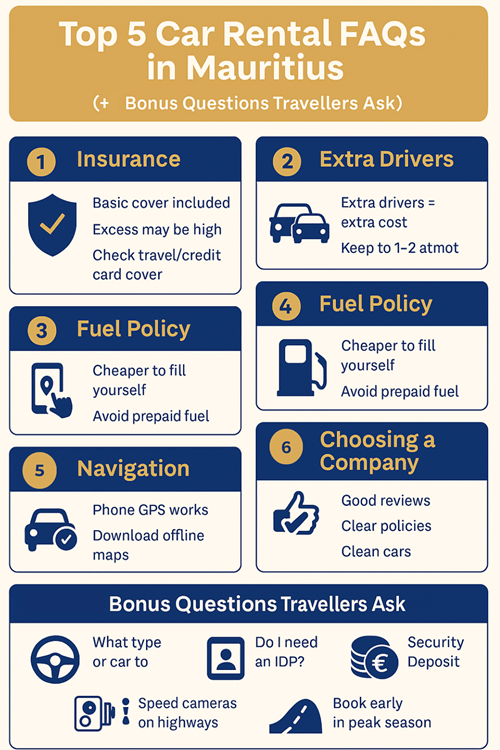
Planning to rent a car during your Mauritius holiday is a smart choice. The island may be small, but its most beautiful beaches, villages, mountain viewpoints, and nature parks are easier to reach when you have your own vehicle. Before booking, many travellers have a few common concerns. To help you make the right choice, here are the top five questions people ask about renting a car in Mauritius, answered simply and clearly.

1. Do I need additional insurance when renting a car?

Most Mauritius car rental companies include basic insurance in the rental price. However, this basic coverage may come with a higher excess amount. Many travellers already have rental car coverage through:

  • Their travel insurance
  • Certain credit cards
  • Their home-country auto insurance

Before buying extra insurance from the rental company, check what you already have.
If you want extra peace of mind, ask the company for a reduced-excess or zero-excess option, which protects you better and avoids unexpected charges.

2. How many drivers can I add to the rental agreement?

Rental companies allow additional drivers, but they usually charge a small daily fee per extra driver. To keep costs low:

  • Add only the people who will actually drive
  • Avoid listing unnecessary names
  • Use one or two drivers for the entire trip

If no one in your group is comfortable driving, consider choosing Mauritius car rental with a driver, which many companies—including Crystal Car Rental—offer for guests who prefer a stress-free experience.

3. Should I fill the fuel myself or let the company do it?

It is almost always cheaper to fill the fuel yourself.
Prepaid fuel packages from rental companies can cost more than standard petrol station rates. The best approach is:

  • Pick up the car
  • Use it normally
  • Refill the tank before returning

Make sure to keep the receipt in case you’re asked to confirm the fuel amount. Returning the car with less fuel than required may result in extra charges.

4. Do I need to rent a GPS device?

No, your smartphone is more than enough.

Apps like Google Maps and Waze work perfectly in Mauritius, and the roads are easy to navigate. If you plan to visit remote areas like Chamarel or the southern coast, download offline maps before leaving your hotel.

Since many rental companies charge additional fees for GPS units, using your phone saves money and works just as well.

5. How do I choose the best car rental company in Mauritius?

Choosing the right car rental company can make a big difference in your travel experience. Here’s what to look for:

  • Good reviews from verified travellers
  • Transparent policies (insurance, deposits, fuel rules)
  • Well-maintained vehicles
  • 24/7 customer support
  • Island-wide delivery and pickup
  • Clear insurance and deposit policies

Comparing options online helps, but always look at real reviews and not only the base price. Many travelers prefer Crystal Car Rental for its straightforward pricing and clean cars.

Top Five Frequently Asked Questions about Renting a Car

These questions will dissuade most of your doubts about car rentals in Mauritius and help you have a great experience.

renting a car in Mauritius

If you're trying to choose between warm beaches, calm lagoons, or a peaceful walk through mountain trails, Mauritius makes the decision easy you can enjoy everything in one place. This small island in the Indian Ocean is known for its comfortable weather, friendly people, and beautiful scenery, which is why so many travelers keep coming back year after year.

But before booking flights and hotels, it always helps to understand the island’s climate, the busy and quiet travel seasons, and how prices for things like car rentals change throughout the year. These small planning details can make your Mauritius holiday far more enjoyable.


Climate in Mauritius: What You Should Know

Mauritius has a tropical maritime climate, which means the weather stays pleasant throughout the year. Because the island lies in the southern Indian Ocean, it receives steady southeast trade winds that help keep temperatures from becoming extreme. You won’t find harsh winters or unbearable heat here—just warm sunshine, cool breezes, and moderate rainfall at certain times of the year.

Still, different months offer different experiences, so here’s a simple breakdown of each season.


Summer in Mauritius (November to April)

Summer is considered the peak travel season in Mauritius, especially from December to March. The days are warm and humid, and temperatures usually stay around 29–32°C. For travellers who love the beach, water sports, or long sunny days, this is the ideal time.

Many families prefer visiting during the summer holidays because the sea is warm and perfect for swimming. Popular fruits like mangoes and litchis are also in season, adding a sweet treat to your tropical getaway.

However, because this is high season, hotels and car rentals are often booked early. Prices can also be slightly higher than the rest of the year.


Cyclone & Rainy Period (mainly January and February)

Mauritius does not have a traditional monsoon season, but certain months receive more rainfall. January and February can experience tropical cyclones—not frequent, but possible. When they do occur, outdoor activities may be restricted and beaches may temporarily close for safety.

This period is generally the least recommended for travellers who prefer clear skies and calm seas. Still, many visitors do travel during these months and enjoy the island with flexible planning.


Winter in Mauritius (May to October)

Mauritian winters are nothing like the cold winters you may imagine. Temperatures stay around 20–24°C during the day, which makes it a favourite season for travellers who enjoy mild, pleasant weather.

Beaches are quieter, making it a great time for couples or honeymooners who want more privacy. Hiking trails—such as Le Morne, Black River Gorges, and Pieter Both—are more comfortable during winter because the air is cooler and less humid.

Water sports are still available, and the sea is calm on many coasts. With fewer crowds and slightly lower accommodation prices, winter often feels like Mauritius at its best.


Transportation & Getting Around the Island

Mauritius is connected internationally through Sir Seewoosagur Ramgoolam International Airport, located in the southeast. Once you land, getting around is easy, but the mode of travel you choose can shape your holiday experience.

Local buses are available but may be slow or crowded, especially during peak hours. Taxis are convenient but costly for long distances. This is why many visitors choose to rent a car during their stay—especially families with children or travellers who want to explore at their own pace.

The island has a well-maintained road network, and most popular attractions are easy to reach with GPS.


Car Rental Prices in Mauritius: When It’s Cheaper

Just like hotels, car rental rates in Mauritius change depending on the travel season:

  • High season (December–April): Prices increase because demand is high
  • Low season (May–November): Rates are cheaper, and more car models are available

Booking your car online before arrival is always recommended. It saves time at the airport and ensures you get a vehicle that fits your budget and group size.

Some of the well-known rental providers in Mauritius include:

  • Crystal Car Rental
  • OLA
  • Avis
  • 1First
  • Sixt
  • Surprice
  • Cath
  • Morisoleil
  • Soleiro

Many travellers prefer Crystal Car Rental because of transparent pricing, island-wide delivery, and a wide range of well-maintained cars.


So, When Is the Best Time to Visit Mauritius?

The truth is, Mauritius is one of the rare places where every season has its charm:

  • For beach lovers & water activities:
    November to April is ideal.
  • For hiking, scenic drives, and cooler weather:
    May to October is perfect.
  • For budget travellers:
    May, June, September, and October offer great weather with lower costs.

Whether you’re travelling solo, planning a family holiday, or looking for a romantic escape, the island’s weather and warm hospitality make it enjoyable year-round.


Conclusion

Mauritius is often called the “Pearl of the Indian Ocean,” and once you visit, it’s easy to understand why. Its mix of beaches, forests, wildlife, and culture gives travelers a complete experience in one destination. Add to that the friendly local communities and diverse cuisine, and you're guaranteed a holiday filled with memories.

No matter which season you choose, planning a few essentials—like understanding the weather and arranging your car rental in advance—can make your trip smoother and more enjoyable. With the right planning, every traveller finds their perfect time to explore Mauritius.dense forest and wildlife and make precious memories for a lifetime with their loved ones in Mauritius.

Mauritius, a jewel in the Indian Ocean, is synonymous with postcard-perfect beaches, crystal-clear waters, and lush landscapes. As a seasoned traveler, I've explored corners of the globe where the sun meets the sea; however, nothing quite compares to the enchanting shores of this island. From hidden gems tucked away from the crowds to popular spots buzzing with life, Mauritius offers a beach for every type of traveler.

In my quest to uncover the best of the best, I've compiled a list of the top 10 beaches in Mauritius. These are places where the sand is powdery white, the water a mesmerizing shade of blue, and the vibes absolutely unmatched. Whether you're a solitude seeker or a social butterfly, get ready to discover your slice of paradise on this stunning island.

Unveiling Mauritius' Coastal Charm

Mauritius, a treasure trove of coastal beauty, gifts visitors with beaches that are nothing short of paradise. Having journeyed across this splendid island, I'm eager to share insights into its coastal marvels. Each shore I visited offered a unique blend of serenity and activity, making it a haven for every kind of beach enthusiast. Let's dive deeper into the details, unveiling some of Mauritius' most enchanting spots that have captivated my heart and are sure to enchant yours too.

Secluded Spots

Among the myriad of beaches, Trou d'Eau Douce stands out for its tranquil atmosphere. Here, the soft whisper of the ocean and the gentle rustling of leaves create a harmony that lulls you into relaxation. Another hidden gem is Poste Lafayette. Located on the island's eastern coast, this spot mesmerizes with its vivid turquoise waters contrasting against the lush green backdrop. These beaches are ideal for those in search of solitude amidst nature’s pristine beauty.

Bustling Beaches

Grand Baie and Flic en Flac, on the other hand, pulse with life. Grand Baie, a hub for water sports enthusiasts and night owls alike, boasts crystal-clear waters and an impressive selection of shops and eateries. Flic en Flac, renowned for its stunning sunset views, offers a lively atmosphere with beachside restaurants playing local Sega music. These spots are perfect for travelers looking to soak up Mauritius' vibrant culture and indulge in water activities.

Family-Friendly Shores

For families, Mont Choisy and Pereybere are unparalleled. Mont Choisy, with its long stretch of sand and calm waters, is ideal for lounging and water sports. Pereybere, though smaller, offers crystal-clear waters and is a favorite among locals and tourists for its charm and warmth. Both beaches provide safe swimming conditions for children, making them excellent choices for family outings.

Mauritius' beaches, whether secluded paradises or bustling hubs, promise unforgettable experiences. Each visit unveils new facets of the island's coastal charm, urging one to explore further and deeper. I’ve found my slice of paradise here, and I'm confident you will too.

Below are the top 10 Best Beaches in Mauritius to explore

Mauritius, famed for its idyllic beaches and vibrant coastal life, offers destinations that cater to every taste, from the bustling nightlife enthusiast to the quiet nature lover. Here's my curated list of the top 10 best beaches in Mauritius, spanning hidden gems and popular spots alike.

1. Grand Baie: The Heart of Mauritius Nightlife

Grand Baie isn't just a beach; it's the pulsating heart of Mauritius' nightlife. Dotted with an array of bars, nightclubs, and beachfront cafes, it presents a lively coastal experience that extends well beyond sunbathing and swimming. The clear turquoise waters and ample opportunities for water sports like windsurfing and sailing make Grand Baie a must-visit for anyone looking to combine daytime beach relaxation with an exhilarating night scene.

2. Belle Mare Plage: Pristine Waters and Luxurious Resorts

Belle Mare Plage stands out for its miles of pristine white sand and crystal-clear waters, making it a slice of paradise for beach connoisseurs. Luxurious resorts lining the beach ensure that visitors can enjoy high-end amenities with stunning ocean views. It's an ideal spot for those seeking tranquility and comfort, offering a perfect backdrop for sunrise views that are simply unmatched.

3. Flic en Flac: Perfect for Families and Snorkeling

The welcoming shores of Flic en Flac make it a premier destination for families. With its long stretch of sandy beaches and a protective coral reef creating calm waters, it's not only safe for children but also offers excellent conditions for snorkeling enthusiasts. The vibrant coral and marine life present just a few meters from the shore provide a mesmerizing underwater experience

4. Pereybère: The Local Favorite

Nestled between Grand Baie and Cap Malheureux, Pereybère is a much-loved spot among locals. Its deep and clear waters, coupled with fine sand, make this compact beach a hidden gem for those looking to escape the more crowded spots. Friendly street food vendors and the proximity to local amenities add to its charm, ensuring a genuine Mauritian beach experience.

5. Le Morne: Where History Meets Scenic Views

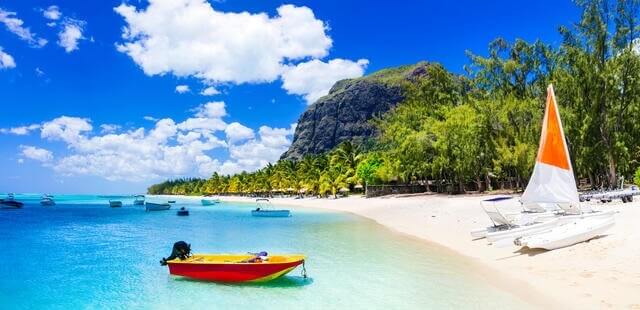
Le Morne, with its iconic mountain backdrop, offers more than just breathtaking scenery. It's a place steeped in history, symbolizing freedom and resistance. The beach itself boasts powdery white sands and crystal-clear waters, ideal for kite surfing due to its strong winds. It's a spot where natural beauty and historical significance create a profoundly moving experience.

6. Tamarin Bay: Best for Surfing Enthusiasts

Known for its salt pans and as a dolphin-watching spot, Tamarin Bay is also the go-to destination for surfing in Mauritius. The beach's unique wind conditions and waves make it suitable for surfers of all levels. While not as crowded as other beaches, it offers a laid-back vibe and stunning sunsets, providing a serene escape for surfers and non-surfers alike.

7. Mont Choisy: The Longest Beach on the Island

Stretching over 3 kilometers, Mont Choisy is the longest beach in Mauritius, boasting a sheltered turquoise bay fringed by casuarina trees. Its sheer size ensures that, despite its popularity, there's always a quiet spot to be found. It's an ideal setting for long beach walks, horseback riding at sunset, and enjoying picnics under the shade of trees.

8. Blue Bay Beach: A Marine Park with Rich Biodiversity

Blue Bay Beach is not only striking for its vivid blue waters but also as the gateway to the Blue Bay Marine Park, renowned for its rich biodiversity. Snorkelers and divers here are treated to a vibrant underwater world teeming with life, including rare corals and a plethora of tropical fish species. It's an extraordinary spot for those looking to explore the wonders beneath the surface.

9. Anse La Raie: Peaceful and Windy Haven

For visitors seeking solitude and a spot favored by windsurfers and kite surfers, Anse La Raie is the answer. Its gusty conditions and peaceful environment make it an excellent location for those looking to harness the wind or simply enjoy a quiet day by the sea, away from the tourist throngs.

10. Trou aux Beaches: Ideal for a Quieter Retreat

Lastly, Trou aux Biches is synonymous with tranquility. Known for its sheltered bay, calm waters, and coral reef, it's perfect for swimming and snorkeling. This beach is particularly appealing for couples and families in search of a quieter retreat, offering stunning sunsets and a relaxed atmosphere devoid of the hustle and bustle found at other beaches.

Mauritius delights with its vast array of beaches, each offering a unique allure. From rich biodiversity and engaging water sports to serene landscapes and historical depth, these top 10 beaches promise memorable experiences for every visitor.

Hidden Gems of Mauritius' Shores

Mauritius, an island renowned for its stunning coastal beauty, is home to numerous well-loved beaches. Yet, beyond the popular hotspots like Grand Baie and Belle Mare Plage, lies a world of lesser-known treasures. My exploration focuses on these hidden gems, offering a glimpse into the secluded and tranquil shores that promise a unique beach experience.

Exploring Less-Traveled Beaches in Mauritius

My journey through Mauritius’ less-traveled beaches uncovers spots where the sands whisper untold stories, and the waves hum in serene solitude. Each beach, distinct in its beauty and ambiance, invites visitors to a part of Mauritius that remains largely uncharted.

  • Pointe d'Esny Beach: Lying on the southeast coast, this beach offers clear, turquoise waters ideal for snorkeling and a pristine stretch of white sand seldom crowded. Its coral garden, teeming with marine life, makes it a snorkeler's paradise.
  • Le Bouchon Beach: This beach reveals a rugged side of Mauritius' beauty. Its strong waves and untamed surroundings appeal to those seeking solitude and adventure. The drive there is equally breathtaking, presenting rustic scenes of the island's landscape.
  • St. Felix Beach: On the southern tip, St. Felix Beach boasts sweeping views and crystal-clear waters. Here, the tranquility is profound, with only the sound of the waves to accompany one's thoughts. It's a perfect retreat for meditative solitude or a peaceful day out in the sun.
  • Cap Malheureux: Known for its iconic red-roofed church, the beach at Cap Malheureux offers serene waters and a picturesque view of the northern islands. It’s a quieter alternative, ideal for watching sunsets that paint the sky in vibrant hues.
  • Gris Gris Beach: At the island's southernmost point, Gris Gris Beach presents a dramatic scene with its cliffs and powerful waves crashing against them. The area offers a spectacular view of nature's force, providing a unique backdrop for contemplation and photography.

These beaches represent just a fraction of the hidden jewels in Mauritius’ coastal crown. Each visit provides a serene escape, far from the crowds, into the island's natural magnificence. Whether it's for the quietude, the breathtaking scenery, or the need to explore beyond the conventional, Mauritius' lesser-known shores never cease to amaze.

When to Visit These Tropical Paradises

Determining the best time to explore the idyllic beaches of Mauritius hinges on weather preferences and the type of experience sought. My research and experience highlight that the prime months for beach visits fall within two main periods: May to December for cooler, dry weather, and January to April for warmer, more humid conditions.

May to December: Ideal for Outdoor Activities

Visiting from May to December, I find, offers the most pleasant weather conditions for a broad range of outdoor activities. The average temperature during these months remains around a comfortable 20°C to 28°C (68°F to 82°F), creating optimal conditions for snorkeling in Pointe d'Esny, hiking near Le Bouchon, or simply lounging on the serene beaches of St. Felix. This period sees less rainfall, resulting in clearer waters which enhance the snorkeling and diving experiences at these coastal gems.

January to April: Warm Beach Days

For those who prefer warmer beach days, January to April presents higher temperatures, averaging 25°C to 33°C (77°F to 91°F). This period, despite being more humid, offers bright sunny days perfect for soaking up the sun on the golden sands of Belle Mare Plage or experiencing the vibrant nightlife of Grand Baie. It's also the time when the sea maintains a soothing temperature, inviting endless swimming and water sports activities. However, it's crucial to be mindful of occasional rains and cyclones, particularly in February and March, which can offer a different adventure in itself.

Given this climate framework, timing your visit correctly can significantly enhance your experience of Mauritius' top beaches - whether it's the popular spots like Grand Baie and Belle Mare Plage or hidden gems such as Le Bouchon and Gris Gris. My advice: choose your visit based on the activities you're most interested in and the weather conditions that suit you best.

Activities to Enjoy on Mauritius Beaches

Exploring Mauritius' pristine beaches, I've found that the island offers more than just picturesque views and tranquil waters. The diverse activities available cater to every type of traveler, whether you're seeking adrenaline-filled adventures or a peaceful retreat. From water sports and diving to cultural tours, there's something for everyone.

Water Sports and Diving Spots

Mauritius, with its crystal-clear waters and vibrant marine life, is a haven for water sports enthusiasts and divers. Activities like windsurfing, kite surfing, and paddleboarding are widely available, especially at popular spots like Grand Baie and Le Morne. These areas provide ideal conditions for both beginners and experienced adventurers, given their consistent winds and wide, shallow bays.

Diving is another activity that attracts visitors from around the globe. With numerous diving spots scattered around the island, Mauritius presents a world of underwater wonders waiting to be explored. Sites like the Cathedral off Flic en Flac and the Blue Bay Marine Park offer divers the chance to immerse themselves in breathtaking underwater landscapes, teeming with diverse marine life and mesmerizing coral gardens.

Beachside Relaxation and Spa Treatments

For those seeking a more serene experience, Mauritius' beaches provide the perfect backdrop for relaxation and rejuvenation. Many resorts and spas along the coast, such as those near Belle Mare Plage, offer luxurious treatments that blend local traditions with modern wellness practices. Imagine enjoying a relaxing massage to the soothing sounds of the ocean or participating in a beachfront yoga session at sunrise. These activities not only soothe the body but also the mind, making for an unforgettable holistic well-being experience.

Cultural Tours and Local Cuisine

Mauritius is not just about its enchanting beaches; it's also rich in culture and history. Taking a cultural tour can unveil the island's vibrant past and present. From the lively streets of Port Louis to the sacred Lake Grand Bassin, every location narrates a story that's deeply entwined with the island's diverse heritage.

Food in Mauritius is another aspect that reflects this cultural diversity. Sampling local cuisine is a must-do activity, with Creole dishes, Indian curries, and Chinese delicacies offering a taste of the island's melting pot of cultures. Markets such as the Flacq Market provide a unique opportunity to try local fruits, street food, and delicacies, allowing visitors to immerse themselves in the flavors and aromas of Mauritian cuisine.

Mauritius beaches serve as gateways to a world of experiences. Whether diving into the depths of the ocean, relaxing under the sun, or exploring the island’s rich culture, there's an activity for every traveler, ensuring a memorable stay on this beautiful island.

Sustainable Tourism and Beach Preservation

Sustainable tourism is a concept that I find particularly important, especially when it comes to preserving the pristine beauty of Mauritius' beaches. It's about striking a balance, ensuring that we, as visitors, leave minimal environmental footprints while enjoying the unique landscapes and vibrant marine life the island has to offer. In this regard, Mauritius has implemented several initiatives aimed at beach preservation and the promotion of eco-friendly practices among tourists and local communities.

Eco-Friendly Practices for Visitors

Encouraging eco-friendly practices among visitors plays a crucial role in beach preservation. I've observed that simple actions can make a big difference. For instance, using reef-safe sunscreen helps protect marine life, while bringing reusable water bottles and bags reduces plastic waste on the beaches. Visitors are also encouraged to participate in clean-up activities, setting a positive example of responsible tourism.

Community Involvement in Conservation Efforts

Local communities are at the heart of conservation efforts in Mauritius. They're deeply involved in projects that aim to protect their environment and ensure sustainable development. From the restoration of coral reefs to the protection of endangered species like the Mauritian kestrel, community-led initiatives are pivotal. Engaging with these communities, tourists can learn about the importance of preserving natural habitats and even take part in conservation activities.

Supporting Eco-Friendly Businesses

Supporting businesses that prioritize sustainability is another effective way to contribute to beach preservation while enjoying Mauritius. Many local enterprises offer eco-friendly accommodations, tours, and activities that respect the environment. By choosing these options, tourists not only enjoy a more authentic experience but also help promote sustainable practices within the tourism industry.

Through these efforts, Mauritius is paving the way for a sustainable future, ensuring that its beaches remain among the world's best for generations to come. As a traveler passionate about preserving the natural beauty of destinations like Mauritius, it's inspiring to see such commitment to environmental protection.

Planning Your Trip to Mauritius

Exploring Mauritius and its fascinating beaches requires thoughtful preparation to ensure a seamless and enjoyable experience. From packing the right essentials to understanding local customs and sustainable tourism practices, I'll guide you through the key elements for planning your trip to this island paradise.

Essentials for a Hassle-Free Beach Holiday

When I pack for a beach holiday in Mauritius, I focus on bringing items that enhance my comfort without burdening my luggage. Lightweight, breathable clothing is a must, considering the island's tropical climate. I always include plenty of sunscreens with high SPF, a broad-brimmed hat, and sunglasses to protect against the intense sun.

For those long days on the sand and in the sea, a reusable water bottle is essential. It keeps me hydrated and supports Mauritius's efforts in reducing plastic waste. I also bring along a good quality snorkeling set. With many of Mauritius's beaches, like Pointe d'Esny, offering spectacular underwater worlds, having my gear means I'm always ready for an impromptu snorkeling adventure.

Considering the island's focus on sustainable tourism, I pack eco-friendly beachwear and accessories. Options like biodegradable sunscreens and towels made from sustainable materials not only lessen my environmental impact but also align with the local conservation efforts.

Lastly, a portable charger ensures my phone is always ready to capture Mauritius's beauty, from the dramatic cliffs of Gris Gris to the picturesque sunsets at Cap Malheureux. With these essentials, I'm well-prepared to enjoy Mauritius's beaches responsibly and comfortably.

Conclusion

Venturing into Mauritius' stunning beaches has been an enlightening journey. From the vibrant shores of Grand Baie to the untouched beauty of Gris Gris, each spot holds its unique charm. I've been particularly moved by the island's commitment to sustainable tourism. It's clear that preserving these natural wonders is a priority, which resonates deeply with me. Planning a trip with sustainability in mind, from choosing eco-friendly beachwear to supporting local conservation efforts, not only enhances the experience but also contributes to the preservation of these idyllic settings. Whether you are after luxury, tranquility, or adventure, Mauritius' beaches offer something for everyone. Remember to pack responsibly and embrace the island's beauty with a mindful approach. Here's to unforgettable beach holidays that leave a positive impact!

beaches-in-mauritius

In my years of exploring the world from behind the wheel, I've learned a thing or two about cutting down costs, especially when it comes to car rentals. With fuel prices fluctuating more often than not, finding ways to drive economically isn't just wise; it's become essential. Whether you're on a cross-country adventure or navigating through city streets, the cost of fuel can quickly eat into your travel budget. But fear not, because I've gathered some tried and tested tips to help you save on those pesky fuel bills during your car rental period.

From choosing the right vehicle to mastering the art of efficient driving, there are plenty of strategies that can lead to significant savings. And the best part? You don't need to be a car expert to apply them. So, let's dive in and discover how you can make your next car rental experience both enjoyable and economical, without compromising on the fun or freedom that comes with hitting the open road.

Understanding Fuel Consumption

Given the goal to minimize costs while enjoying the benefits of a car hire, grasping how to manage fuel consumption is crucial. My insights here focus on how various driving styles and the type of vehicle chosen can significantly impact fuel efficiency. By paying attention to these areas, renters can enjoy a more economical driving experience.

How Different Driving Styles Affect Fuel Efficiency

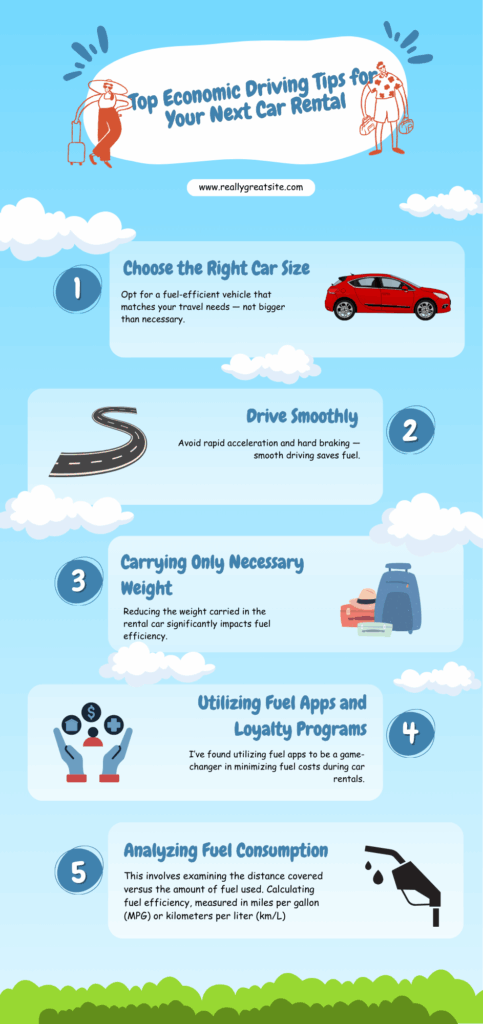
I've noticed that aggressive driving, which includes speeding, rapid acceleration, and hard braking, greatly increases fuel consumption. In contrast, adopting a smoother driving style can enhance fuel efficiency. For example, maintaining a steady speed, accelerating gently, and anticipating traffic flow to avoid unnecessary stopping and starting can reduce fuel bills. Utilizing cruise control on highways is also a smart move to maintain a constant speed, thereby improving fuel economy.

The Impact of Vehicle Type on Fuel Economy

Choosing the right vehicle plays a pivotal role in fuel efficiency. Compact cars, hybrids, and electric vehicles generally offer better fuel economy compared to larger SUVs or older models with less efficient engines. Before selecting a rental car, I always consider the type of driving I'll be doing. City driving, for instance, might be more economical in a compact or hybrid vehicle, while electric vehicles are ideal for short trips with accessible charging points. Understanding the vehicle's fuel consumption ratings, available in the car's manual or from the rental company, helps me make an informed decision that aligns with my economical driving goals.

Pre-Drive Tips for Economic Driving

In my experience, preparing before hitting the road can significantly reduce fuel bills during a car rental. Let me share some effective tips focusing on choosing the right rental car and ensuring the vehicle's tire pressure and alignment are optimal. These steps are crucial for enhancing fuel efficiency from the get-go.

Choosing the Right Rental Car

Selecting the appropriate rental car is a pivotal step in driving economically. Compact cars, hybrids, or electric vehicles inherently use less fuel compared to larger SUVs or trucks. For instance, hybrids blend gasoline engines with electric power to optimize fuel efficiency, making them an excellent choice for those conscious about both fuel consumption and environmental impact. When I'm planning a trip that involves a lot of city driving, I always go for a compact or a hybrid vehicle. These cars not only offer better mileage but are also easier to maneuver in tight parking spaces, which is an added bonus in urban settings.

Checking Tire Pressure and Alignment

Before embarking on any journey, checking the rental car's tire pressure and alignment is essential. Properly inflated tires maximize the contact with the road, reducing resistance and subsequently, fuel consumption. Most people overlook this, but I make it a point to check the tire pressure using a gauge. It's surprising how a small adjustment can lead to noticeable savings on fuel over a long trip.

Furthermore, proper wheel alignment ensures the vehicle travels straight without pulling to one side, which can increase rolling resistance and, in turn, fuel usage. Although checking alignment might not be practical for every rental, noticing any signs of misalignment such as the steering wheel being off-center when driving straight or the car veering to one side can indicate a need for adjustment. If I notice these signs, I don't hesitate to report them to the rental agency.

By taking these pre-drive measures, I set myself up for a more economical drive, ensuring both reduced fuel costs and a smoother rental experience.

On the Road: Driving Techniques to Save Fuel

Driving economically doesn't stop at selecting the right car and ensuring it's in prime condition before hitting the road; how I handle the car while driving plays a crucial role in fuel consumption. By adopting certain driving techniques, I can further reduce my fuel bills during car rental. Let me share some effective methods to drive more economically.

Smooth Acceleration and Braking

Smooth acceleration and gentle braking are keys to reducing fuel consumption. Whenever I accelerate too quickly, the car uses more fuel than necessary. Similarly, hard braking can lead to an increase in fuel usage. By accelerating gradually and allowing the car to coast to slow down before applying the brakes, I've noticed a significant decrease in my fuel consumption. This method not only saves fuel but also minimizes wear and tear on the car's braking system, turning it into a win-win situation.

Maintaining Optimal Speed and Using Cruise Control

Driving at a constant speed, preferably within the range of 50-70 mph, where legal and safe, is another technique I've found to be effective in saving fuel. Speeds above this range tend to dramatically increase fuel consumption due to higher air resistance. Whenever I'm driving on highways, I make use of the cruise control feature. It helps maintain a constant speed, preventing unnecessary acceleration and deceleration which can be fuel-intensive. Cruise control is particularly useful for long drives, making it a valuable tool for staying economic on the road.

Planning Routes to Avoid Congestion

One of the most overlooked aspects of fuel-efficient driving is route planning. I always make it a point to plan my routes in advance to avoid areas known for heavy traffic congestion. Stopping and starting in traffic jams can significantly increase fuel consumption. Whenever possible, I opt for the scenic route or the road less traveled if it means I can maintain a steady pace without much stop-and-go. Utilizing GPS apps has been a game-changer for me, helping to predict traffic conditions and suggest the most fuel-efficient routes.

By incorporating these driving techniques during my car rental period, I've managed to save significantly on fuel costs. It's remarkable how minor adjustments to driving habits can lead to substantial savings, making my travels both more enjoyable and economical. Whether you're driving a rental or your own vehicle, these methods can help minimize fuel expenses and contribute to a more sustainable driving practice.

Additional Strategies to Reduce Fuel Costs

After exploring various driving techniques and pre-drive tips for economizing on fuel consumption with a rental car, I've discovered more strategies that can significantly cut down on fuel expenses. These additional measures focus not just on how to drive, but also on leveraging technology and managing car load for optimal fuel efficiency.

Utilizing Fuel Apps and Loyalty Programs

I've found utilizing fuel apps to be a game-changer in minimizing fuel costs during car rentals. These apps pinpoint the gas stations offering the lowest prices on fuel, thereby ensuring I'm not overspending at the pump. Moreover, many of these applications provide real-time updates on price changes, which is particularly useful in areas where fuel prices fluctuate frequently.

Participating in fuel loyalty programs is another strategy I employ to reduce fuel costs. Most major gas station chains offer programs that provide discounts or accumulate points with every fuel purchase, which can lead to substantial savings over time. Some rental agencies also partner with fuel stations to offer exclusive discounts to renters, making it all the more beneficial to sign up for these programs before embarking on a trip.

Carrying Only Necessary Weight

Reducing the weight carried in the rental car significantly impacts fuel efficiency. I make it a point to check the trunk and remove any unnecessary items before I start driving. Each extra pound requires more fuel to move, so keeping the car's load to the minimum necessary not only improves fuel economy but also enhances the vehicle's performance.

I also advise against using roof racks or carriers unless absolutely necessary, as they add weight and increase aerodynamic drag, further lowering fuel efficiency. By sticking to only essential items and packing smart, I manage to keep the car's weight down and save on fuel, contributing to an overall economical rental experience.

By employing these strategies alongside the previously discussed driving techniques and pre-drive considerations, I ensure maximum fuel savings during my car rental period. Navigating the balance between efficient driving, leveraging technology, and managing vehicle load effectively paves the way for substantial reductions in fuel expenses.

When to Refuel: Timing and Location Matters

After covering a host of strategies to cut down on fuel costs from choosing the right vehicle to adopting efficient driving practices, it's crucial to consider the timing and location for refueling during your car rental period. Knowing when to refill your tank and selecting the right gas stations can significantly impact your fuel expenditures. Let’s dive into the essential advice on timing your refills and finding the best deals on gas stations.

Best Times to Fill Up the Tank

I've found that timing can play a pivotal role in how much you pay at the pump. Historically, gas prices tend to fluctuate throughout the week, influenced by market demand, supply operations, and even the day of the week. Several studies suggest that early in the week, specifically on Mondays and Tuesdays, gas prices tend to be lower. The rationale here is that fuel stations often raise prices in anticipation of weekend travel. By refueling early in the week, you can capitalize on these lower prices. Additionally, filling up your tank early in the morning or late in the evening during summer months can be advantageous. Since temperatures are cooler, fuel density increases, giving you slightly more bang for your buck. This tactic is all about getting the most out of every gallon, especially when you're keeping a keen eye on rental car expenses.

Selecting Gas Stations for the Best Deals

Selecting the right gas station requires a mixture of strategic planning and technological assistance. Not all fuel stations offer the same prices, and variations can be significant depending on the location. For instance, stations closer to highways and in affluent neighborhoods often charge more due to convenience and demographic factors. My strategy involves using fuel price apps like GasBuddy or Waze, which compare real-time gas prices at nearby stations. These apps have been instrumental in my quest to find the lowest prices, saving me a considerable amount every time I refuel.

Moreover, enrolling in loyalty programs at gas stations chains can lead to direct savings at the pump. These programs frequently offer discounts per gallon, and when combined with a rewards credit card that offers cashback on fuel purchases, the savings can be substantial. It’s about being smart and taking advantage of every opportunity to reduce costs, ensuring that fueling up doesn't empty your wallet more than it needs to.

By marrying these tips on when to refuel and selecting the best gas stations with the economic driving practices previously discussed, maximizing fuel efficiency during your car rental becomes a tangible goal. It’s all about making informed decisions, from the moment you choose your rental car to when and where you decide to refill the tank. Every little saving contributes to a more cost-effective and environmentally friendly rental experience.

After Your Journey: Review and Learn

Reflecting on the rental period and analyzing the driving and fuel consumption data is crucial. This phase offers invaluable insights, contributing to more economical car use in the future. In this section, I'll delve into effective methods to review your fuel usage and suggest strategies for adapting your driving habits for future savings.

Analyzing Fuel Consumption Post- Car Rental

Upon concluding a car rental, I look closely at the fuel consumption patterns. This involves examining the distance covered versus the amount of fuel used. Calculating fuel efficiency, measured in miles per gallon (MPG) or kilometers per liter (km/L), provides a clear insight into the car's performance under my driving conditions.

Reviewing the receipt from the gas station, I compare the fuel cost against the total distance driven. This calculation helps me understand how different driving practices, such as maintaining a steady speed, accelerating gently, and reducing idle times, impact fuel efficiency.

Additionally, using apps or onboard diagnostics (OBD-II) scanners to track fuel consumption can reveal more detailed insights. These tools offer a breakdown of driving habits, such as speeding or aggressive driving, that contribute to higher fuel usage. By analyzing this data post-rental, I identify specific areas for improvement.

Adapting Habits for Future Savings

Understanding fuel consumption patterns equips me with the knowledge to adapt my driving habits effectively. For instance, if I notice high fuel use during short, frequent trips, I plan my future trips better, combining errands to reduce the car's overall usage.

Practicing more fuel-efficient driving techniques also becomes a focus. Maintaining a moderate speed, using cruise control on highways, and minimizing the use of air conditioning are practices I implement to enhance fuel efficiency.

Moreover, being mindful of the vehicle's load and avoiding unnecessary weight can significantly impact fuel economy. After reviewing the fuel data, I ensure to remove unnecessary items from the trunk or roof racks that increase drag and, consequently, fuel consumption.

Incorporating these adaptations into my driving habits doesn't just promise future savings but also contributes to a more environmentally friendly driving approach. By reflecting on the rental period's fuel consumption and making conscious efforts to adapt, I not only reduce future rental bills but also promote sustainable driving practices.

Conclusion

Adopting the strategies I've shared can significantly cut down on fuel expenses during your car rental period. It's not just about the immediate savings; it's about cultivating a mindset of fuel-efficient driving that extends beyond the rental experience. By analyzing your fuel consumption post-rental and adjusting your driving habits accordingly, you're not only saving money but also contributing to a more sustainable environment. Remember, every small change in how we drive can lead to substantial savings over time. So next time you're behind the wheel of a rental, keep these tips in mind and drive your way to more savings and a healthier planet.

Economic Driving Tips for car rental

I've always believed that true adventure lies in stepping out of your comfort zone, and what better place to do that than Mauritius? This island paradise, known for its stunning landscapes and crystal-clear waters, is not just a haven for beach lovers but also a playground for thrill-seekers. From the adrenaline-pumping experience of skydiving to the mesmerizing beauty of undersea walking, Mauritius offers a unique blend of adventures that cater to every type of adventurer.

Exploring the depths of the ocean without getting your feet wet might sound like a dream, but in Mauritius, it's a reality. And if you're someone who prefers the sky over the sea, imagine free-falling from thousands of feet above the ground, with the island's breathtaking views speeding towards you. Join me as I dive into the world of adventure sports in Mauritius, where every moment is an adventure waiting to be discovered.

Exploring the Thrills of Skydiving in Mauritius

Skydiving in Mauritius

Mauritius, with its picturesque landscapes and crystal-clear waters, offers one of the most breathtaking backdrops for skydiving. I've learned that adventure seekers looking to add an unforgettable experience to their bucket list find skydiving in Mauritius to be an exceptional choice.

The Skydiving Experience

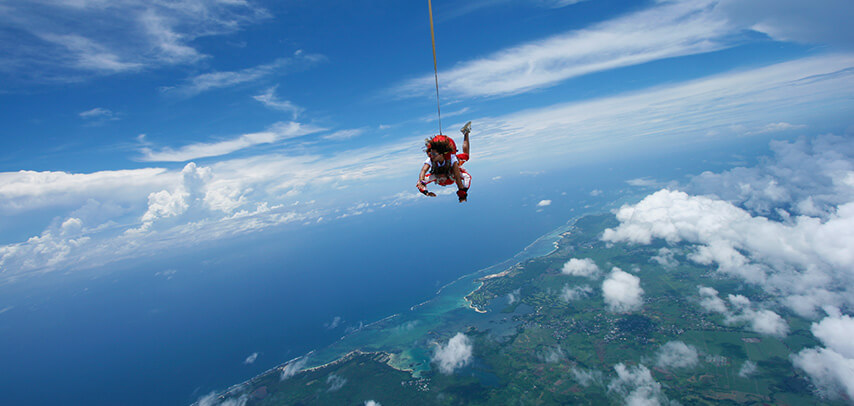
Embarking on a skydiving adventure in Mauritius begins with a scenic plane ride that takes you up into the skies. The moment of truth arrives as you edge closer to the open door, preparing to jump. The free fall is an exhilarating experience, where for a few seconds, you're surrounded by nothing but air, and the stunning views of Mauritius unfold beneath you like a vibrant tapestry. The adrenaline rush of the free fall is followed by a peaceful parachute glide, allowing you to soak in the island's beauty from a bird's-eye view. Operators in Mauritius offer tandem jumps, which means you're securely attached to a certified instructor, making this thrill accessible even to first-timers with no previous experience.

Safety Measures and Best Practices

Safety always comes first in skydiving, and Mauritius is no exception. The operators here adhere to stringent international safety standards to ensure that every participant has a secure and enjoyable experience. Before taking to the skies, you'll be briefed on the entire process, from the jump to the landing. This briefing includes an introduction to the equipment, which is meticulously maintained and regularly inspected.

Best practices in skydiving include dressing appropriately in comfortable clothing and secure shoes. It's advisable to listen closely and follow the instructor's guidance at all times, especially during the free fall and parachute glide. Operators ensure that every skydiver is equipped with a helmet, goggles, and harness, and they conduct thorough weather checks before each dive to guarantee optimal conditions.

Skydiving in Mauritius is not just an adventure sport; it's an opportunity to step beyond your comfort zone and witness the island's majestic landscapes from an unparalleled perspective. With the right preparation and adherence to safety measures, it promises to be an experience you'll never forget.

The Underwater Realm: Undersea Walking

Undersea Walking

After the exhilarating sky above, Mauritius invites its visitors to explore the tranquility of its underwater world through undersea walking. This unique adventure allows you to stroll on the ocean floor while surrounded by the island's vibrant marine life, a stark contrast to the adrenaline-pumping experience of skydiving but equally memorable.

What is Undersea Walking?

Undersea walking provides a seamless way for enthusiasts to immerse themselves in the underwater realm without the need for complex diving gear or extensive training. Using a specially designed helmet that feeds continuous airflow, participants can breathe naturally underwater. These helmets also ensure that individuals can keep their glasses on, making the experience accessible to everyone. As I step onto the ocean floor, the calmness envelops me, offering a close-up view of Mauritius's diverse marine species, coral reefs, and the colorful world beneath the waves.

Who Can Try Undersea Walking?

Undersea walking in Mauritius is accessible to nearly anyone interested in exploring the underwater world. Children aged 10 and above, adults, and even non-swimmers can participate in this adventure. Before the underwater journey begins, I receive a thorough briefing from experienced guides on safety protocols and communication signals. Ensuring comfortable and secure experiences for all, health conditions such as serious heart problems or certain disabilities might restrict participation, ensuring a safe environment for this enthralling adventure.

Mauritius's undersea walking presents an extraordinary opportunity to encounter marine biodiversity up-close, making it an inclusive activity that invites adventure seekers to witness the island's beauty from yet another unparalleled perspective.

Riding the Waves: Kitesurfing and Windsurfing

Kitesurfing and Windsurfing

Kitesurfing for Beginners and Pros

Mauritius, a jewel in the Indian Ocean, is a paradise for kitesurfing enthusiasts of all levels. The island's eastern coast, especially the area around Le Morne, offers world-class conditions for this exhilarating sport. Remarkably, the shallow waters and steady winds create an ideal environment for beginners to learn and professionals to refine their skills. I've discovered that schools dotting the coastline offer lessons and equipment rentals, making it easy for anyone to get started. The best time for kitesurfing in Mauritius is from May to October when the southeast trade winds blow consistently, providing optimal conditions. For pros, the One Eye spot at Le Morne is a must-try, known for its challenging waves and strong winds. This diversity ensures that, regardless of one's skill level, kitesurfing in Mauritius delivers an unforgettable thrill.

Also read : An Unforgettable Road Trip in Mauritius

The Allure of Windsurfing in Mauritius

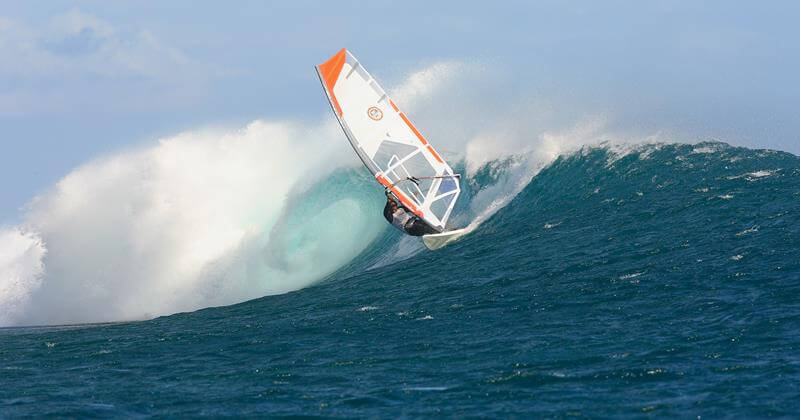
Transitioning from the high-flying excitement of kitesurfing, windsurfing in Mauritius presents another fabulous way to ride the island's waves. This sport combines elements of surfing and sailing, allowing participants to glide across the water's surface with the help of the wind. Mauritius' north and east coasts, particularly spots like Belle Mare and Anse La Raie, are renowned for their excellent windsurfing conditions. These locations offer a mix of flat waters and moderate waves, suitable for both beginners and intermediate surfers. The period from May to November, coinciding with the island's winter, brings steady winds ideal for windsurfing. Schools and rental shops are available along the coast, providing lessons and equipment for adventurers looking to explore the waters. The scenic beauty of the coastline, coupled with the exhilarating experience of harnessing the wind, makes windsurfing in Mauritius an adventure not to be missed.

Mountain Adventures: Hiking and Rock Climbing

Hiking and Rock Climbing

The Best Hiking Trails in Mauritius

Mauritius, a haven for adventure seekers, offers an array of hiking trails that cater to all experience levels, complementing its renowned water sports activities. From the lush, verdant valleys to the majestic peaks, hiking in Mauritius promises breathtaking vistas and a chance to immerse oneself in the island's natural beauty. The Black River Gorges National Park stands out as a premier destination, featuring over 60 kilometers of trails meandering through indigenous forests, home to rare flora and fauna. Here, the hike to the summit of Le Pouce Mountain provides panoramic views of the island, showcasing its spectacular landscape from a unique vantage point.

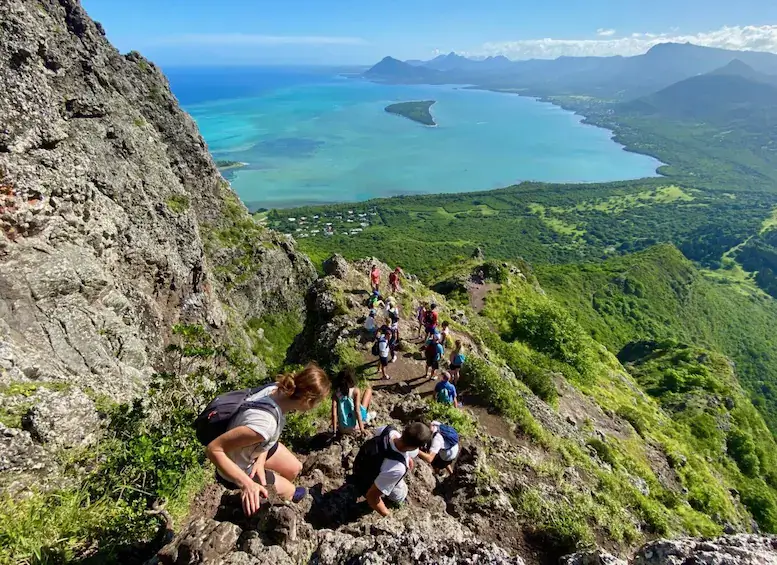
Another notable trail leads adventurers to the top of Le Morne Brabant, a UNESCO World Heritage site. This trail isn't just a physical journey but a meaningful exploration into Mauritius's history and the story of its people. It offers a moderately challenging hike, concluding with views that are simply unmatched, overlooking lagoons that glisten under the tropical sun.

Rock Climbing Spots for Every Level

Rock climbing in Mauritius might not be the first activity that comes to mind, but it's rapidly gaining popularity among locals and visitors alike. The diverse terrain of the island provides a variety of rock climbing spots suitable for beginners through to experienced climbers. The cliffs at Pointe aux Caves, with their overhanging routes, present an exhilarating challenge for advanced climbers, offering spectacular ocean views as a backdrop.

For those new to the sport, the Corps de Garde mountain, situated near the island's center, offers routes that are perfect for honing skills and building confidence. It's not just about the climb; it's about engaging with the island's geology, understanding its formation, and appreciating its natural wonders from up high.

Each trail and climbing spot offers a distinct perspective of Mauritius, ensuring that adventure enthusiasts can experience the island's splendor from every angle. Whether it's conquering peaks or scaling cliffs, the mountain adventures in Mauritius extend beyond mere physical activity, fostering a deep connection with the natural world.

The Rush of River Activities

White Water Kayaking

Transitioning from the high-energy adventures found on land and sea in Mauritius, the excitement doesn't wane as we delve into the adrenaline-pumping world of river activities. This portion of the island’s adventure sports offers a unique blend of thrill and natural beauty, perfect for those eager to experience the pulsing heart of Mauritius through its rivers and gorges.

White Water Kayaking

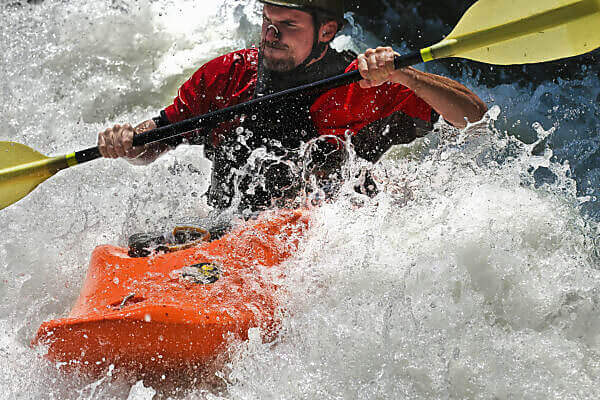
Mauritius offers an exquisite setting for white water kayaking, presenting a fantastic opportunity to navigate through the untamed waters of its rivers. This activity takes enthusiasts on a thrilling ride, maneuvering through rapids that range from gentle flows suitable for beginners to more challenging sections that test the skills of experienced kayakers. The rivers in the south of the island, especially, provide an ideal backdrop, with their lush landscapes and the occasional wildlife sighting adding to the experience. Safety gear and professional guides ensure that adventurers of all levels can enjoy the rush of kayaking in Mauritius with peace of mind.

Canyoning in Majestic Gorges

For those seeking an even more immersive experience in Mauritius' natural wonders, canyoning in its majestic gorges offers an unparalleled adventure. This activity combines elements of rock climbing, rappelling, and swimming, allowing participants to explore the hidden depths of the island’s gorges. The Tamarin Falls, with their series of seven cascading waterfalls, represent a popular spot for this exhilarating sport. Participants navigate through lush forests, jump into crystal-clear pools, and rappel down rocky cliffs, all under the guidance of experienced instructors. Canyoning in Mauritius not only provides an adrenaline surge but also grants adventurers intimate access to the island’s breathtaking landscapes and the serene beauty of its secluded spots.

In encapsulating the spirit of adventure that Mauritius offers, river activities like white water kayaking and canyoning stand out as prime examples of how the island caters to thrill-seekers. With safety as a paramount concern, these activities are designed to welcome adventurers of all proficiency levels, ensuring anyone can take part in the excitement. The blend of physical challenge and natural exploration these activities offer is a testament to Mauritius's reputation as a premier destination for adventure sports enthusiasts worldwide.

Adventure Sports in Mauritius: From Skydiving to Undersea Walking

Mauritius isn't just a cornucopia of natural beauty; it's a playground for adventure seekers looking to elevate their travel experience with adrenaline-pumping activities. After exploring the thrilling skydives offering breathtaking aerial views of the island and the unique sensation of undersea walking among vibrant marine life, I'll guide you through planning an adventure sports itinerary and combining various activities for an unforgettable visit.

Planning Your Adventure Sports Itinerary

To fully embrace the range of adventure sports Mauritius offers, effective planning is crucial. First, consider the island's diverse terrain – an intricate blend of stunning coastlines, lush forests, and rugged mountains. This diversity means that while you can skydive over Le Morne Brabant one day, you might find yourself hiking in the Black River Gorges National Park the next.

Start by listing the activities that catch your interest. From the air, skydiving provides unparalleled views of the island's contrasting colors. Under the sea, walking allows you to marvel at the aquatic life up close. For those drawn to the water's surface, kitesurfing and windsurfing offer a thrilling challenge, whereas the island's intricate landscapes are perfect for mountain adventures like hiking and rock climbing.

Afterward, group activities by location to maximize your time. Many of Mauritius's adventure sports are concentrated in specific areas, making it easier to plan logistics. For example, Tamarin Bay is famed for both surfing and dolphin watching, allowing you to schedule both on the same day.

Lastly, factor in rest days. While the lure of adventure might tempt you to pack every day with activities, rest is essential to recuperate and truly enjoy each experience.

Combining Activities for the Ultimate Experience

Creating the ultimate adventure sports itinerary in Mauritius involves strategically combining activities to enhance your experience. Start with an adrenaline-high activity like skydiving, setting an exhilarating tone for your trip. Following this, dive into the serene underwater world with an undersea walking expedition, offering a calming contrast.

For a comprehensive day, pair a morning hike in the Black River Gorges National Park with an afternoon of kitesurfing at Le Morne. This combination balances physical exertion with the thrill of mastering the waves, all under the watchful eye of the majestic Le Morne Brabant.

Meanwhile, those interested in river activities can enjoy a morning of white-water kayaking in the south's lush landscapes followed by an afternoon canyoning through the majestic gorges of Tamarin Falls. This pairing not only offers a mix of challenging and leisurely activities but also showcases Mauritius's breathtaking natural beauty.

Conclusion

Mauritius proves itself as a haven for adventure seekers, offering a unique blend of sky-high thrills and underwater wonders. I've shared how meticulously planning your itinerary can transform your trip into an unforgettable journey. By grouping activities that complement each other, you'll not only save time but also experience the island's diverse landscapes to their fullest. Whether you're soaring above the clouds or exploring the vibrant life beneath the waves, each adventure in Mauritius promises to be as enriching as it is exhilarating. So, pack your spirit of adventure and let Mauritius unfold its wonders for you.

Adventure Sports in Mauritius

Hiring a car can often feel like navigating through a maze of choices and potential pitfalls. I've learned the hard way that what seems straightforward can quickly turn into a costly mistake if you're not careful. From hidden fees to insurance misunderstandings, the road to renting a car is fraught with obstacles that can trip up even the most seasoned traveler.

That's why I've put together a comprehensive guide on the things to carefully avoid when hiring a car. It's not just about finding the best deal; it's about making informed decisions that ensure your car rental experience is smooth, hassle-free, and, most importantly, doesn't break the bank. Whether you're a first-timer or a frequent renter, these insights will help you navigate the complexities of car rental with confidence.

Understanding Car Rental Pitfalls

The journey of renting a car comes with its challenges and potential pitfalls. Leveraging my experience and the insights shared in the previous section, I aim to guide you through understanding these pitfalls more deeply. This recognition is crucial for making informed decisions, ensuring a smooth, hassle-free, and budget-friendly car rental experience. Let's delve into the common mistakes to avoid and how to prepare for a smoother rental experience.

Recognizing Common Mistakes

Firstly, overlooking reviews and renting from an unreliable car rental agency can lead to a host of issues, including hidden fees or poor service. It's essential to research and choose reputable rental agencies. Secondly, failing to check for any pre-existing damage before driving off can make you liable for repairs not caused by you. Always conduct a thorough inspection and document everything. Thirdly, not understanding the rental agreement can lead to unexpected charges. Be sure to read the agreement carefully, paying close attention to return times, fuel policies, and mileage limits.

Choosing additional insurance without understanding what's already covered by your personal auto insurance or credit card can also unnecessarily inflate costs. Verify your existing coverages to avoid overlapping. Additionally, ignoring traffic laws and rental policies can result not only in fines but also in surcharges from the rental company. Respect the rules of the road and the terms of your rental agreement to evade these penalties.

Preparing for a Smoother Rental Experience

Preparing for a car rental involves several proactive steps. Confirming your booking details beforehand, such as the pick-up location, time, and the car model, can prevent last-minute surprises. Ensure you have all required documents, including your driver's license, credit card, and any needed international permits.

Understanding the fuel policy is critical to avoid additional fees. Opt for returning the car with the same amount of fuel it had when you picked it up if that's what the policy states. Exploring coverage options ahead of time allows you to make informed decisions about insurance without pressure at the rental desk.

Lastly, being familiar with the rental company's policies on additional drivers, late returns, and cancellations ensures you're not caught off-guard by any extra charges. Knowledge of these policies also aids in better planning your trip, rental duration, and overall budget.

By acknowledging these common mistakes and preparing adequately, you're set for a more informed and enjoyable car rental experience. Remember, knowledge is power, especially when it comes to navigating the complexities of renting a car.

For Smoother Car Rental Experience Book With Crystal Car Rental

Avoiding Extra Costs

Navigating the complexities of car rental involves a keen eye for dodging unnecessary expenses. Many renters unknowingly incur additional costs that could easily be avoided with the right knowledge. By focusing on upcoming aspects, I'll help you understand how to sidestep these financial pitfalls.

Unnecessary Insurance Upgrades

One common area where renters face unnecessary costs is through insurance upgrades. Rental companies often try to upsell additional insurance coverage that you might not need. Before you arrive at the rental desk, it's critical to review your personal car insurance policy and any coverage provided by your credit card company. Many personal auto policies extend coverage to rental cars, and credit cards frequently offer rental insurance as a benefit. By declining the rental agency's insurance upgrade when your current policies already protect you, you can avoid this extra expense. Remember, understanding the specifics of your existing coverage is key to making an informed decision at the rental counter.

Exorbitant Fuel Charges

Another area rife with potential for unnecessary costs is fuel charges. Rental companies typically offer a few refueling options, some of which come at a premium. The most common mistake renters make is choosing the pre-paid fuel option without considering their actual needs. While it's marketed for its convenience, this option often comes at a higher price per gallon than local fuel rates. To avoid overpaying, opt to refuel the vehicle yourself before returning it. Pay attention to the rental agency's fuel policy to ensure you return the car with the correct fuel level to avoid any refueling service fees. By taking control of the refueling process, you can sidestep these exorbitant charges.

Through careful consideration of insurance upgrades and fuel policies, renters can effectively avoid unnecessary costs associated with car rentals. Being informed and prepared allows for a more budget-friendly and enjoyable rental experience.

Being Wary of Car Condition

Navigating the complex landscape of car rentals, I've learned the importance of vigilance, especially concerning the vehicle's condition. This knowledge stems from both professional insights and personal experiences, guiding renters through the vital steps of scrutinizing a rental car's condition to avoid unforeseen charges and ensure a hassle-free experience. The tips I share here are pivotal for anyone looking to rent a car smartly and efficiently.

Ignoring Pre-Rental Inspection

One crucial step I always emphasize is the pre-rental inspection. Skipping this can lead to complications that might not only mar your rental experience but also lead to unexpected expenses. During this inspection, it's essential to check for any mechanical issues or cosmetic damage. This means examining the car thoroughly, from the engine's performance to the bodywork, and ensuring everything is in working order. Turn the ignition, test the brakes, and look under the hood. If you spot anything amiss, report it immediately to the rental agency before driving off. This proactive approach ensures you won't be held responsible for pre-existing conditions.

Not Documenting Existing Damage

Moreover, not documenting existing damage is a pitfall you'll want to avoid. Whenever I pick up a rental car, I make it a point to document every scratch, dent, and scuff, no matter how minor they seem. Use your smartphone to take clear photos or videos from different angles, capturing the date and time. This visual evidence serves as indisputable proof of the car's condition at the time of your rental. Additionally, ensure that the rental agency acknowledges these imperfections in writing. By doing so, you safeguard yourself against any disputes over damages that were present before you took possession of the vehicle. Sharing this documentation upon returning the car helps create a transparent and trust-based relationship with the rental company, mitigating the risk of being unfairly charged for damages you didn't cause.

Incorporating these strategies into your car rental process can significantly influence the outcome of your experience. Being meticulous during the pre-rental inspection and diligent in documenting existing damages empowers you to navigate car rental with confidence, ensuring a smoother, more enjoyable journey.

Reading the Fine Print

When hiring a car, diving into the fine print of the rental agreement isn't just a step; it's a necessity for smart renting. Unearthing the details buried in the terms and conditions can save me from unexpected pitfalls, ensuring a smooth rental experience without overstepping my budget. Let's explore two critical aspects that often get overlooked but can significantly impact the overall cost and rental terms.

Overlooking Mileage Limits and Penalties

One aspect of the fine print I always pay close attention to is the policy on mileage. Many rental agreements specify mileage limits, and exceeding these can incur hefty penalties. For example, some deals offer unlimited mileage, while others set a daily limit, charging extra for each mile or kilometer I drive over this cap. Understanding this before I hit the road is crucial; it informs my travel plans and helps me avoid unexpected charges at the end of the rental period. By ensuring the rental's mileage policy aligns with my travel distance, I can steer clear of penalties and keep my renting costs predictable.

Missing Hidden Fees and Charges

Another common trap in car rental agreements is hidden fees and charges. These can range from additional driver fees, early return fees, to charges for optional extras like GPS or child seats. Rental companies also sometimes charge airport fees if I pick up the car from an airport location. By scrutinizing the fine print for mentioned fees and asking direct questions about any charges not clearly explained, I can avoid surprises when it comes time to settle the bill. Educating myself on these potential extra costs allows me to make informed decisions about what services I really need for my rental, ensuring I don't pay for unnecessary additions.

Reading the fine print thoroughly arms me with the knowledge I need to navigate the complexities of car rentals. It's an essential step in my car rental process, ensuring I get the best deal possible and avoid unexpected expenses that could disrupt my budget. By focusing on mileage policies and hidden fees, I position myself for a smooth, cost-effective car rental experience.

With Crystal Car Rental You can Assure with No Hidden Fees & Charges

Choosing the Right Vehicle

In my years of experience with car rentals, I've learned that selecting the right vehicle is pivotal for a seamless experience. Often overlooked, this step is crucial in avoiding unnecessary complications and ensuring the rental process aligns with individual needs and expectations. Below, I'll delve into key aspects to consider, reinforcing the main topic of smart renting practices.

Opting for the Wrong Car Size

One common mistake renters make is choosing a car size that doesn't match their requirements. Whether it's underestimating the amount of luggage space needed or selecting a vehicle too large for comfort, both scenarios can lead to inconvenience and additional costs. I recommend always assessing your needs before making a decision. For instance, a compact car might be more economical and easier to navigate through city streets, but it could pose challenges if you're traveling with a large group or have significant luggage. Conversely, opting for an SUV or minivan increases comfort and space but may come with higher rental and fuel costs. Balancing needs and vehicle specifications ensures you don't face issues like insufficient space or unnecessary expenses for unutilized capacity.

Disregarding Rental Car Policies

Ignoring rental car policies is another pitfall to avoid. Each rental company has its own set of rules and restrictions, which may include age requirements, additional driver policies, and restrictions on travel across state or country borders. Failing to familiarize yourself with these policies might result in unexpected fees or even the inability to rent the car. I've found it essential to review these policies in detail before confirming a rental. This review process should cover insurance requirements, mileage limits, and fuel policies to avoid disputes during vehicle return. For example, some companies offer unlimited mileage, while others set a daily limit and charge extra for additional miles. Understanding these terms prevents surprises and ensures you adhere to the rental agreement, avoiding penalties and extra costs.

Choosing the right vehicle for your car rental involves more than just selecting a model you like; it's about considering size, comfort, and understanding the rental policies. By paying attention to these aspects, you ensure a more efficient, cost-effective, and enjoyable rental experience.

Navigating Rental Agreements

Navigating rental agreements is a critical step when hiring a car, ensuring that you’re fully aware of what you're agreeing to. This awareness helps in avoiding any unwelcome surprises or additional costs that can arise from misunderstandings. Below, I’ll talk about two key areas where many renters, unfortunately, find themselves caught off guard.

Failing to Understand Contract Terms

Understanding contract terms is paramount when renting a car. Many renters fall into the trap of quickly scanning the agreement without grasping the specifics, which later results in unforeseen charges and restrictions. The rental agreement outlines everything from the rental period, insurance coverages, and mileage limits to late return fees and the procedure for extending the rental period. It's important to review each clause meticulously. Questions like, "What constitutes as 'additional charges'?", "How is the mileage calculated and what’s the limit?", or "What are the insurance liabilities?" need clear answers before I sign off. Ensuring clarity on these points prevents disputes and extra charges. It's not uncommon for rental agreements to contain terms that could limit where I can drive the car or specify steep fees for exceeding mileage limits. By meticulously reviewing the agreement, I ensure I'm not inadvertently agreeing to terms that could restrict my usage or inflate my rental costs.

Skipping Over Cancellation Policies

Another common oversight is neglecting to review the cancellation policies. Circumstances change, and sometimes I might need to cancel my rental reservation. Understanding the cancellation policy of the rental company is crucial to avoid losing my deposit or being charged a cancellation fee. Most companies offer a full refund if the cancellation occurs within a specific timeframe before the rental starts, but terms can vary significantly between companies. I make it a point to look for any mention of “non-refundable deposits” or “cancellation fees” within the agreement. Additionally, I check if the policy changes for last-minute cancellations or no-shows. This knowledge assists me in making informed decisions about whether to book with that company, particularly if my travel plans aren’t set in stone. By dedicating the necessary time to comprehend the cancellation policies, I safeguard myself against unexpected fees and ensure flexibility in my travel plans.

By paying careful attention to the rental agreement, specifically the contract terms and cancellation policies, I place myself in a position to avoid common renting pitfalls. It's a step often overlooked in the rush to secure a vehicle, but it's one that can save a significant amount of time, money, and stress, leading to a more enjoyable and cost-effective car rental experience.

Final Tips for Smart Car Renting

Staying Informed and Vigilant

In navigating the car rental landscape, staying informed and vigilant becomes paramount. I've learned through experience that knowledge truly is power, especially when it comes to avoiding hidden fees and securing the best deals. Always confirm the rental includes essentials like insurance coverage and roadside assistance. If the deal sounds too good to be true, it often is. Scrutinizing the rental agreement for undisclosed charges, such as early return or late return fees, can save significant money. Moreover, I make it a point to inspect the vehicle meticulously before driving off. Documenting any existing damage with photos or videos provides a clear record, helping to avoid disputes over the car's condition upon return.

Comparing Rates and Reviews

When it comes to car renting, I've found that comparing rates and reviews is non-negotiable for securing the best value. Websites and apps dedicated to car rental comparisons have been invaluable tools for me, offering a bird's eye view of the market landscape. I not only look for the most competitive rates but also weigh the quality of service, leaning on customer reviews for unfiltered insights. Peer experiences often highlight which companies excel in customer satisfaction and which ones to avoid. Additionally, I explore discounts and loyalty programs, which can lead to substantial savings. By dedicating time to research and leveraging user feedback, I ensure I'm making an informed decision, balancing cost-effectiveness with service quality for a smart renting experience.

You can check review & ratings by our happy visitors at Crystal Car Rental - Google Reviews

Conclusion

Armed with these insights, I'm confident you can navigate the complexities of car rental with ease. Remember, the key to a stress-free experience lies in being well-informed and proactive. Don't let the lure of seemingly low rates trick you into paying more in the end. By avoiding the common pitfalls outlined, you're not just saving money; you're also ensuring a smoother, more enjoyable journey. Whether it's scrutinizing the fine print, choosing the right car, or conducting a thorough pre-rental inspection, each step is crucial. I've shared these tips to help you make smart, cost-effective decisions that align with your needs.

Car Rental Mistakes to Avoid Smart Renting Guide

When planning a dream vacation to Mauritius, how you choose to explore the island can make all the difference. I've discovered that renting a car offers unparalleled freedom and convenience, far outshining the experience you'd get with public transport. This isn't just about comfort; it's about making the most of your precious holiday time.

Navigating Mauritius by car means you're not tied to bus schedules or limited to the routes taxis are willing to take. Instead, imagine the breeze in your hair as you drive along the coast, stopping at hidden beaches and quaint villages at your own pace. It's the kind of spontaneity and adventure that public transport simply can't match.

In this piece, I'll dive into why renting a car is your best bet for an unforgettable Mauritius holiday. From the freedom to explore off-the-beaten-path locations to the ease of planning your day, the benefits are clear. Let's get started on why you should consider this option for your next island getaway.

The Freedom of Exploring at Your Own Pace with car rental

Exploring Mauritius by renting a car offers an unparalleled sense of freedom compared to the limitations of public transport. My experience validates the immense value of this flexibility, which allows travelers to immerse themselves fully in the island's beauty at their own pace. This section delves into why renting a car is advantageous for those wishing to explore Mauritius without the constraints typically encountered with public transportation.

No Timetable Restrictions

One of the most liberating aspects of renting a car in Mauritius is the ability to travel without adhering to a fixed schedule. Public transport, while efficient in its own right, operates on strict timetables, which can significantly limit how much of the island you're able to see in a day. I've found that the ability to start the day whenever I choose, be it for an early sunrise at the beach or a late start after a leisurely breakfast, greatly enhances the vacation experience. This flexibility extends to spending as much or as little time as I'd like at each location, free from the worry of missing the last bus or train back to the hotel. It's this type of freedom that transforms a holiday from good to unforgettable, allowing for spontaneous detours and discoveries that are often the highlights of a trip.

Accessing Remote Locations

Mauritius is known for its stunning, secluded spots often situated away from the main tourist trails. Accessing these remote locations can be a challenge with public transport, which typically caters to more popular and densely populated areas. With a rented car, I've ventured off the beaten path to discover hidden beaches, quaint villages, and breathtaking landscapes that I would have otherwise missed. These moments of serenity, away from the crowds, wouldn't have been possible without the independence a personal vehicle provides. Moreover, having a car means there's room to bring along any necessary gear, be it for hiking, snorkeling, or picnicking, enabling a full day of adventures without the constraints of carrying everything by hand. This level of accessibility ensures every day is maximized to its fullest potential, creating a rich tapestry of experiences that public transport simply cannot match.

The freedom to explore Mauritius at one's own pace is a key factor in choosing to rent a car for the holiday of a lifetime. From no timetable restrictions to accessing the most remote and enchanting parts of the island, the benefits are clear. Renting a car not only offers convenience but also opens up a world of possibilities that enrich the travel experience in ways public transport cannot.

Cost-Effectiveness for Groups and Families

Exploring the cost benefits of renting a car in Mauritius becomes even more pronounced when it comes to groups and families. The dynamics of shared costs and the inconvenience of buying multiple tickets for public transport highlight two significant advantages: sharing rental expenses and avoiding the hassle of purchasing individual tickets for each journey.

Sharing Rental Expenses

Renting a car in Mauritius offers an economical advantage for groups and families. Splitting the cost of a rental car among members turns out to be significantly cheaper than individual fares on public transport, especially for larger groups. For instance, the daily rental fee for a comfortable, spacious vehicle capable of accommodating a family of four or a group of friends is often less than the cumulative cost of multiple bus or taxi fares needed to visit various attractions across the island. This shared expense approach not only reduces the financial burden on each person but also enhances the holiday experience by traveling together in comfort.

Avoiding Multiple Ticket Purchases with car rental

Another aspect where renting a car clearly beats public transport is the avoidance of repeated ticket purchases. For families or groups planning to visit multiple sites in a day, the logistics of buying individual tickets for each leg of the journey can be daunting and time-consuming. Public transport in Mauritius, while reliable, requires passengers to purchase tickets for each bus or train ride, which can quickly add up in cost and complexity, particularly for those unfamiliar with the system. In contrast, a rental car eliminates this issue, offering unlimited access to any destination on the island with a single upfront payment. This not only streamlines the travel process but also allows for greater flexibility in itinerary adjustments without the worry of additional costs.

For groups and families looking to explore Mauritius, renting a car presents a cost-effective and convenient alternative to navigating the often complicated and more costly public transport system. By sharing rental expenses and eliminating the hassle of multiple ticket purchases, travelers can enjoy a seamless, enjoyable, and economically smart holiday experience.

Comfort and Convenience Factors

In my exploration of why renting a car beats public transport for your Mauritius holiday, let's delve into the aspects of comfort and convenience that significantly contribute to a superior travel experience. Renting a car not only elevates your journey with tailored travel conditions but also ensures that your privacy and space are uncompromised.

Climate-Controlled Travel

One of the prime advantages of opting for a rental car in Mauritius is the guarantee of climate-controlled travel. Mauritius is known for its tropical climate, with temperatures fluctuating between warm and hot throughout the year. By renting a car, I've found that controlling the internal environment is a breeze, no matter the weather conditions outside. Whether it's turning up the air conditioning to combat the midday heat or adjusting the heater during cooler evenings, the ability to modify your travel climate enhances your comfort multifold. This level of personalized climate control is something public transport cannot offer, making rental cars a preferable choice for many.

Luggage Space and Privacy

When it comes to traveling, especially in a scenic yet expansive island like Mauritius, luggage space and privacy become crucial factors. Renting a car offers ample room for not just the passengers but also for their luggage, sporting equipment, or any shopping items picked up along the way. My experience has shown that this eliminates the stress of cramped spaces and the struggle to keep personal belongings safe and organized - a common issue on public transport.

Moreover, the privacy that comes with renting a car is unparalleled. It allows for personal conversations, the choice of music on the stereo, and the freedom to take breaks or detours whenever desired, without concern for fellow passengers’ preferences or schedules. This privacy aspect significantly enhances the overall holiday experience, making car rental in Mauritius a highly favored option for travelers seeking both comfort and convenience.

Cultural Immersion and Flexibility

In the heart of a Mauritius holiday, cultural immersion and flexibility rank high for an unforgettable experience. Renting a car not only elevates this adventure but also seamlessly integrates it into the journey, allowing me to dive deep into the island’s vibrant culture and tailor each day to my spontaneity and curiosity.

Meeting Locals off the Beaten Path

Exploring Mauritius by car, I've found, offers unparalleled opportunities to meet locals in their authentic settings, far removed from the well-trodden tourist spots. Small villages and hidden gems that public transport often bypasses become accessible, showcasing the real heartbeat of the island. Engaging with the local community, trying traditional street food like Dholl Puri from a roadside stall, or simply having a chat at a quaint village shop enriches the travel experience manifold. These encounters allow for a genuine understanding of the Mauritian way of life, adding depth and color to my holiday narrative.

Adapting Plans on the Fly

One of the highlights of having a rented car in Mauritius is the liberating ability to adapt plans on the fly. If I hear about a can't-miss local event or spot an intriguing trailhead on the side of the road, there’s nothing stopping me from exploring it right then and there. This flexibility is a game-changer, setting the stage for serendipitous discoveries and adventures. Whether it's deciding to chase the sunset at a newly recommended beach or opting to spend a few extra hours exploring the vibrant streets of Port Louis, a rented car puts me in the driver’s seat of my holiday, literally and figuratively. The freedom to change course as I please, guided by whims or local recommendations, ensures that my Mauritius experience is uniquely mine, filled with personal triumphs and treasures.

In essence, renting a car in Mauritius not only amplifies the cultural immersion and flexibility of the holiday but also turns every moment into a potential adventure, making it the superior choice over public transport.

Safety and Reliability Considerations

Exploring the aspects that make renting a car in Mauritius a preferable choice over public transport, I delve into the crucial factors of safety and reliability. These components are significant for travelers seeking peace of mind during their holiday.

Dependable Transportation

Renting a car ensures that I have dependable transportation at my disposal. Unlike public transport, where schedules can be erratic and delays common, a rental car is ready to go whenever I am. This reliability is especially important in Mauritius, where some attractions are located in areas that might be difficult to reach through public transport. Having a car means I'm not reliant on the punctuality or availability of buses or taxis, making my travel plans seamless and stress-free. Additionally, rental agencies in Mauritius typically offer 24/7 assistance, ensuring that any issues with the vehicle are promptly addressed, further enhancing the reliability of this mode of transportation.

Reduced Exposure to Crowds

In the context of safety, particularly relevant in today's world, renting a car significantly reduces my exposure to crowded spaces. Public transportation, by nature, involves traveling with many people in confined areas, which can be a concern for those cautious about health and safety. By choosing a rental car, I minimize my contact with large groups, allowing for a safer and more comfortable holiday experience. This aspect is not only beneficial health-wise but also offers a sense of privacy and personal space that greatly enhances the overall vacation experience in Mauritius.

Together, the dependable nature of having a personal vehicle and the reduced exposure to crowds justify the choice of renting a car in Mauritius for safety and reliability considerations. These factors, combined with the flexibility and freedom previously discussed, paint a comprehensive picture of why renting a car surpasses public transport for an unforgettable holiday experience on the island.

Conclusion Opting to rent a car for your Mauritius holiday clearly outweighs the limitations of relying on public transport. The unmatched freedom to explore at your own pace, combined with the cost savings for groups and families, makes it a no-brainer. It's not just about the convenience; it's about crafting a personalized adventure that immerses you in the local culture far beyond what scheduled routes offer. Safety and reliability seal the deal, ensuring peace of mind throughout your journey. For a truly unforgettable experience, embracing the flexibility and independence of a rental car is the way to go

Why Car Rental Wins Over Public Transport in Mauritius

Embarking on a culinary journey to Mauritius, I discovered a melting pot of flavors that truly embodies the island's diverse culture. From street food to gourmet dishes, the Mauritian cuisine offers a tantalizing array of tastes that promise to delight any food lover. It's a vibrant fusion of Indian, French, Chinese, and African influences, each dish telling a story of its ancestral origins and the island's rich history.

As I explored the bustling markets and quiet streets, I compiled a list of 10 must-try foods that are the heart and soul of Mauritian culinary tradition. These dishes are not just meals; they're an experience, a way to connect with the local culture and its welcoming people. Join me as I take you through this flavorful journey, sharing the secrets and stories behind Mauritius's most beloved foods. Get ready to ignite your taste buds and add these culinary gems to your foodie bucket list.

The Melting Pot of Flavors: Mauritius' Culinary Scene

Overview of Mauritian Cuisine

Mauritius, a lush island nation in the Indian Ocean, presents a culinary landscape as diverse as its history and people. My journey across this vibrant food scene reveals that Mauritian cuisine is a testament to the island's rich mosaic of cultures. Integrating Indian, French, Chinese, and African culinary traditions, the local dishes offer a symphony of flavors that echo the island’s multicultural heritage. Each meal here isn't just sustenance; it's a narrative of migration, adaptation, and unity, served on a plate. From the bustling markets of Port Louis to the serene beaches of Grand Baie, the variety of food available is a palatable representation of Mauritius's social and cultural amalgamation.

The Influence of Multiple Cultures on Mauritian Dishes

Delving deeper, I've discovered how the assorted influences shape Mauritius' culinary offerings. Indian spices mingle with French savoir-faire, Chinese cooking techniques combine with African vibrancy, resulting in dishes that are uniquely Mauritian. The Indian influence is unmistakable in the widespread use of spices and preparation of curries and chutneys, while French contributions manifest in the sophisticated flavors of seafood dishes and desserts. The Chinese touch is evident in the popularity of fried noodles and rice dishes, adapted to local tastes with the addition of Mauritian spices. African influence, though more subtle, is present in the rustic, hearty meals prepared across the island. This culinary coalescence creates a dining experience that is both familiar and novel, inviting you to dissect the layers of flavors with every bite. Thus, in Mauritius, food is more than sustenance—it’s a celebration of the island’s history, a colorful patchwork of its diverse cultural influences.

The Top 10 Must-Try Foods in Mauritius

Mauritius, an island rich in cultural diversity, offers a culinary journey like no other. I've explored the vibrant flavors that tell stories of its multicultural heritage, weaving together Indian, French, Chinese, and African influences into every bite. Here, I'll share with you the 10 must-try foods during your visit to this enchanting island.

Dholl Puri: The Quintessential Street Food

Dholl Puri: The Quintessential Street Food

Dholl Puri stands as Mauritius's ultimate street food, a testament to the island's Indian influence. This dish features thin, flatbread stuffed with ground split peas, served with bean curry, atchar, and chutney. Every bite of Dholl Puri encapsulates a mix of textures and flavors, making it an unmissable culinary experience.

Gateau Piment: The Spicy Snack

Gateau Piment: The Spicy Snack

Gateau Piment, or chili cakes, are small, fried balls made from yellow split peas and, of course, chili. They balance spiciness with a touch of seasoning, typically eaten as a savory snack or within bread as a Mauritius-style sandwich. They're a simple yet profound reflection of the island's love for spices and deep-fried delights.

Boulettes: The Chinese Influence

Boulettes: The Chinese Influence

Mauritius's culinary landscape would be incomplete without Boulettes, the local take on Chinese dumplings. These steamed goodies come with a variety of fillings, such as chicken, fish, or vegetables, often swimming in a flavorful broth. Boulettes showcase the seamless integration of Chinese cooking techniques into Mauritian cuisine.

Mine Frite: A Nod to Noodles

Mine Frite: A Nod to Noodles

Mine Frite, or fried noodles, pays homage to the island's Chinese community. Tossed with vegetables, meat, or seafood, and seasoned with soy sauce and spices, this dish is a staple in Mauritian homes and a beloved street food option. Mine Frite exemplifies the simplicity and adaptability of Chinese cuisine with a Mauritian twist.

Briani: A Celebration of Spices

Briani: A Celebration of Spices

Briani, a gastronomic nod to the island's Indian Muslims, is a fragrant rice dish cooked with spices, meat, or fish. What sets the Mauritian Briani apart is the use of local ingredients like thyme and the method of layering, which ensures every spoonful is infused with complex flavors.

Fish Vindaye: A Taste of India

Fish Vindaye: A Taste of India

Fish Vindaye, borrowing from the Indian Vindaloo, is a Mauritian version less spicy yet equally flavorful. It features fish marinated with turmeric, garlic, and mustard, giving it a unique taste and a slightly tangy flavor. It's a reflection of how Indian cuisine has been adapted to suit local tastes.

Rougaille: A Creole Classic

Rougaille: A Creole Classic

Rougaille is a versatile tomato-based sauce, a staple of Creole households. This sauce accompanies a variety of dishes, from fish to sausages, embodying the essence of Creole cuisine's robust and hearty flavors. It's a testament to the African and French culinary influences blending in Mauritius.

Farata: The Perfect Accompaniment

Farata: The Perfect Accompaniment

Farata, the Mauritian version of Indian flatbread, serves as the perfect accompaniment to curries and stews. Its soft, buttery layers are perfect for scooping up sauces and gravies, making it a must-try for anyone aiming to experience the full range of Mauritius's flavors.

Alouda: A Sweet Soother

Alouda: A Sweet Soother

After exploring the myriad of savory dishes, Alouda provides a sweet respite. This refreshing drink made from milk, basil seeds, agar-agar jelly, and flavored syrups, often topped with ice cream, is Mauritius's answer to the falooda. It's a beloved dessert drink that perfectly encapsulates the island's penchant for vibrant, sweet treats.

The French Connection

Napolitaine is a delightful pastry that rounds off our list with a touch of French elegance. These shortbread cookies, sandwiched with jam and topped with a pink icing glaze, are a testament to Mauritius's French influence. They're a popular treat for special occasions, embodying the sophistication and finesse of French pastry arts with a uniquely Mauritian flavor.

Through these dishes, Mauritius offers a culinary voyage that mirrors its cultural diversity, making it a destination where every meal narrates the history of this beautiful island. From street food to sweet treats, the top 10 must-try foods in Mauritius promise an unforgettable gastronomic journey.

Where to Find These Delicacies

Exploring Mauritius's culinary landscape requires knowing where to find these incredible foods. From bustling street-food stalls to local restaurants and vibrant festivals, every corner of this island offers a taste of its rich cultural diversity. Let me guide you through the best spots to enjoy the top must-try foods in Mauritius.

Street-Food Stalls and Markets

My journey through Mauritius's culinary offerings often starts at street-food stalls and local markets, the heartbeats of Mauritian street cuisine. Places like Port Louis' Central Market or the Quatre Bornes market are not just markets but culinary treasure troves. Here, Dholl Puri, a thin flatbread filled with ground yellow split peas, becomes an ultimate treat when paired with bean curry and chutney. Don't miss the chance to try Gateau Piment, spicy fried chili cakes, perfect for snacking as you explore. For a taste of Chinese influence, Boulettes, steamed dumplings served in a flavorful broth, are readily available at these bustling hubs, offering a glimpse into the island's culinary fusion.

Local Restaurants: A Sit-Down Experience

When I seek a more relaxed dining environment, Mauritius's local restaurants provide an intimate look into the island's gastronomy. Here, dishes like Mine Frite, a Mauritian take on fried noodles, and Briani, a fragrant mix of rice, spices, and meats, are meticulously prepared, creating flavors that tell stories of cultural confluence. Restaurants from Grand Baie to Mahebourg offer seafront views, enhancing the dining experience with picturesque backdrops. Fish Vindaye and Rougaille, a tomato-based stew, epitomize the local flavors, best enjoyed in these sit-down establishments, where the attention to detail in every dish reflects the island's culinary pride.

Festivals and Celebratory Feasts: Where Foods Shine

In Mauritius, festivals and celebratory feasts are perhaps the most vibrant showcase of the island's culinary heritage. My experiences during Diwali, Eid, or Chinese New Year in Mauritius highlight how food becomes the centerpiece of celebrations. Farata, a buttery flatbread, and Alouda, a sweet milk-based drink, are popular during these times, offering insights into the communal and celebratory aspects of Mauritius's food culture. Napolitaine, a sweet treat with jam sandwiched between two cookies and covered in pink icing, is especially sought after during these festive occasions. Each festival in Mauritius, regardless of its cultural origin, serves as a melting pot of flavors, inviting everyone to partake in the joyous celebration of diversity through food.

Eating Like a Local: Tips and Etiquette

Exploring Mauritius's vibrant culinary landscape goes beyond just sampling dishes; it's about immersing in the local dining etiquette and understanding the cultural nuances. I'm here to guide you through this aspect, ensuring you not only eat like a local but also respect the island's dining traditions.

Embracing the Street Food Scene

Mauritius's street food is a reflection of its melting pot culture, offering flavors that span continents within the space of a food stall. When visiting places like Port Louis' Central Market, I've learned to observe a few unwritten rules that make the experience richer. Always greet the vendor with a friendly "Bonjour" or "Bonsoir," depending on the time of day. It's a simple gesture that sets a positive tone. Paying with small change is appreciated, as it makes transactions smoother for vendors. Lastly, patience is key. The best delicacies, like Dhal Puri or Gateaux Piment, often come with a wait, indicative of their freshness and popularity.

Understanding the Rituals of Mauritian Dining

Mauritian dining rituals are a beautiful amalgamation of the island's diverse cultures, each adding its unique flavor to the communal dining experience. An essential custom I've observed is the act of sharing food. It's common to order several dishes and share them among the table, fostering a sense of community and togetherness. When invited to a local's home, bringing a small gift, like sweets or a dessert, is a polite gesture that's always appreciated. During meals, using the right hand for eating (especially when utensils aren't used) respects local customs and reflects a keenness to integrate into the dining experience.

Dietary Preferences and Allergies in Mind

Mauritius's cuisine, with its array of flavors, also caters to various dietary preferences and allergies. As someone mindful of these considerations, it's comforting to know that many local eateries and street-food vendors are accommodating. Vegetarian options abound, thanks to the island's considerable Hindu population, with dishes like Vegetable Briani and Roti Chaud offering delicious meat-free choices. For those with allergies, communication is key. Learning a few phrases in French or Mauritian Creole to specify dietary restrictions helps immensely. Vendors are generally understanding and will often go out of their way to ensure your meal is safe and enjoyable.

Mastering these dining nuances has not only enriched my culinary journey in Mauritius but also deepened my appreciation for the island's culture and hospitality. It's a reminder that food is more than sustenance; it's a gateway to understanding and embracing the local way of life.

Pairing Mauritian Dishes with the Perfect Drinks

Mauritian cuisine's explosion of flavors finds perfect accompaniment in a variety of drinks, from local creations to international favorites. By pairing the right beverage with your meal, you can elevate the dining experience, enriching the complex flavors Mauritius offers. Here's my guide to matching these tantalizing dishes with the best drinks to complement their rich tastes.

Local Beverages to Enhance Your Meal

Mauritius boasts a selection of unique beverages that perfectly complement its diverse culinary scene. When indulging in the island's delicacies, choosing a local drink not only enhances the meal but also offers a more authentic dining experience.

  • Alouda: This refreshing Mauritian drink, a favorite at Port Louis' Central Market, pairs wonderfully with light snacks or street food. Alouda, made from milk, agar-agar jelly, basil seeds, and vanilla, provides a soothing contrast to spicy bites like Gateaux Piment.
  • Phoenix Beer: A locally brewed lager, Phoenix Beer is the go-to choice for washing down heartier dishes. Its crisp and light taste complements the rich flavors of dishes like Mine Frite or a flavorful Mauritian Briani, balancing the meal's spices.
  • Green Island Rum: Mauritius is known for its exceptional rum, and sipping on Green Island Rum alongside traditional desserts like Napolitaine fills each bite with enhanced flavors. This combination introduces a smooth, sweet finish to a delightful culinary journey.

Also Read : Useful Things to Know Before You Travel to Mauritius

International Drinks That Complement Mauritian Flavors

While local beverages provide a traditional pairing, several international drinks also harmonize beautifully with Mauritian dishes, offering a global twist to the dining experience.

  • South African Chardonnay: The creamy and oaky notes of a chilled South African Chardonnay beautifully cut through the richness of seafood dishes, such as Grilled Ourite (octopus). This pairing brightens the meal, highlighting the fresh, oceanic flavors.
  • Indian Pale Ale (IPA): The hoppy bitterness of an IPA contrasts nicely with the sweetness of Mauritian dishes like Rougaille. Its complexity can stand up to the robust flavors, adding an extra layer of taste.
  • French Rosé: For a refreshing accompaniment to a spicy Mauritian curry, a glass of French Rosé offers a crisp, cooling balance. Its light fruitiness complements the heat without overpowering the dish's vibrant flavors.

Pairing the right drink with Mauritian dishes isn't just about quenching thirst; it's an integral part of the culinary adventure that Mauritius presents. Whether opting for a local specialty or an international favorite, the perfect drink can turn a meal into an unforgettable experience. As I immerse myself further into the island's dining culture, I find these pairings not only enhance the meal but also deepen my appreciation for Mauritius's rich, culinary heritage.

A Foodie's Itinerary: Planning Your Culinary Journey

As a seasoned traveler and a fervent advocate for exploring cultures through their cuisines, I've crafted a guide to help you navigate Mauritius's culinary landscape seamlessly. The island’s myriad of flavors is a palette waiting for exploration, and with this itinerary, you're set to embark on a gastronomic journey that promises an authentic taste of Mauritian culture.

Mapping Out Dining Spots

Commencing your culinary adventure in Mauritius necessitates a strategic approach to mapping out dining spots. My firsthand experience dining across the island has shown me the importance of variety. Start with the bustling street-food stalls in Port Louis' Central Market for a taste of authentic Mauritian Dholl Puri or the succulent Gateaux Piments. Here, the vibrant atmosphere and aromatic spices intermingle to provide a sensory feast even before the first bite.

Transitioning from the streets to established restaurants offers an elevated dining experience with dishes such as Mine Frite and Briani, meticulously prepared to reflect Mauritius’s Indo-Mauritian influence. Restaurants nestled along the coast, such as those found in Grand Baie, provide fresh seafood options like Grilled Dorado with a Creole sauce, enhancing the island vibe with every dish.

An essential part of mapping out dining spots includes identifying eateries that celebrate Mauritius's cultural and festive foods. Seek out places that serve Farata, Alouda, and Napolitaine during local festivals to immerse yourself fully in the island's culinary traditions.

Scheduling Meals Around Activities

To maximize your culinary journey, scheduling meals around activities is key. My strategy involves starting the day with a light breakfast, perhaps a locally inspired fruit salad with papayas, mangoes, and pineapples, leaving ample room for the exploration of mid-morning snacks found in markets or beachside stalls.

Lunches are best enjoyed post-morning adventures, ideally at a restaurant with a scenic view to relax and savor the midday meal. This could be after a hike in the Black River Gorges National Park or a swim at Pereybere Beach, aligning the meal with the day's physical activities.

Evening dining plans should incorporate the island's nightlife, pairing dinner with an opportunity to explore Mauritius's lively scenes. A late dinner after sunset catamaran cruises or a stroll along the Flic-en-Flac beach ensures you experience both the island’s culinary delicacies and its enchanting night ambiance.

In crafting this segment of your journey, pairing drinks with meals enhances the dining experience. Ending a day with a glass of Green Island Rum or a chilled Phoenix Beer mirrors the essence of Mauritian dining culture, where the meal extends beyond just the food—it’s an experience, a celebration of the island's rich, cultural tapestry.

Conclusion

Exploring Mauritius's culinary scene is like embarking on a vibrant journey that tantalizes the taste buds at every turn. My adventure through the island's diverse flavors has not only introduced me to the rich tapestry of dishes but also to the cultural significance behind each meal. From the bustling street-food stalls to the serene upscale dining, every bite tells a story of tradition, innovation, and celebration. Pairing these exquisite meals with local drinks has elevated my dining experience, allowing me to truly immerse myself in the Mauritian way of life. Whether it's the spicy kick of Briani, the sweet indulgence of Napolitaine, or the refreshing sip of Alouda, Mauritius's culinary offerings are a testament to its vibrant culture. So, if you're planning a trip, make sure to indulge in these culinary delights—your palate will thank you for the unforgettable journey.

Must Try Foods on Your Culinary Journey
© Crystal Car Rental | 2023